Seven spice roasted duck
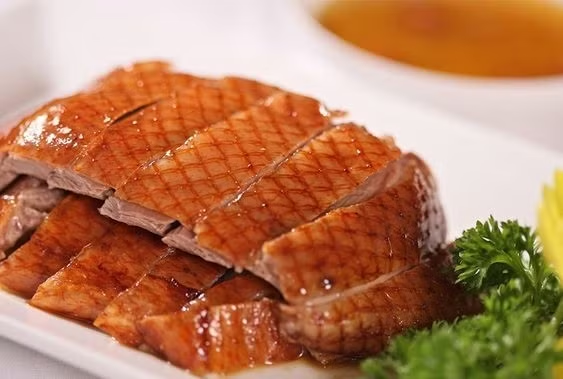
Roast duck with seven flavors has long been known as a famous delicacy in Cao Bang. Local people use up to seven different spices, including ginger, garlic, dried onion, pepper, honey, tofu, and mac mat to marinate the dish.
Local people have their own secret of processing this dish, which is unlike the ordinary roasted duck. This dish requires that the duck should not be grass-raised or too fat and big. Ideally, ducks should weigh around 1.8 to 2kg. The most important stage is marinating the cleaned duck with fish sauce and salt mixed in seven flavored liquids.
After being roasted with a layer of honey covering the whole duck on fire, the duck skin turns into light red-brown skin and its smell is the most charming thing on earth with peach pink well-done pieces of meat.
Cao Bang roasted duck has flavorful, soft meat, attractive with the mesmerizing aroma from Mac mat fruit, and the duck skin is perfectly golden-brown and crispy.
Just one bite is enough to leave a lasting impression on those who taste it.
Ant egg cake
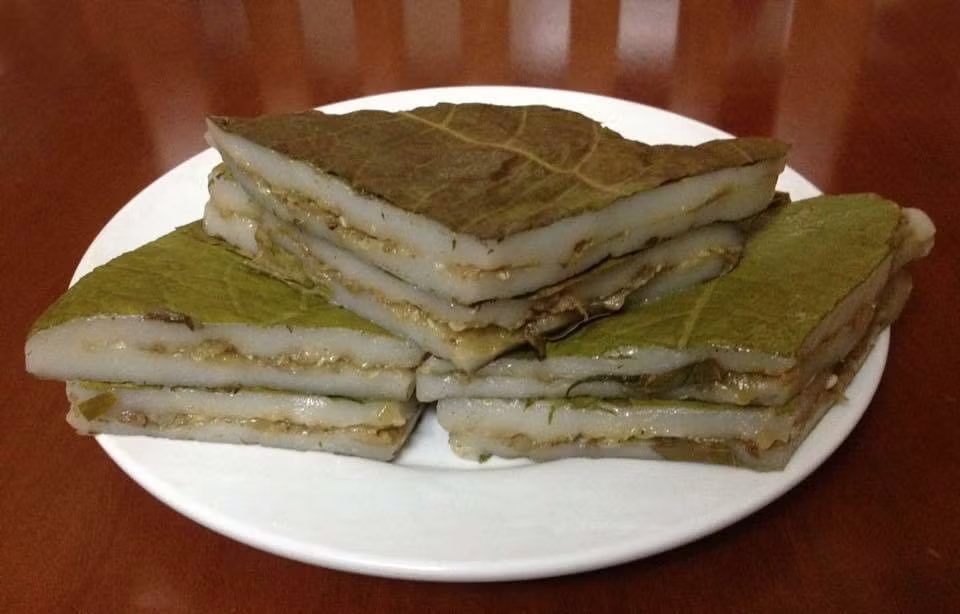
Ant egg cake is only available once a year, from early April to the end of May.
Ant egg cake is also known as Peng Ray. The main ingredients to make the cake are young eggs of black ants, glutinous rice flour and fig leaves.
Not all ant eggs can be eaten. Only the eggs of black ants which have a small body, sharp tail are can be used. Around April and May, the Tay ethnic group in Cao Bang go together into the forest to find black ant eggs and bring back home to make cakes. Dark black ant eggs are very high in fat and protein.
Black ant’s eggs that resemble round, white, shiny grains of rice are mixed with dried shallot, minced pork, peanut, roasted sesame and other ingredients after being washed clean to make the fillings richer.
The skin is made from a mixture of sticky rice with normal rice. Locals first apply a thin layer of the rice mixture onto young fig leaves before adding the fillings, then applying another layer of rice mixture before steaming the cake.
To make the cake more appealing, locals cut it into square pieces before plating.
Waiting for every moment when the cake is cooked, the aroma of the fig leaves will attract visitors when first enjoying this dish. Biting the first pieces, the egg tarts are supple and fragrant with the ants’ scent that makes it hard to resist.
Trung Khanh chestnuts
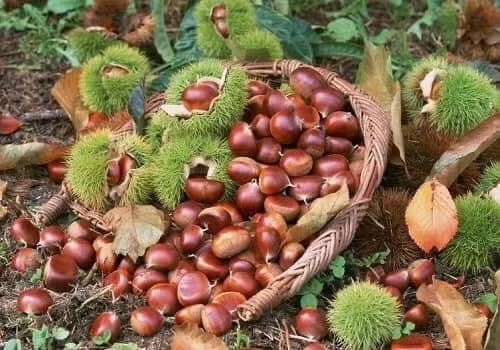
Chestnuts are grown in many places, but perhaps only the soil in Trung Khanh, a rural district 58 kilometers away from Cao Bang city, produces special nuts.
Trung Khanh chestnut has thick, hard outer shells that resemble rambutans and about 3 – 4 seeds inside each chestnut. It can be boiled, steamed or brought into the oven, and you will find a natural fragrance from it. Just take a moment to soften it out in your mouth. When eating the nuts in the cold you will be able to feel the taste of the mountains and the heart of who has been caring the chestnuts.
The chestnut season in Trung Khanh falls in autumn around August or September in the lunar calendar.
Sticky rice with black canarium (xoi tram)
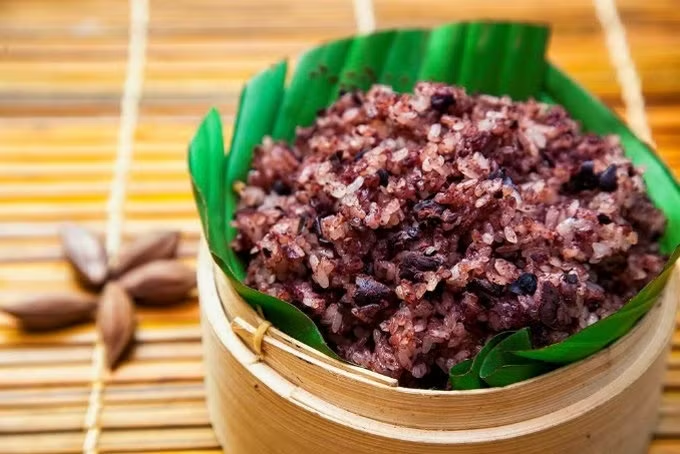
Sticky rice with black canarium is a rustic traditional dish of Cao Bang locals, who start to harvest the fruit as autumn comes.
The main ingredients for the dish are, as its name indicates, sticky rice and black canarium. Although there are various types of canariums in Cao bang, tram nep, a special black canarium sub-type, is often chosen to make the dish as it is nuttier, softer and more flavorful than other canariums.
The black canarium used for xoi tram has to be ripe but fresh and dark purple. As the fruit is harvested, the tree sap still sticks on its stem. The fruit to be cooked must have shiny, smooth, and fairly intact skin and soaked in lukewarm water of about 25 – 30oC until soft.
After soaking the fruit in water, locals take out the flesh to mix thoroughly with cooked sticky rice.
Nutritious, nutty and uniquely flavorful, Cao Bang’s sticky rice with black canarium tastes best when served with black sesame or Cao Bang sausage.
Cao Bang pancakes
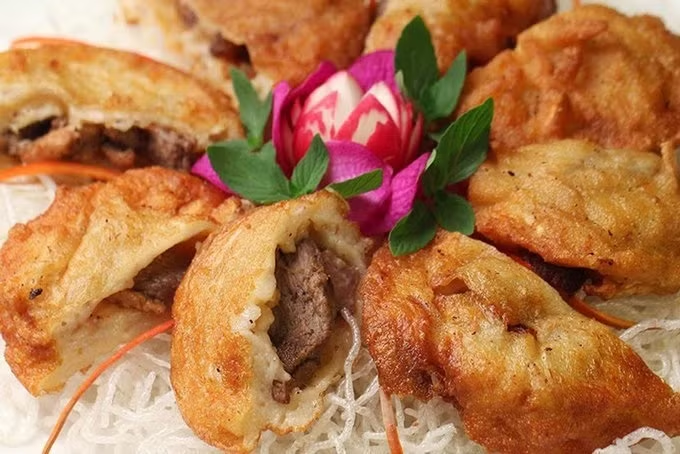
Pancake is a specialty dish of Cao Bang that is very familiar every winter. This is an extremely simple and familiar snack for every local people.
There are no fancy ingredients, just a mixture of flour mixed with flexible water and seasoned simply divided into round molds and quickly dropped into a pan of hot oil. However, the taste is extremely inviting to diners from all over the regions.
Black canna noodles
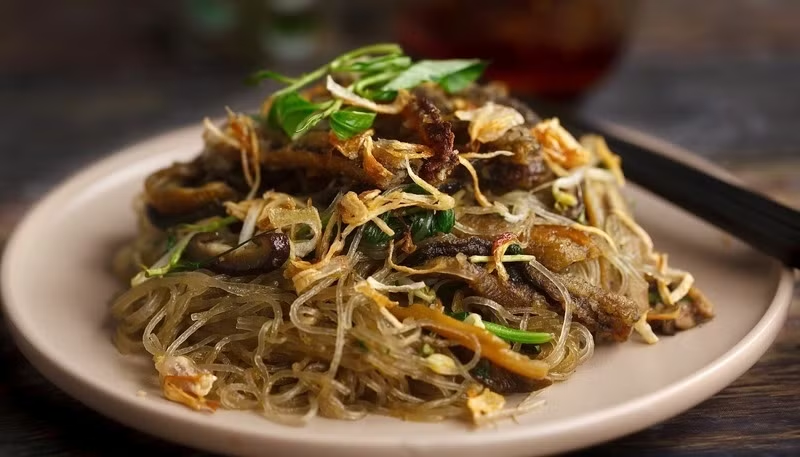
It would be amiss to talk about Cao Bang specialties without mentioning Phia Den black canna noodles.
Canna is grown in Phia Den from January to February in the lunar calendar and harvested in October and November.
Phia Den black canna noodles are characterized by unrivaled umami flavor from the shiny, crunchy and stringent canna made with the artisan’s meticulousness and age-old traditional methods and the clear, pure, cold water found in rivers and streams at the top of the mountain.
Phia Den black canna noodles have become well known throughout the country and are one of Cao Bang’s most famous specialties.