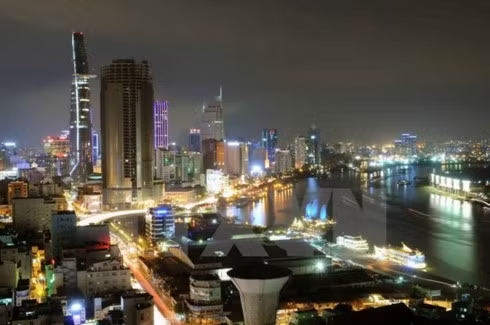
Ho Chi Minh City’s gross regional domestic product grew by 7.76 percent in the first half of this year, higher than the same period in the past two years.
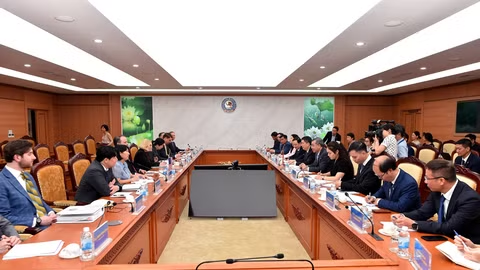
It was unveiled during a meeting of the municipal People’s Committee on June 15 to discuss the city’s socio-economic-cultural performance and the budget expenditure and spending in the first half of the year, and major tasks for the remaining months.
With this growth, the city is likely to fulfill the set growth of 8.4 – 8.7 percent this year, said Chairman of the municipal People’s Committee Nguyen Thanh Phong, adding that the total State collection hit 173 trillion VND (7.52 billion USD), or 49.5 percent of the yearly target.
 |
The services sector grew 7.38 percent while industry and construction expanded by 7.17 percent and agriculture up 5.93 percent.
Pham Thanh Kien, Director of the municipal Department of Industry and Trade, said the six-month industrial development index rose 7.5 percent year-on-year, the highest in the past five years.
During the period, there were more than 18,000 new businesses with a total registered capital of upwards 227 trillion VND. The total registered and additional capital topped 492 trillion VND, marking a 2.2-fold increase annually.
The city also licensed 340 foreign-invested projects, mostly in the processing and manufacturing industries, which doubled the city’s capital attraction of the previous period in 2016 to 2.15 billion USD.
In order to achieve set targets this year, the municipal authorities asked departments and localities to clear obstacles to businesses by improving business climate, reforming administrative procedures regarding taxation and customs while perfecting start-up ecosystem and promoting start-up innovation.
The city will also promote programmes on supply-demand, business-bank connectivity, demand stimulation, and market stabilisation.
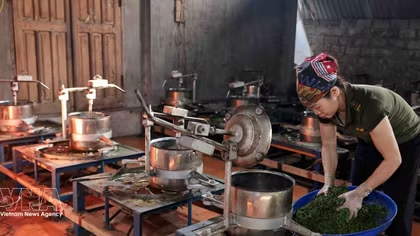
More than a year after the Politburo's Resolution No. 68-NQ/TW on private sector development came into effect, expectations now extend beyond increasing the number of enterprises. The goal is to build a stronger business community with greater resilience, larger ambitions and the capacity to compete in global supply chains.
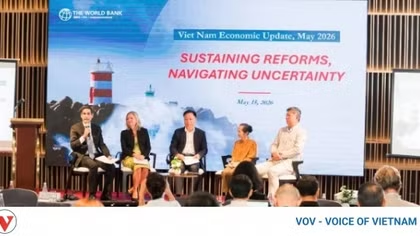
Vietnam is expected to remain one of ASEAN’s fastest-growing economies in 2026, supported by resilient exports, strong investment inflows and an ambitious reform agenda, despite mounting global uncertainties, according to the World Bank’s latest Vietnam Economic Update released on May 15.
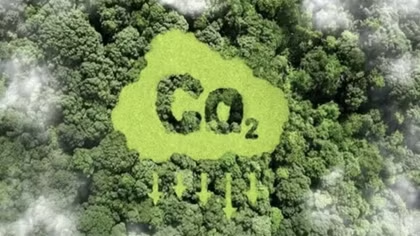
Under a new circular, the exchange of greenhouse gas emission quotas and carbon credits is conducted on the domestic carbon credit exchange through the carbon trading system, which is interconnected with the national registration system.
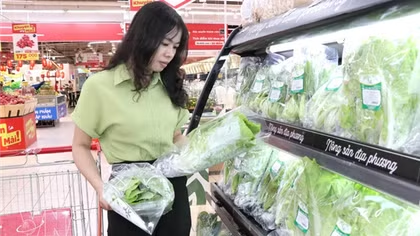
As many agricultural businesses continue to face challenges in finding stable outlets, modern retail systems are increasingly becoming key distribution channels helping Vietnamese products access the market more professionally.
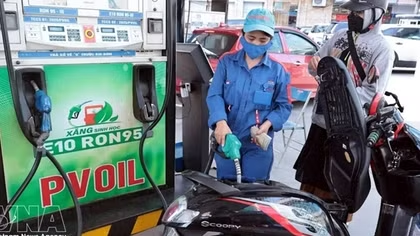
For biofuels, particularly E10, to develop successfully, stronger and more coordinated policies are needed, especially pricing mechanisms capable of creating a sufficiently attractive gap between E10 and mineral-based petrol, an expert has said.
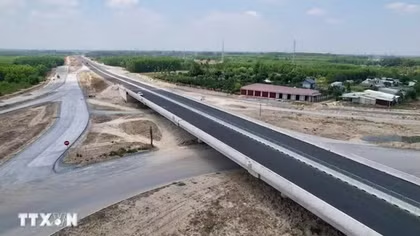
A recent PM directive set a May 10 deadline for ministries, agencies and localities to complete detailed allocations of the 2026 public investment capital plan.

A Party official has urged the Vietnamese business community to improve corporate governance, technological capacity, production standards, workforce quality and international connectivity to strengthen ties with the FDI sector.

The White Book provides a comprehensive overview of Vietnam’s current tax system in line with international practices, including direct taxes, indirect taxes and sector-specific levies.

The 12th Africa Forum for Investment & Commerce (AFIC 12) opened in Algiers, the capital of Algeria, on May 9, drawing around 2,000 participants, including officials, economists, businesses, financial and development organizagtions from 43 African countries and international partners, including Vietnam.
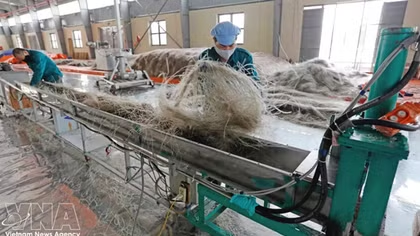
According to Dr. Bui Thanh Minh, Deputy Director of the Office of the Private Economic Development Research Board under the Prime Minister’s Advisory Council for Administrative Procedure Reform, Resolution 68 has helped foster a stronger entrepreneurial spirit through a series of concrete policy measures.
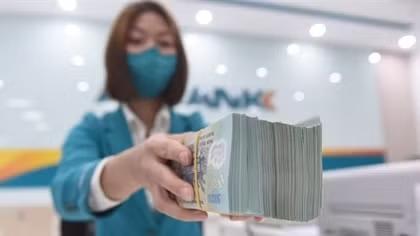
Consolidated first-quarter 2025 statements from Vietcombank, VietinBank and BIDV showed that the Treasury’s total deposit balance at the three lenders rose by nearly 39% compared with the end of 2025.

Vietnam targets 1 million one-person businesses, 5 million business entities, 10,000 tech startups, 45 startup support networks, a position among the world’s top 40 innovation ecosystems, and 1.5 billion USD in venture capital by 2030.

The exhibition, which runs until May 9 at the Hanoi International Centre for Exhibition, showcases advanced products and technologies across a range of fields, including pharmaceuticals, drug manufacturing machinery and equipment, medical devices, hospital and clinic services and dental equipment.
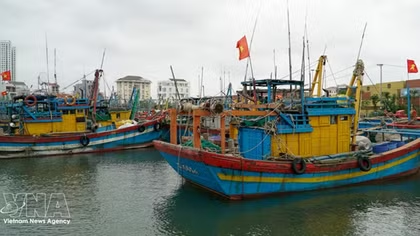
The province is tightening maritime governance, with a focus on May–June 2026 to finalise a more robust legal framework and close loopholes for illegal fishing.
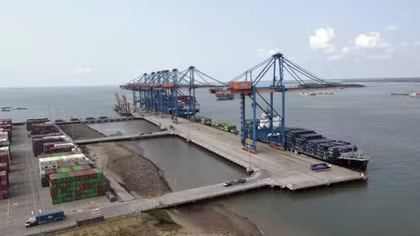
Leading the charge in this massive building spree is the new central city square in the core of the Thu Thiem new urban area. Spanning more than 20 ha, it’s the crown jewel of the Central Square and new administrative center complex.
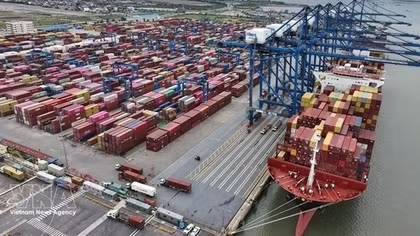
The country’s stable political and economic environment provides a critical foundation for long-term sourcing strategies. At the same time, Vietnam has demonstrated a strong ability to scale up manufacturing, supported by a continuously expanding industrial base capable of meeting both high-volume demand and increasingly complex technical and quality requirements.
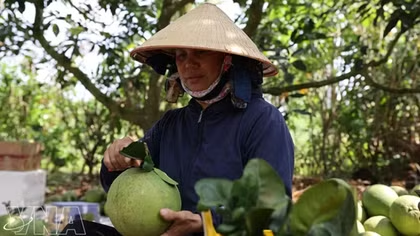
The update by Australia’s Department of Agriculture, Fisheries and Forestry to its Biosecurity Import Conditions system (BICON) on April 10, officially setting out import conditions for Vietnamese pomelos, is regarded as a major milestone in market access efforts.

Structured in two steps and three phases, the roadmap envisions a gradual shift from partial to full relocation of international flights, aligned with infrastructure readiness and the long-term ambition of building a regional aviation hub.
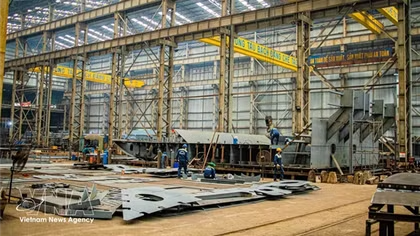
The circular economy is no longer just a policy choice. It has become an inevitable trend for delivering sustainable and green growth, sharpening competitiveness at home and abroad, and meeting Vietnam’s net-zero emissions target by 2050. It is now a prerequisite to sustain long-term economic expansion, particularly in industrial production and supporting industries.

Vietnamese fresh produce and processed foods are increasingly recognised for their quality, with items such as cashew nuts, coffee and spices gaining popularity among Middle East consumers. In 2025, Vietnam’s farm produce exports to the UAE exceeded 445 million USD, up nearly 24% year-on-year.