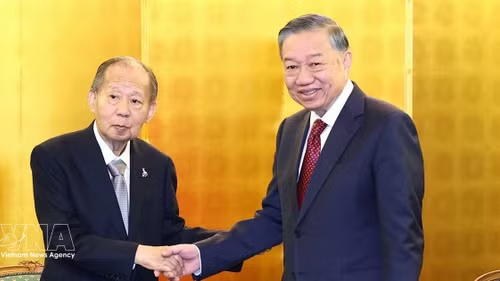
The friendship between the Japanese Communist Party (JCP) and the Communist Party of Vietnam (CPV) has been reinforced in recent years, according to Ogata Yasuo – JCP Vice Chairman and Head of the JCP’s International Affairs Department.
He made the remark while meeting with Pham Minh Chinh, Politburo member and Chairman of the CPV Central Committee’s Organisation Commission, in Hanoi on February 22.
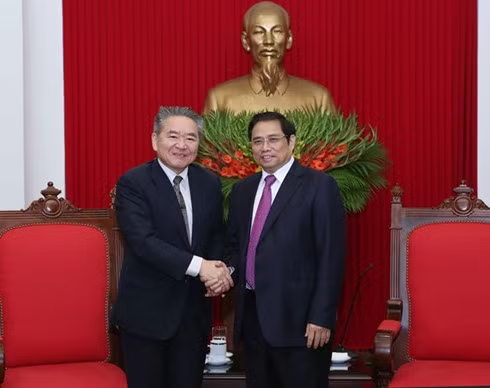 |
| Pham Minh Chinh (R), Chairman of the CPV Central Committee’s Organisation Commission, meets with JCP Vice Chairman Ogata Yasuo on Feb 22. |
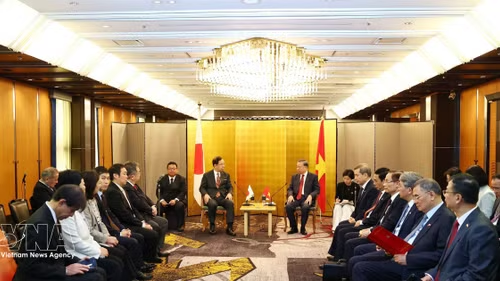
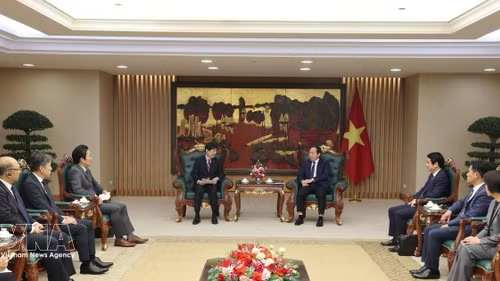
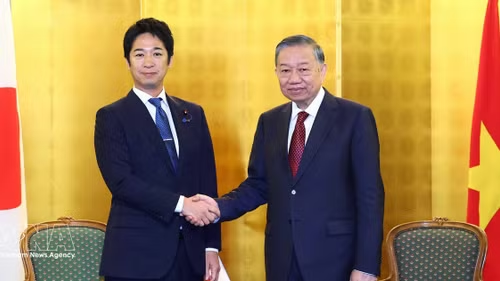
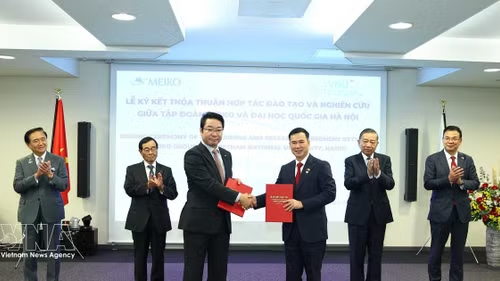
The Vietnamese leader also proposed closer cooperation in healthcare, including the promotion of Kanagawa’s ME-BYO preventive healthcare model to improve the quality of life of elderly people in Vietnam. At the same time, he encouraged the prefecture to facilitate Vietnamese businesses’ access to its market, technologies and innovation ecosystem.
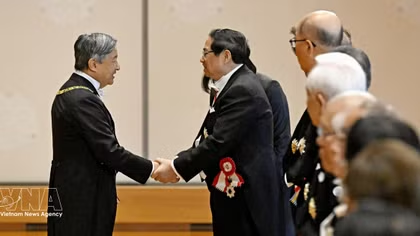
During his tenure as head of the Vietnamese Government, former PM Pham Minh Chinh made dedicated contributions to elevating Japan – Vietnam relations to a Comprehensive Strategic Partnership for Peace and Prosperity in Asia and the World in 2023.
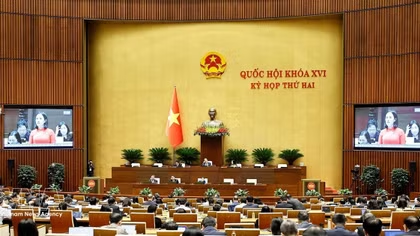
Lawmakers backed the need for the law, saying that it will fully institutionalise the Politburo’s Resolution 80-NQ/TW on Vietnamese cultural development and create a legal corridor for the cultural industry ecosystem and value chain.
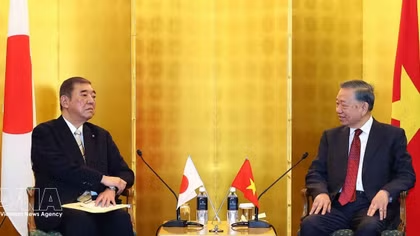
Vietnam and Japan should focus on four cooperation priorities, including strengthening political trust through regular exchanges and meetings across Party, State and parliamentary channels; promoting economic cooperation and connectivity while ensuring economic security; expanding collaboration in innovation, space technology and high-tech agriculture; and enhancing the effectiveness of cooperation between localities of the two countries.

China's and Vietnam's consecutive hosting of APEC presents an opportunity for the two countries to make practical contributions to regional economic integration and promote open, innovative, inclusive and sustainable development.
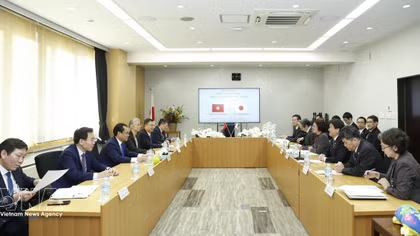
The Vietnamese and Japanese environment ministries will run policy dialogues, expert exchanges, human resources training, feasibility studies and technology transfer, aiming to pull companies and research institutes from both countries into environmental projects, particularly in areas where Vietnam needs capital and technology.
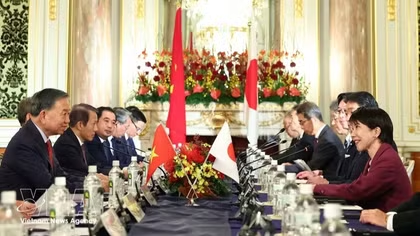
The two sides agreed to advance science and technology and innovation as a pillar of bilateral cooperation, based on partnership, co-creation and public-private cooperation.
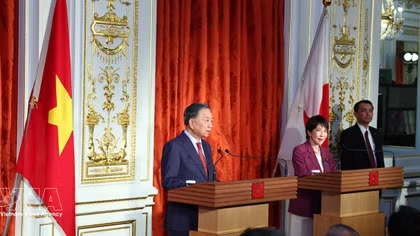
The two sides agreed to issue the Vietnam–Japan Joint Vision Statement, lifting the Comprehensive Strategic Partnership to a new height as equal partners that accompany and co-create together on mutual benefit, for quality growth, strategic autonomy and self-reliance.
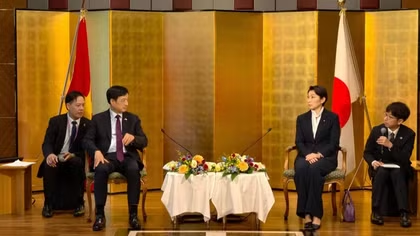
The parliamentary friendship groups and unions of Vietnam and Japan should play a greater role in promoting the implementation of high-level agreements, particularly in economic and trade cooperation, and translating commitments into concrete outcomes.
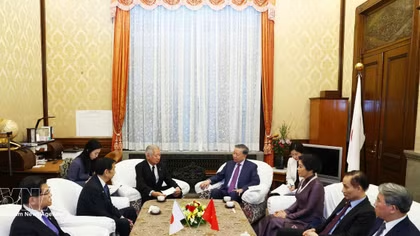
General Secretary of the Communist Party of Vietnam Central Committee and President To Lam met with Speaker of Japan's House of Representatives Mori Eisuke and President of the House of Councillors Sekiguchi Masakazu in Tokyo on November 9 afternoon (local time), as part of his official visit to Japan.
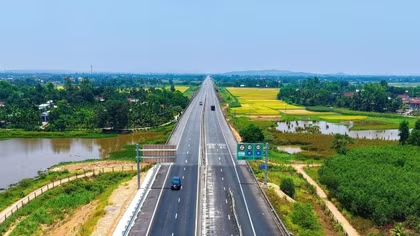
The projects are also pitched as infrastructure bottleneck relief, completing the planned expressway network, narrowing regional development gaps and reducing poverty in mountainous areas.
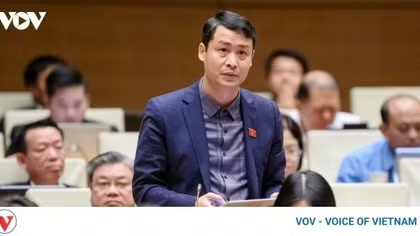
VOV.VN - Vietnamese lawmakers have proposed tougher measures to protect children and young people from tobacco-related harm, including a lifetime ban on tobacco sales to people born on or after January 1, 2010, and tighter controls on tobacco-related content in the digital environment.
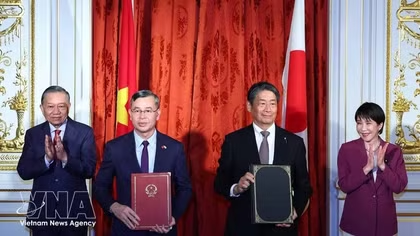
General Secretary of the Communist Party of Vietnam Central Committee and President To Lam and Japanese Prime Minister Takaichi Sanae witnessed the exchange of nine cooperation documents out of 11 signed in total in Tokyo on November 9 evening (local time), as part of the top Vietnamese leader’s official Japan visit.
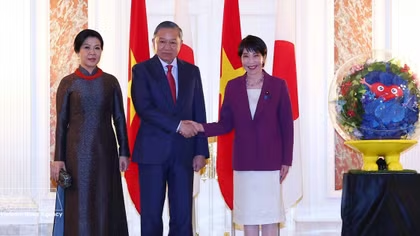
The leaders of Vietnam and Japan affirmed that bilateral cooperation in areas including defence, security, the economy, economic security, energy resources, trade, investment, science, technology, agriculture, the environment, ocean management, education and training, labour, culture, sports, tourism, law and justice, locality cooperation and people-to-people exchanges has developed substantially and has continued to strengthen and broaden.
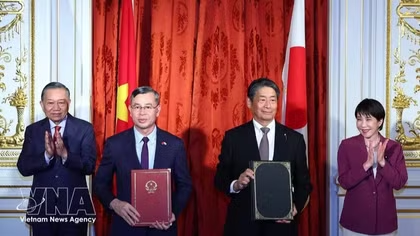
The exchange of the three documents on loans and grant aid reaffirms Japan's position as one of Vietnam's leading economic partners and reflects the strong commitment of both governments to translating high-level agreements into concrete cooperation projects, contributing to further strengthening the Vietnam-Japan Comprehensive Strategic Partnership.
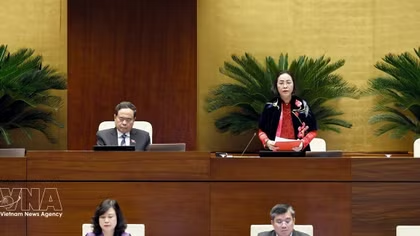
The National Assembly (NA) on November 9 adopted a resolution on the 2027 central budget allocation, with all 469 deputies present and voting in favor. Under the resolution, total central budget revenue in 2027 is estimated at more than 1.7 quadrillion VND (66.62 billion USD), while total expenditure is projected at over 2.3 quadrillion VND.
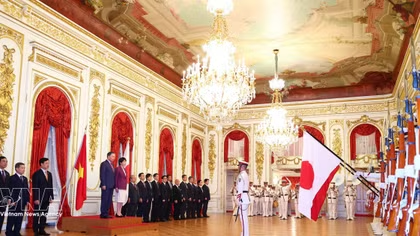
The visit is expected to turn agreements and commitments reached by high-ranking leaders into practical cooperation schemes and projects across various fields, and make positive contributions to each country’s development goals as well as global and regional peace, cooperation and development.
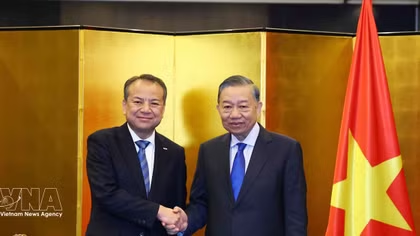
General Secretary of the Communist Party of Vietnam Central Committee and President To Lam met with leaders of major Japanese corporations in Tokyo on November 9 as part of his official visit to Japan.
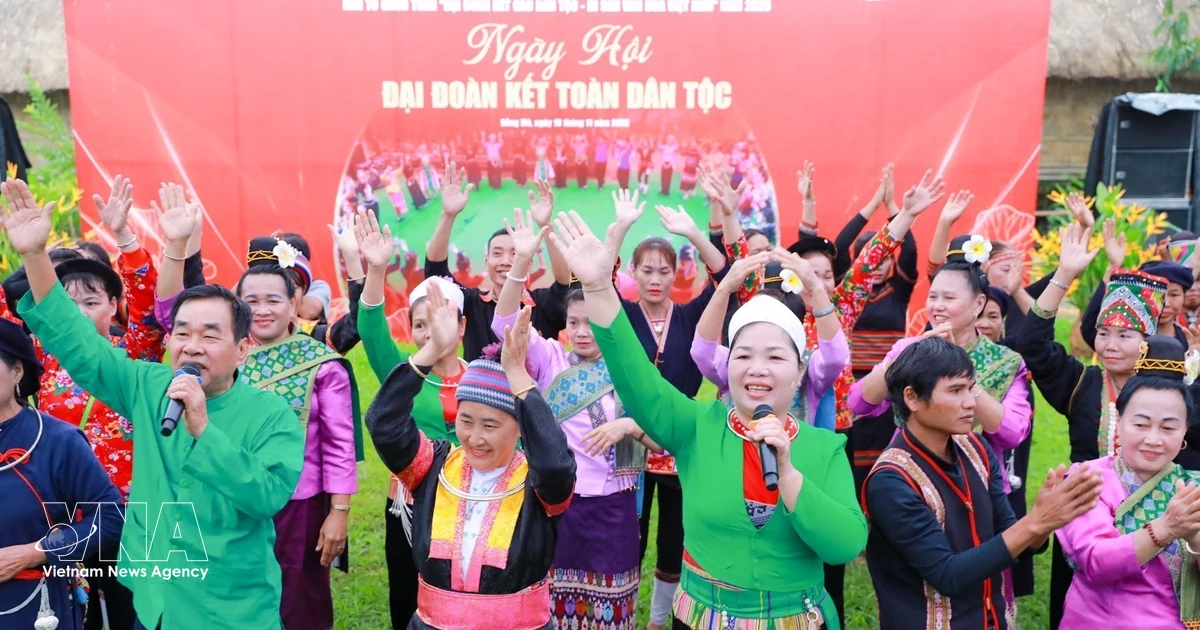
Harnessing cultural strength and reinforcing the great national unity bloc begin with concrete action at the grassroots level. In this process, Party committees provide leadership, local authorities create favourable conditions, the Vietnam Fatherland Front (VFF) and its member organisations play a central role in mobilising and bringing people together, while citizens are the creators, practitioners and beneficiaries of cultural values.
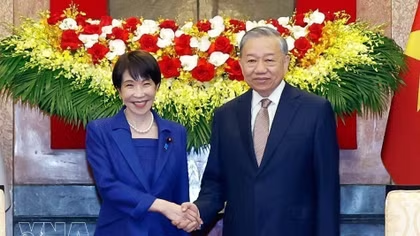
The visit is expected to further deepen ties through Party, State, parliamentary and people-to-people channels, while creating breakthroughs in economic, financial, scientific and technological cooperation, innovation, education and training, digital and green transformation, and supply chain diversification, thereby contributing to a peaceful and stable environment for development in both countries.