National industrialisation and modernisation requires a boost, say experts

Experts have suggested that Vietnam move to accelerate its national industrialisation and modernisation process in order to meet current development requirements moving into the new period in line with the resolution adopted by the 13th National Party Congress.

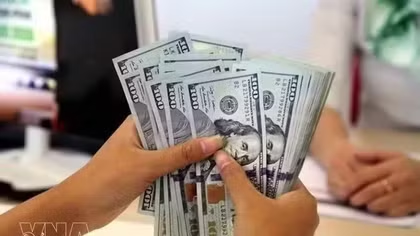
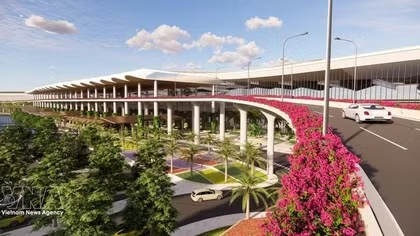
national industrialisation and modernisation requires a boost, say experts picture 1

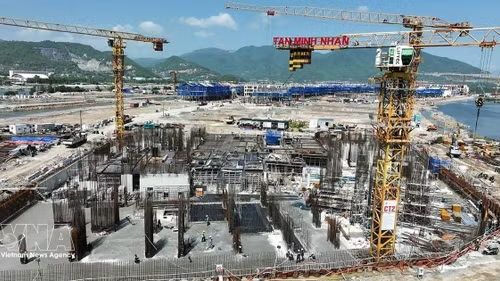
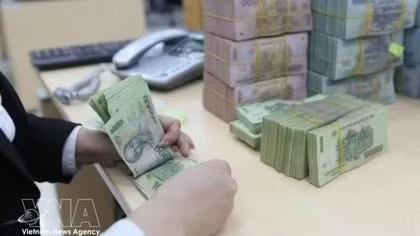
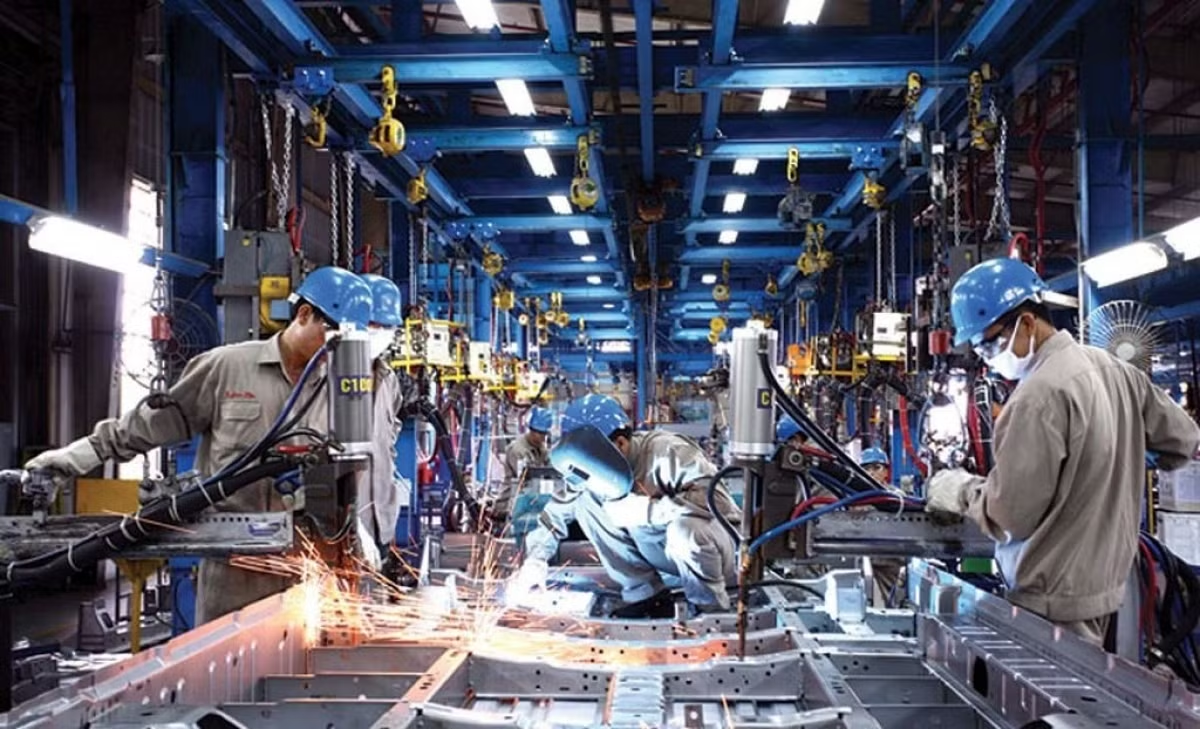
Manufacturing development serves as the major driving force behind high economic growth in Vietnam. (Illustrative image)

Vietnam launched its Doi Moi (Renewal) process in 1986 with the aim of making breakthroughs in national development and international integration following years of developing a centrally-planned economy. For over three decades, especially the period from 2011 to 2021, the country has made great efforts in order to boost industrialisation and modernisation, recording various important achievements in the process.

Statistics highlight that the national economy expanded 6.17% throughout the reviewed period, with the quality of growth being improved and the size of the economy increasing rapidly. In addition, the economic structure has changed positively, with industry and services accounting for 72.7% of national GDP in 2020 to turn Vietnam into a developing, middle income economy.

However, due to a variety of factors Vietnam has yet to achieve the goal of becoming a modern industrialised country by 2020. In his opening speech at the ongoing sixth plenum of the 13th Party Central Committee in Hanoi, Party General Secretary Nguyen Phu Trong pointed out that, “strategic breakthroughs have not been made while economic growth has yet to reach the strategic target, with the growth gradually decreasing every 10 years.”

According to the Party leader, the internal strength of the economy remains weak and is heavily dependent on the foreign-invested sector. The domestic private sector has yet to meet its role as an important driving force for industrialisation and modernisation, whilst state-owned enterprises have also revealed weaknesses that must be swiftly redressed.
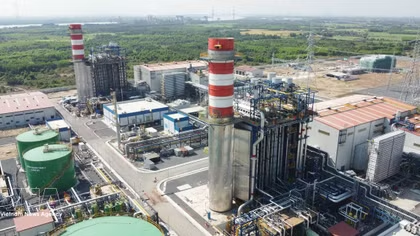
national industrialisation and modernisation requires a boost, say experts picture 2
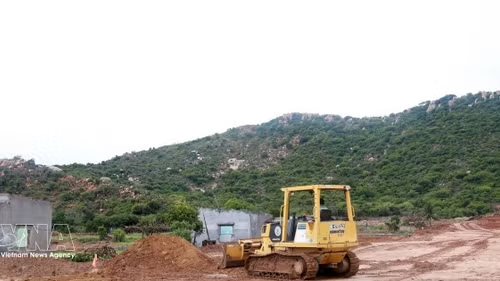
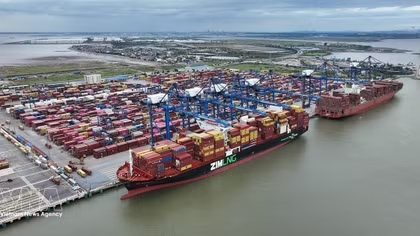
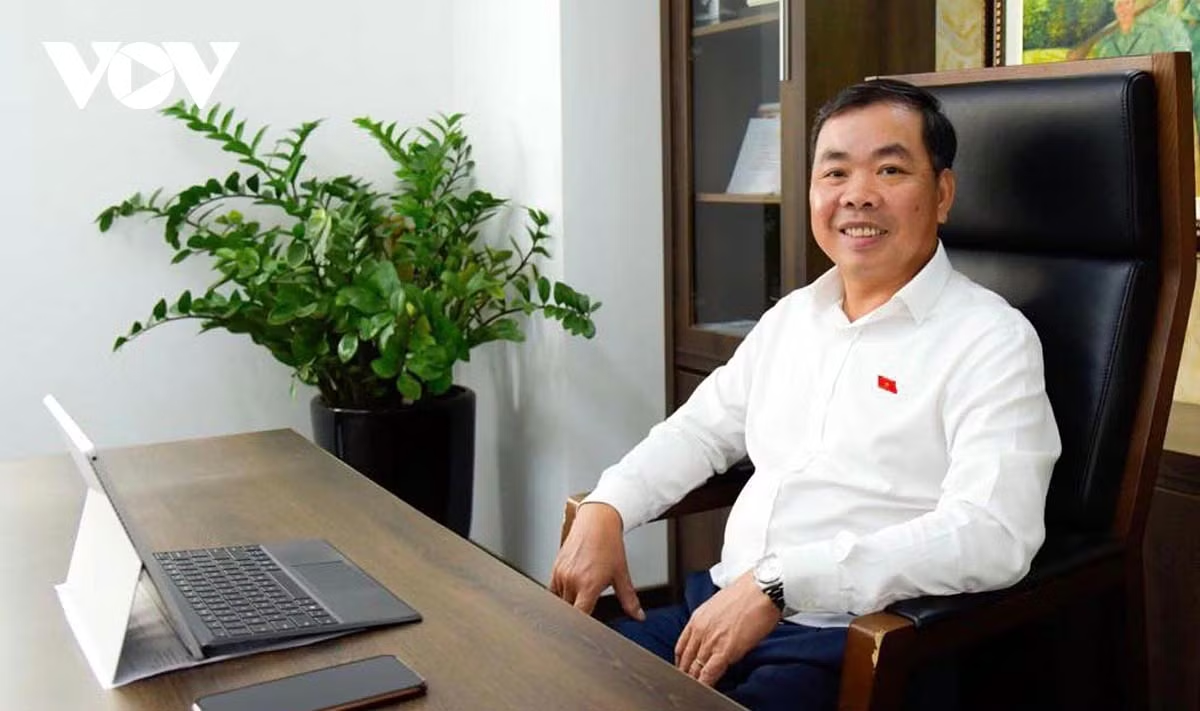
Nguyen Quang Huan, chairman of the Board of Directors of Halcom Vietnam JSC.

Some experts argue that the country will find it difficult to make breakthroughs in development if it only relies on an unskilled and cheap workforce producing low-value products. They have therefore suggested that Vietnam shift to focus on applying modern technology in production in order to bring high efficiency in business operations and improve labour productivity.

Technological application can be viewed as a key solution, said Nguyen Quang Huan, chairman of the Board of Directors of Halcom Vietnam JSC, a firm that specialises in investment and consulting for infrastructure and urban development.

“We must know that when we choose the right technology, it will result in high productivity and successful projects,” said the executive.

Meanwhile, economist Le Duy Binh who is also director of Economica Vietnam, noted that the country has formed and developed a number of key industries over recent years, such as mechanical engineering, steelmaking, shipbuilding, and energy, along with the emergence of some light industries like textile, leather & footwear and electronics. There has been an ongoing shift in the industrial field, with some industries making use of a higher technology content and higher capital.
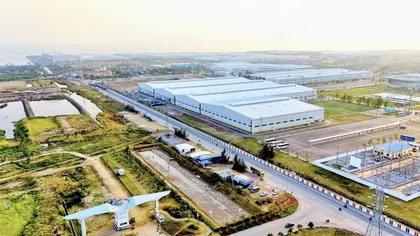
national industrialisation and modernisation requires a boost, say experts picture 3
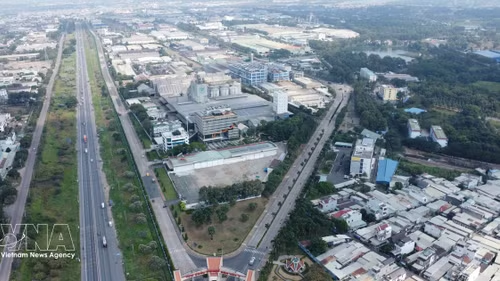
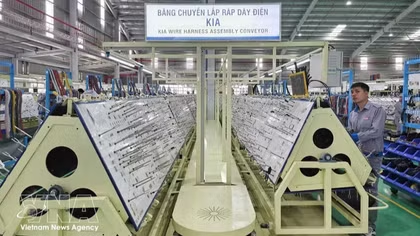
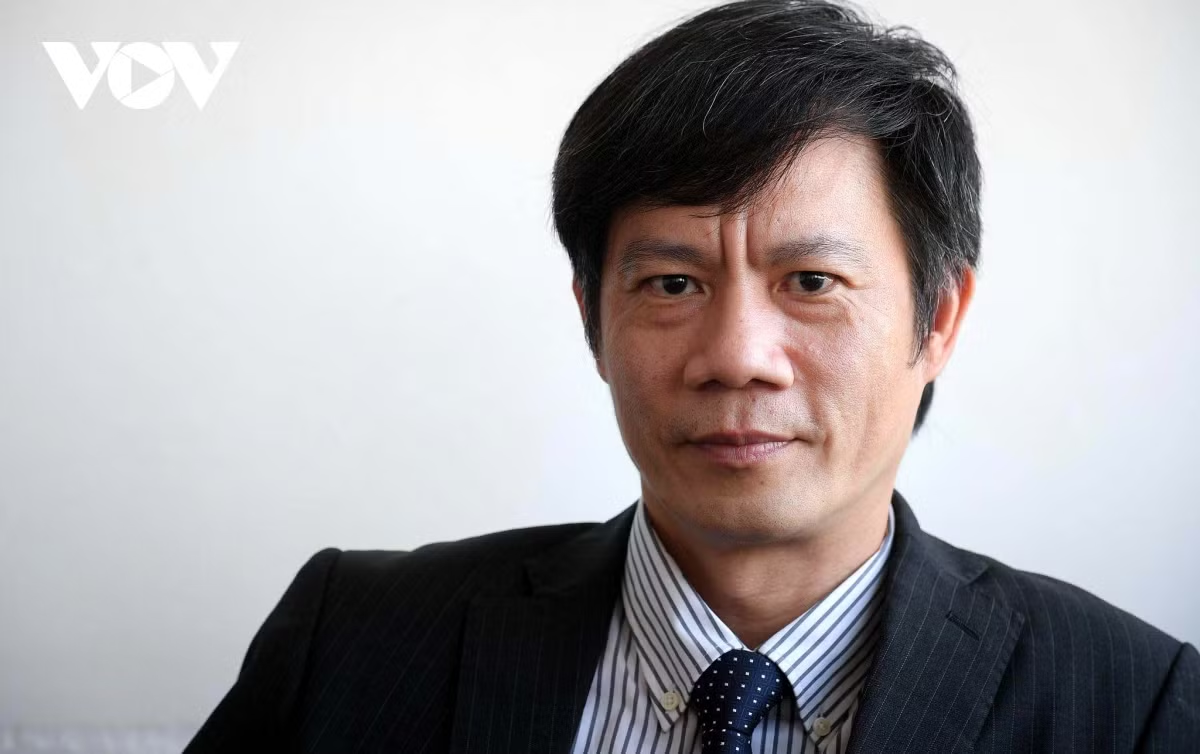
Economist Le Duy Binh, director of Economica Vietnam. 

Most notably, he said the process of national industrialisation and modernisation is no longer mainly based on State-owned enterprises, but instead the active engagement of the private economic sector and foreign investors has resulted in new industries emerging, including carmaking, renewable energy, mechanical engineering, and some others.

“However, our industrialisation is yet to reach the desired level; the added value of the domestic industry remains low; and the proportion of contribution of domestic private enterprises to industrialization is not high,” said Binh. “The domestic supporting industry has not been developed yet, and we have mainly worked in the field of processing and assembling. We have not paid special attention to investments in designing or building our own brands. I think these weaknesses should be addressed in the coming period,” he added.

According the resolution adopted at the 13th National Party Congress in 2021, Vietnam has been striving to become a developing country with a modern industry and high middle income by 2030, with a developed economy and high income by 2045. As a means of achieving this goal, it has no choice but to ramp up industrialisation and modernisation on the basis of scientific and technological advances and innovation, as well as paying closer attention to factors such as self-reliance and the independent nature of the industry.

Assoc. Prof. & Dr. Le Quoc Ly, former deputy director of the Ho Chi Minh National Academy of Politics, stated that businesses serve as the primary driving force behind the promotion of national industrialisation and modernisation.

“The ongoing sixth Party plenum must concretize the guidelines set forth by the 13th National Party Congress so that digital technology will be translated into life,” he suggested, adding, “It is necessary to create a good environment for industrialisation and modernisation to thrive, in which businesses get support for development.”

VOV

Other News

SBV raises short-term capital lending cap to 40%

SBV raises short-term capital lending cap to 40%

The new circular will help credit institutions have more room to provide capital to businesses and investment projects to support high economic growth in the next few years, while increasing flexibility in the SBV’s monetary policy management.

Business confidence in Vietnam rebounds strongly: UOB

Business confidence in Vietnam rebounds strongly: UOB

The study found that 85% of Vietnamese enterprises reported positive business sentiment, a sharp increase from 48% in 2025, when business confidence was weighed down by uncertainties surrounding US tariff policies and related trade developments.

Bac Ninh seeks high-quality foreign investment for sustainable growth

Bac Ninh seeks high-quality foreign investment for sustainable growth

According to Vice Chairman of the provincial People’s Committee Pham Van Thinh, the province aims to maintain stable and sustainable growth, improve the competitiveness of both the economy and local businesses, and make better use of free trade agreements (FTAs) to expand and diversify export markets.

Green building trend flourishes in Ho Chi Minh City's real estate landscape

Green building trend flourishes in Ho Chi Minh City's real estate landscape

The International Finance Corporation (IFC) highlighted the city's dominance in green-certified building floor space in Vietnam, reflecting the rapid expansion of the green building market with 780 completed green buildings encompassing over 18.69 million sq.m by 2025, predominantly certified by EDGE and LEED.

UK supports Vietnam in wind power and green finance development

UK supports Vietnam in wind power and green finance development

The United Kingdom officially announced two new climate cooperation initiatives to support Vietnam in its energy transition and green growth journey. These programs focus on offshore wind power development and the creation of a sustainable green financial ecosystem.

Ample room remains for Vietnam–India logistics cooperation

Ample room remains for Vietnam–India logistics cooperation

The GTTCI expert noted that alongside logistics and integrated warehousing, e-commerce is expected to be a particularly high-growth sector in the coming years. He described it as a multi-billion-dollar market with significant untapped opportunities for cooperation between Vietnam and India.

Exports gain momentum from high-tech growth drivers

Exports gain momentum from high-tech growth drivers

According to the Ministry of Industry and Trade, Vietnam’s exports reached 215.66 billion USD in the first five months of 2026, up 19.5% year-on-year. Twenty-six export items generated more than 1 billion USD in revenue each, including seven with turnover exceeding 10 billion USD.

Vietnam–China crossings see spike in ASEAN fresh produce

Vietnam–China crossings see spike in ASEAN fresh produce

Since the start of the summer harvest season, China's two major border gates with Vietnam, Youyi Guan in Pingxiang and Beilun 2 Bridge in Dongxing, have entered their peak period for handling imports of fresh agricultural and seafood products from member states of the Association of Southeast Asian Nations (ASEAN).

Cargo handling operations at Berths 3 and 4 of the Hai Phong International Gateway Port. (Photo: VNA)

AI reshapes logistics, raising bar for workforce skills

According to the Vietnam Logistics Business Association (VLA), the logistics sector will require around 2.2 million workers by 2030, including 1.6 million employees for logistics service providers and nearly 600,000 personnel supporting logistics operations in manufacturing and trading enterprises.

Robust dispute resolution framework key to Vietnam's IFC ambitions

Robust dispute resolution framework key to Vietnam's IFC ambitions

The development strategy for VIFC-HCMC envisions a comprehensive financial ecosystem encompassing green finance, carbon credits, financial technology (fintech), blockchain technology, digital assets, digital banking and other innovative business models. These highly internationalised sectors involve complex cross-border transactions and sophisticated legal structures.