Nine laws to become effective on July 1

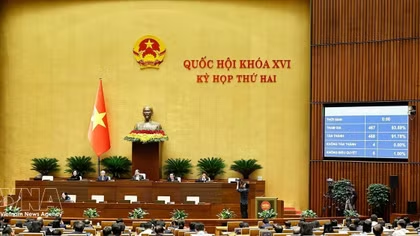
Nine new laws will become effective on July 1, 2018, including the Law on Public Debt Management; Law on amendments and supplementations to some articles of the Law on Overseas Representative Missions of the Socialist Republic of Vietnam.

The others are the Law on Guard Force; Law on Management and Use of Weapons, Explosives and Supporting Tools; Law on State Compensation Liability; Law on Technology Transfer; Irrigation Law; Railway Law; and Law on Access to Information.

The Law on Public Dept Management comprises of 10 chapters, 63 articles. One of the important new points of the law is that the Ministry of Finance is now responsible for issues related to ODA and foreign soft loans instead of the Ministry of Planning and Investment.

A new concept of “public debt limitation” is introduced for the first time in the law in order to raise alarm when public debt is about to hit the ceiling level. The level will be decided by the National Assembly for each period.
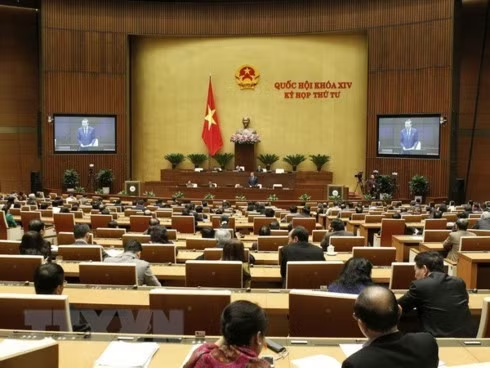
Meanwhile, the Law on amendments and supplementations to some articles of the Law on Overseas Representative Missions of the Socialist Republic of Vietnam makes changes to 11 out of the total 36 articles of the current law. It adjusts and supplements the stipulation on the consular duties of representative missions. The law also regulates that the National Assembly’s Standing Committee shall approve proposals on appointment and dismiss of ambassadors.

The Law on Guard Force has 6 chapters and 33 articles, regulating measures to protect high-ranking officials of the Party, State and the Vietnam Fatherland Front. 

It also specifies four situations in which a guard can open fire. 

With 8 chapters and 76 articles, the Law on Management, Use of Weapons, Explosives and Supporting Tools adds a stipulation that coast guard force, cipher security force and investigators of the Supreme People’s Procuracy will be equipped with weapons.

The revised Law on State Compensation Liability, with 9 chapters and 78 articles, aims to ensure the compensations is undertaken in a prompt and effective manner, and address limitations and obstacles in the work in the past time.

The Law on Technology Transfer has 60 articles and 6 chapters, with addition regulations on policies to encourage businesses to apply and renovate technology, along with measures to develop science and technology market.

The Irrigation Law clarifies principles in investment in construction of irrigation works, in which the State will only build major irrigation works of special significance, projects facing difficulties in mobilising social resources, projects that serve both irrigation and national defence-security and natural disaster control; works in disadvantaged areas including areas inhabited by ethnic minority communities, mountainous areas, islands, especially poor areas and localities hard hit by climate change. 

The Railway Law has 10 chapters and 87 articles, 2 chapters more than the 2005 version but a reduction of 27 articles. The law also has new regulations on high-speed railway.

The Law on Access to Information has 5 chapters and 37 articles, stipulating the exercise of citizens’ rights to access information as well as principles, procedures to implement the rights and the obligations of State agencies in ensuring the rights.

The law regulates that foreigners residing in Vietnam can only be requested to provide information directly related to their rights and responsibilities.
VNA

Other News

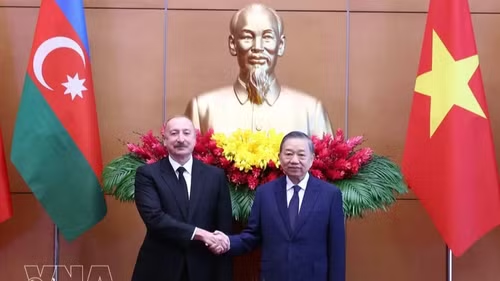
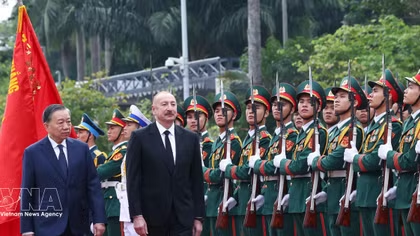
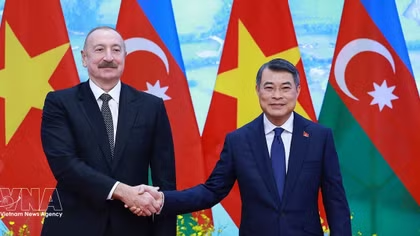
Welcome ceremony held for Azerbaijani President

Welcome ceremony held for Azerbaijani President

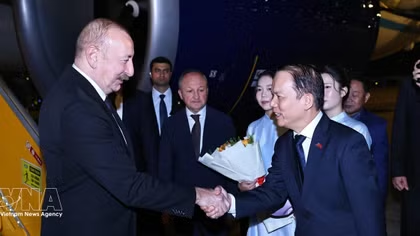
The two leaders walked along the red carpet to the ceremonial podium as military bands performed the national anthems of Azerbaijan and Vietnam. They then reviewed the Guard of Honour of the Vietnam People's Army and introduced members of their respective high-level delegations.

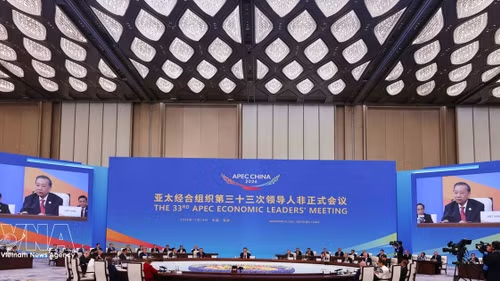
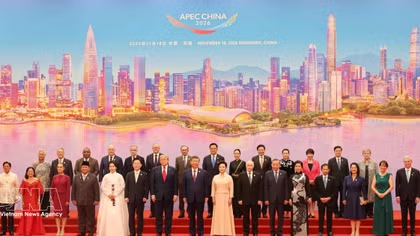
Vietnam builds on APEC 2026 outcomes towards hosting APEC 2027: Foreign minister

Vietnam builds on APEC 2026 outcomes towards hosting APEC 2027: Foreign minister

Vietnam participated in APEC 2026 not only as an active and proactive member but also with the responsibility of the host of APEC 2027. Its engagement reflects the country's consistent foreign policy, ambitious and sustainable development goals in the new era, and desire to make greater contributions to the common future of the Asia-Pacific region.

Vietnam, China share experience in personnel affairs

Vietnam, China share experience in personnel affairs

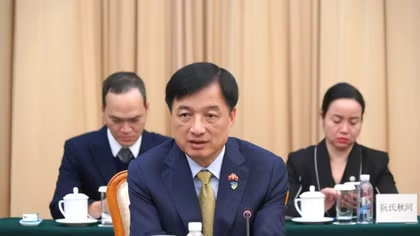
Vietnam treats human capital, science - technology, innovation and digital transformation as drivers of national development, prompting new demands for personnel affairs, including the need for officials with technical expertise and stronger leadership capabilities across Party committees, Head of the Communist Party of Vietnam (CPV) Central Committee’s Organisation Commission Nguyen Duy Ngoc said, adding that Vietnam wants to draw on Yunnan’s experience in this regard.

NA President meets Azerbaijani President in Hanoi

NA President meets Azerbaijani President in Hanoi

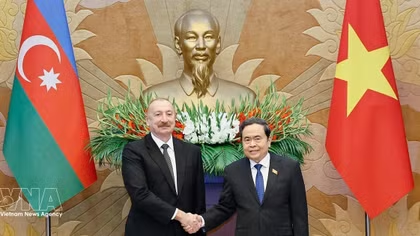
The two sides vowed to expand parliamentary cooperation, education - training, culture, tourism and people-to-people exchanges, and ease travel and cooperation for their citizens and companies, for the two peoples’ interests and for peace, stability and development.

Azerbaijan seeks expanded cooperation with Vietnam

Azerbaijan seeks expanded cooperation with Vietnam

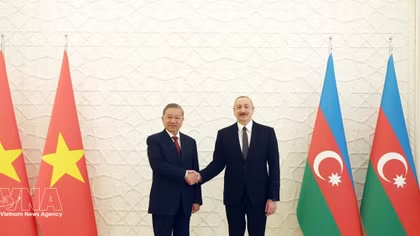
Vietnam is one of Azerbaijan’s important partners in Southeast Asia, Azerbaijani President Ilham Aliyev said, expressing his desire to further develop bilateral cooperation across fields in line with their traditional friendship and established strategic partnership.

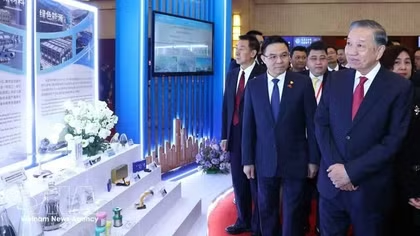
Top leader attends Vietnam-Southwest China Development Strategy Connectivity Forum

Top leader attends Vietnam-Southwest China Development Strategy Connectivity Forum

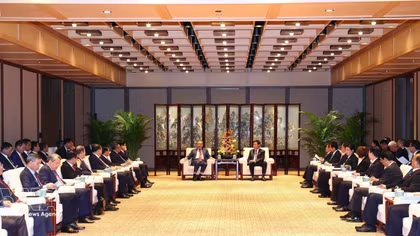
Southwest China has a vast market and increasingly strong industrial and innovation capabilities, while Vietnam boasts a dynamic economy, extensive international integration and seaports connecting it to major global shipping routes. By bringing into full play these advantages, the two sides can create shared development opportunities, linking inland areas with the sea, China with Southeast Asia and both with global markets.

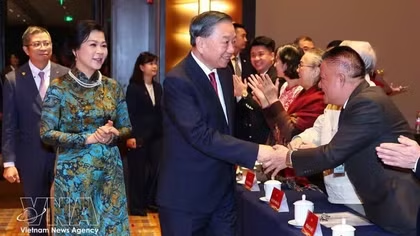
Madame Ngo Phuong Ly attends gathering of APEC's spouses

Madame Ngo Phuong Ly attends gathering of APEC's spouses

Madame Ngo Phuong Ly, spouse of General Secretary of the Communist Party of Vietnam Central Committee and President To Lam, attended a gathering of spouses of leaders and representatives of APEC economies in Shenzhen on November 19, using the occasion to spread Vietnam’s image on the sidelines of the APEC 2026 Economic Leaders’ Week.

President of Azerbaijan and spouse begin official visit to Vietnam

President of Azerbaijan and spouse begin official visit to Vietnam

President of Azerbaijan Ilham Aliyev’s visit carries particular significance. It offers high-ranking leaders a chance to reinforce political trust, review the full range of relationship-building directions and set concrete steps to realise the Strategic Partnership, adding new momentum across politics, diplomacy, economy, trade, investment, energy, education, science-technology, and people-to-people exchanges.

Vietnam officially takes over as APEC 2027 host

Vietnam officially takes over as APEC 2027 host

The top Vietnamese leader noted that hosting APEC for the third time marks an important milestone in Vietnam’s integration and development. The country pledges to be a dedicated host, listening to build consensus and connecting members to expand cooperation and deliver lasting results.