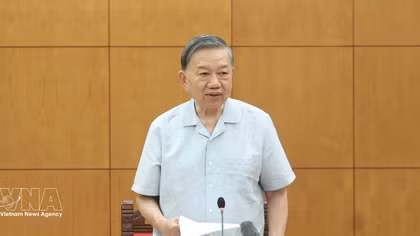
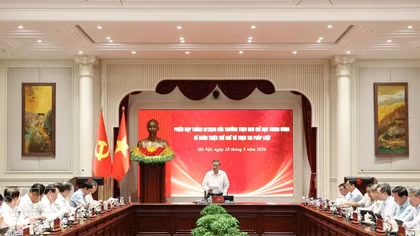
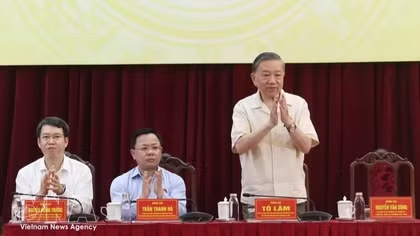
Party General Secretary To Lam on March 28 called for the urgent completion of an institutional framework to advance Vietnam’s sports sector in a modern and synchronised direction, laying a foundation for long-term development.
He made the remarks while attending a ceremony in Hanoi marking the 80th anniversary of the traditional day of Vietnam’s sports sector (March 27, 1946 – 2026), organised by the Ministry of Culture, Sports and Tourism.
On March 27, 1946, President Ho Chi Minh issued Decree No. 38 establishing the
department of youth and physical training and called on all citizens to exercise regularly, emphasising that a strong population is the foundation of a strong nation.
The late leader recognised the importance of physical training for national development soon after the country gained independence, and laid the foundation for the country’s sports sector.
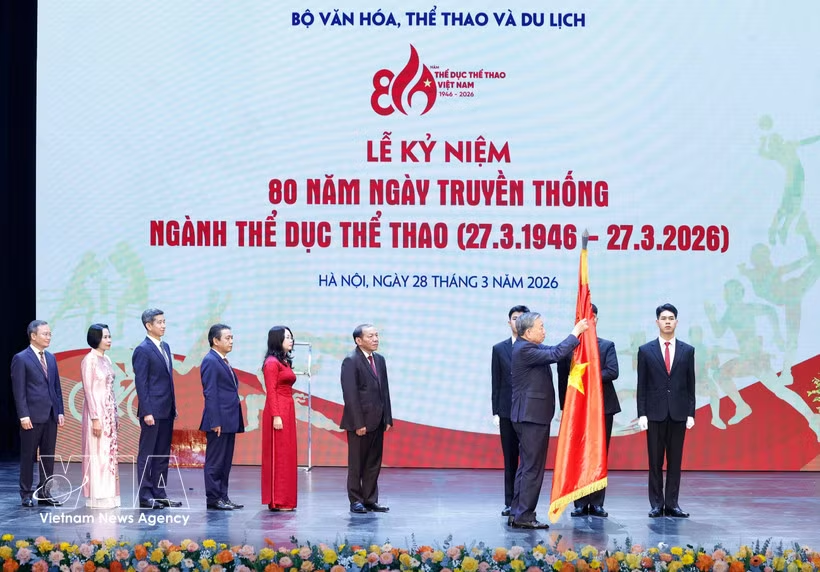
Over the past eight decades, Vietnam’s sports sector has made significant contributions to national construction and defence. In recognition of these efforts, the Party and State have awarded the sector prestigious honours, including the Ho Chi Minh Order and the Independence Order.
General Secretary Lam affirmed that under the Party’s leadership and the State’s guidance, Vietnam’s sports system has gradually taken shape from central to local levels, with growing investment in facilities, policies, training and international cooperation.
He highlighted the sector's important contributions to the country’s development, noting that these achievements reflect the dedication of generations of sports officials, the intellect of managers and scientists, the silent sacrifices of coaches, and the dedication of athletes, alongside the support of families, schools and the entire society.
He noted that the country is entering a new development stage with higher demands regarding human resources, the physical stature of the population, public health, national competitiveness and people’s quality of life. Therefore, a more comprehensive view of the role and position of sports is required.
In the time ahead, the Ministry of Culture, Sports and Tourism, the sports sector, ministries, agencies, the Vietnam Fatherland Front, mass organisations, local authorities, schools, businesses and society as a whole must urgently complete the institutional framework for sports development in a modern and synchronised direction to pave the way for long-term progress.
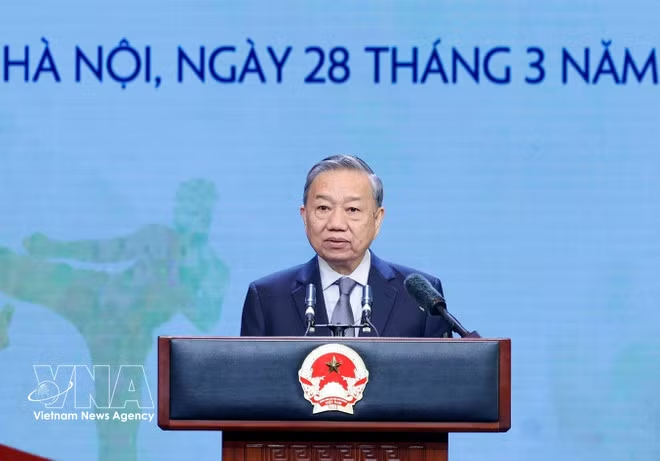
A sound institutional framework, he said, should clearly define the roles of the State and society, promote socialisation, ensure transparent governance, and encourage investment, innovation and the mobilisation of resources from all sectors.
It should also establish clear standards for infrastructure, athlete and coach training, welfare and career transition for athletes, as well as promote sports science, digital technology and the development of the sports economy and industry.
The Party leader emphasised the need to strongly promote mass sports so that all citizens have opportunities and motivation to engage in regular physical exercise.
He called for sports and physical activities to become part of everyday life in families, communities, schools, workplaces and armed forces units, including remote and disadvantaged areas.
General Secretary Lam proposed promoting the campaign encouraging each citizen to choose at least one sport suitable for regular practice, which could range from simple activities such as walking, running, badminton, swimming and cycling to traditional sports and recreational games.
He stressed that the goal is not only to increase participation but also to build an active society and a culture of daily physical exercise.
The Party chief also highlighted the importance of strengthening physical education and school sports as a foundation for developing the younger generation, preserving traditional sports linked to community culture, and advancing high-performance sports in a professional, scientific and sustainable manner.
He also called for expanded international cooperation and greater proactiveness in hosting regional and international sporting events.
With its proud 80-year tradition and the support of the entire political system and society, Vietnam’s sports sector is well positioned to continue developing strongly, contributing to the comprehensive development of the Vietnamese people and national progress, he said.
On the occasion, the General Secretary presented the First-Class Labour Order to the Sports Authority of Vietnam under the Ministry of Culture, Sports and Tourism in recognition of its outstanding contributions to institutional development and professional advancement in 2024–2025.
Also at the ceremony, Deputy Prime Minister Mai Van Chinh, on behalf of the Prime Minister, awarded certificates of merit to Nguyen Danh Hoang Viet, Director of the Sports Authority of Vietnam, and Nguyen Hong Minh, its Deputy Director.
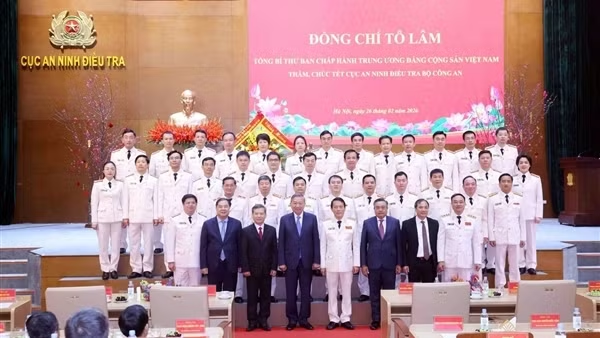 General Secretary To Lam visits Security Investigation Department
 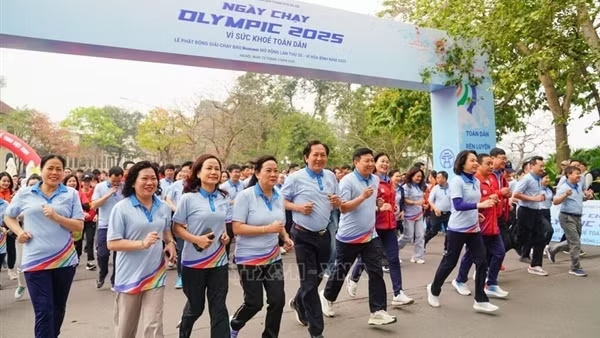 Olympic movement helps elevate Vietnam’s sporting stature internationally