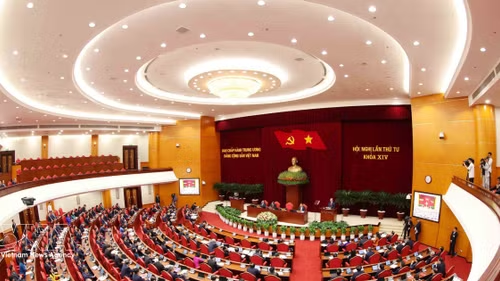
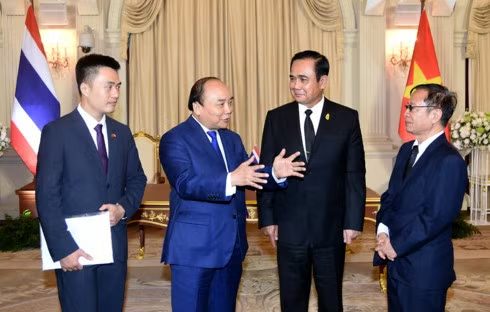
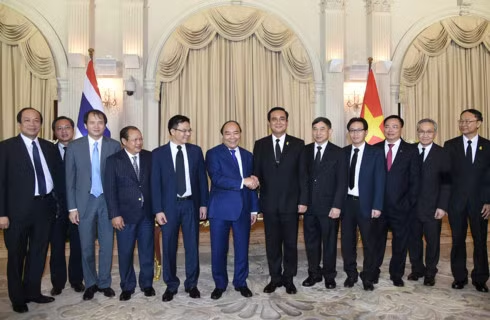
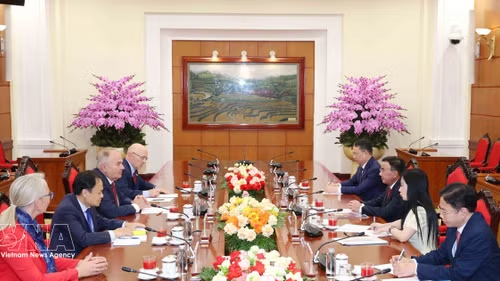
Prime Minister Nguyen Xuan Phuc and his Thai counterpart Prayut Chan-ocha expressed their satisfaction at the strong development of Vietnam-Thailand cooperation over the past 41 years since they established diplomatic ties in August 1976, during their talks in Bangkok on August 17.
 |
The two PMs recognised that the bilateral relations have been stable and developed in all fields from politics and security to economy and socio-culture, especially after Vietnam and Thailand established a strategic partnership in 2013.
Both sides vowed efforts to raise bilateral trade to US$20 billion by 2020 and support each other to become centres for investment and trade in the region. They agreed to foster rice-related cooperation and provide favourable conditions for Vietnamese and Thai rice to access each other’s market.
 |
PM Chan-o-cha affirmed that he will encourage Thai businesses to increase investment in fields critical to Vietnam’s development such as tourism, support industries, finance, banking, science-technology, and agro-fisheries.
Both leaders stressed that security-defence cooperation is one of the pillard of the Vietnam-Thailand strategic partnership. The two countries will step up sharing defence-related viewpoints and policies while boosting collaboration between their defence arms and services.
They also reiterated the commitment of not allowing any individuals or organisations to use this country’s territory to carry out activities sabotaging the other country. The two sides will coordinate in fighting terrorism and crimes, dealing with sea-related issues, and promoting negotiations on agreements on extradition and mutual assistance in criminal matters.
They also affirmed the importance of reinforcing cooperation and sharing experience in preventing illegal, unreported and unregulated fishing.
The PMs agreed to increase transport connectivity through multiple means, including by road, sea and air, between the two countries and within the Greater Mekong Subregion such as a bus route linking Thailand, Laos and Vietnam, a coastal transport route connecting Thailand, Cambodia and Vietnam, and air routes linking Vietnam and Thailand.
They reached a high consensus on working out measures to bolster ties in other spheres like labour, agricultural trade, tourism, science-technique, cultural, and people-to-people exchange.
On this occasion, PM Phuc asked Thailand to continue providing optimal conditions for the Vietnamese community in the country to integrate into the local society and develop. He also called on Thailand to soon grant travel documents for old Vietnamese expatriates.
 |
PM Chan-o-cha confirmed that he is going to attend the APEC Economic Leaders’ Meeting slated for November in Da Nang city, adding that his country supports Vietnam’s initiatives within the APEC framework.
Looking back ASEAN’s 50-year journey, the leaders were glad to see that the ASEAN Community has grown into an important cooperation mechanism for the bloc itself and for countries in and outside the region.
PM Phuc highly valued Thailand, one of the founding countries of the grouping, for always maintaining its active role in strategic security and development issues of the ASEAN Community.
Meanwhile, PM Chan-o-cha stressed the increasingly dynamic, proactive and responsible role of Vietnam in ASEAN, and expressed his hope that the two countries will continue their close relations within the bloc’s framework and contribute to its common successes.
The two sides committed to working closely with each other and with other ASEAN member states to strengthen the bloc’s unity, maintain its stance and promote its centrality in issues that challenge the region’s peace and security.
They reiterated the importance of maintaining peace, security and stability as well as navigation safety and freedom in the East Sea.
They stressed that parties concerned need to fully and efficiently implement the Declaration on the Conduct of Parties in the East Sea (DOC); build, preserve and improve mutual trust; respect the principles of exercising self-restraint and banning the use of force; address differences and disputes by peaceful means in compliance with international law, including the 1982 UN Convention on the Law of the Sea.
The leaders also reaffirmed their support for ASEAN and China to soon have a Code of Conduct in the East Sea (COC).
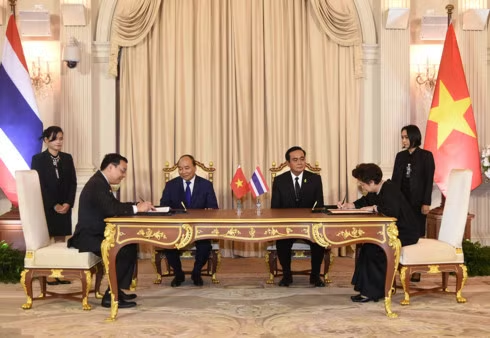
On the occaison, the PMs witnessed the signing of important documents, including an agreement between the two governments on cooperation in science, technology, renovation and creation, and memoranda of understanding between ministries and sectors pertaining to economy, trade, post, telecommunications, information technology and banking, as well as those between localities and businesses.
Late on the day, PM Phuc, his spouse and the Vietnamese delegation attended a banquet hosted by PM Prayut Chan-ocha and his spouse.
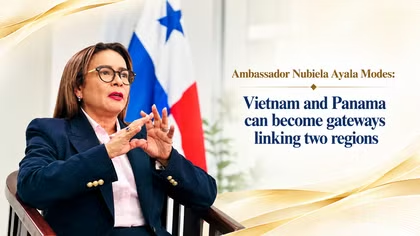
"Panama can serve as a strategic platform for Vietnamese companies seeking greater access to Latin America and the Caribbean, while Vietnam represents an important gateway for strengthening Panama’s engagement with Southeast Asia", Ambassador Nubiela Ayala Modes confirmed.
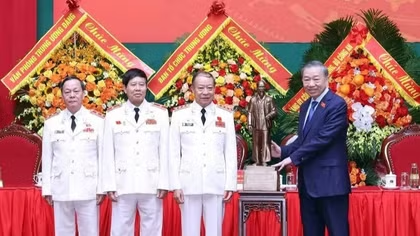
The Vietnam Association of Former People's Public Security Officers must truly serve as a common home that fosters comradeship and solidarity among former public security officers and those who have contributed to the cause of safeguarding security and social order, said top leader To Lam.
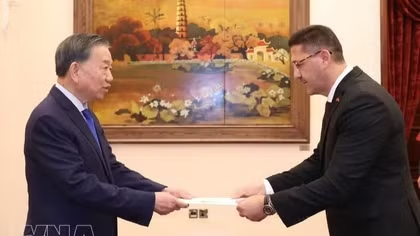
General Secretary and President To Lam receives newly accredited ambassadors
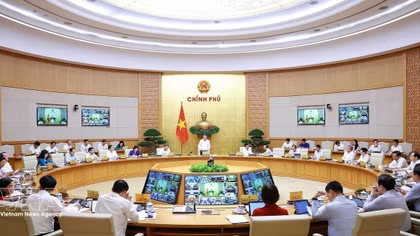
Localities nationwide hailed effective and flexible directions delivered by the Government so far this year, resulting in positive nine-month socio-economic growth, and reaffirmed their commitment to achieving targets set for the whole 2026 at an online Government-locality conference on October 3.
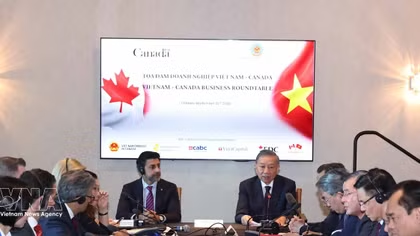
The elevation of bilateral ties to a Strategic Partnership shows that Vietnam and Canada increasingly view each other not simply as trading partners, but as long-term partners in addressing economic, technological and regional challenges.
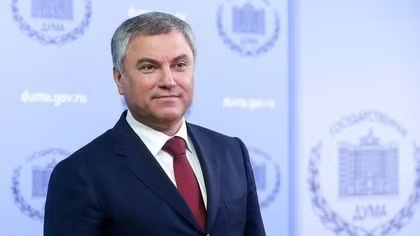
National Assembly President Tran Thanh Man on October 1 sent a congratulatory letter to Vyacheslav Volodin on his re-election as Chairman of the State Duma of the Federal Assembly of Russia.
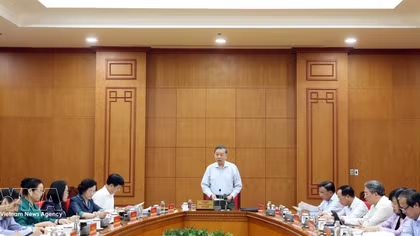
The top leader applauded the efforts of ministries, sectors, localities, social organisations, coaches, athletes, experts in developing physical education and sports in recent times, stressing that Resolution No. 08 has provided an important political foundation for sports development over the past 15 years, while Conclusion No. 70 set important orientations for the new period.
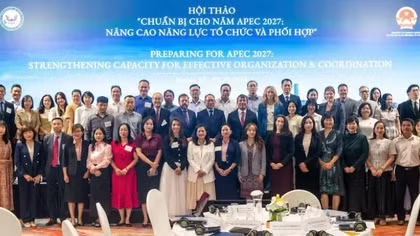
PSNews - Vietnam is recognised by its partners as an influential member of the Asia-Pacific Economic Cooperation (APEC) forum, with expectations that it will continue to demonstrate leadership when it hosts APEC for the third time in 2027, according to Standing Deputy Minister of Foreign Affairs Nguyen Minh Vu.
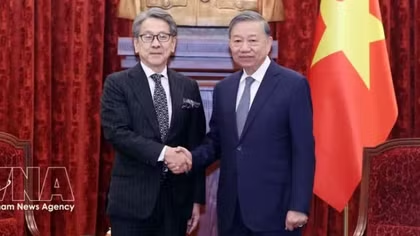
General Secretary and President Lam urged JBIC to continue promoting the substantive implementation of projects under the Asia Zero Emission Community (AZEC), and step up discussions on potential cooperation within the framework of the POWERR Asia (Partnership on Wide Energy and Resources Resilience Asia) initiative, including the development of strategic energy reserves.
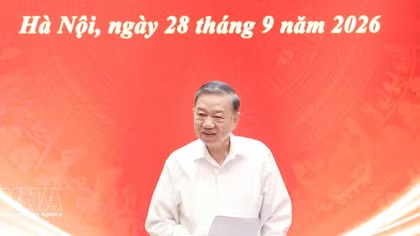
Overhauling the Party’s leadership methods is an objective, inevitable and urgent requirement to elevate the Party’s governing capacity and combat strength and keep the political system effective in the new development era.
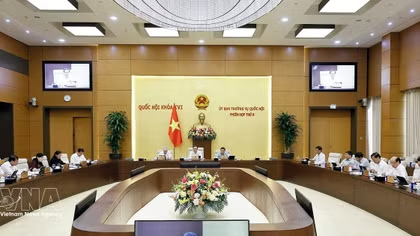
During the session, the NA Standing Committee will give opinions on a number of draft laws, namely the revised Land Law, the revised Housing Law, the revised Law on Real Estate Business, the Law on Legal Normative Documents, and the consolidated Law on the State Budget.
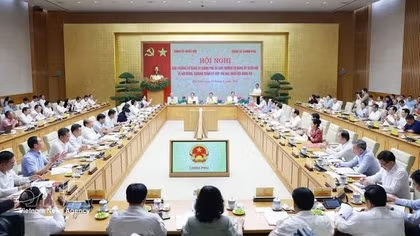
National Assembly President Tran Thanh Man coordination must go beyond finishing the agenda to improve the quality of NA decisions and Government enforcement; deal with policies rather than just paperwork, especially in the fight against corruption and other negative phenomena; and pin down final responsibility for each product, not just progress.
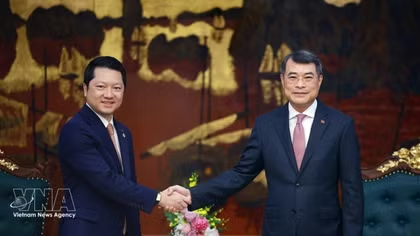
Prime Minister Le Minh Hung asked the two countries' inspection agencies to build on their achievements by regularly exchanging information and experience, maintaining delegation exchanges, and coordinating inspections in areas related to bilateral economic, trade and investment cooperation.
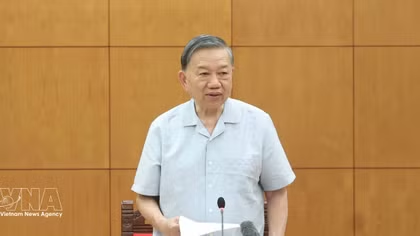
General Secretary and President To Lam demanded a sweeping review rather than piecemeal amendments to individual laws, so that people's rights are protected on a continuing basis.
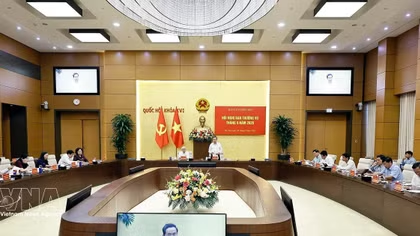
The meeting approved a plan to develop the project on reviewing the 2013 Constitution and studying and proposing comprehensive amendments to the Constitution.
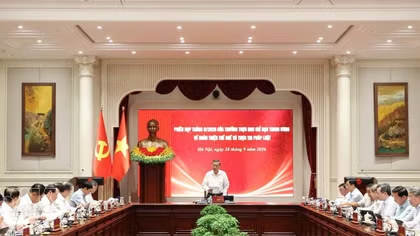
General Secretary of the Communist Party of Vietnam Central Committee and President To Lam on September 28 called for urgent and fundamental improvements in law enforcement, stressing that legislation and its enforcement must form a unified whole and ultimately serve development, protect legitimate rights and interests, and strengthen public trust.
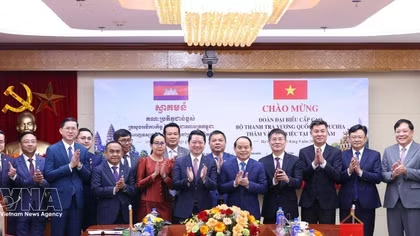
The Government Inspectorate of Vietnam broadly accepted the Cambodian ministry's proposals to maintain, renew and make more effective regular meetings between professional units and training establishments, and increase exchanges of senior, expert and specialised working-group delegations.
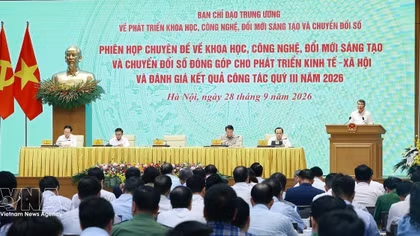
Prime Minister Le Minh Hung said Vietnam can no longer depend on capital and cheap labour. The only way to maintain strong double-digit growth, he said, is by boosting productivity through science, technology, innovation, and digital transformation.
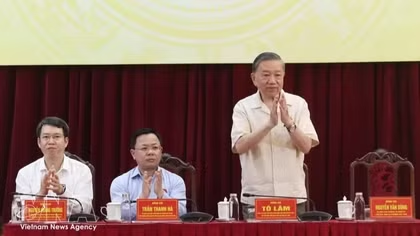
The General Secretary and President stressed that there must be no delay between resolutions and action, or between decisions and results in people’s lives, adding that laws must not only serve management but also facilitate development, while outdated regulations must not hinder growth.
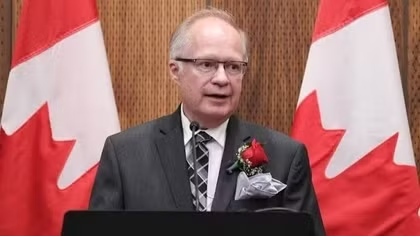
Regarding Vietnam’s role in multilateral affairs, Wilfert highlighted four areas where Vietnam could further contribute to multilateral cooperation, beginning with its contribution to regional peace and stability through ASEAN and the UN.