Prime Minister Nguyen Xuan Phuc was worried about the slow disbursement of public investment capital while chairing the government’s regular meeting in Hanoi on October 3, noting that only 55 percent of the year’s investment plan has been disbursed so far.
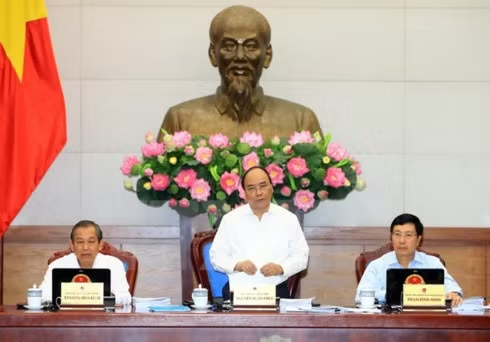 |
| Prime Minister Nguyen Xuan Phuc (middle) at the meeting |
Urging sectors and localities to accelerate the work, the PM instructed that capital that cannot be disbursed as scheduled should be used for other urgent issues.
The Government leader also expressed dissatisfaction at the slow pace in equitisation of State owned enterprises (18 out of 44 targeted SOEs) and divestment of state capital (VND11.8 trillion out of the planned VND60 trillion).
Reviewing socio-economic performance, the PM lauded the breakthrough economic growth of 7.46 percent in the third quarter, higher than 5.15 percent in the first quarter and 6.28 percent in the second.
He said with such momentum and provided that there is no major natural disaster, the government could fulfill targets assigned by the Party Central Committee and the National Assembly. He underlined the remarkable fact that the growth is mostly driven by production and services instead of credit and mining.
The leader informed that the World Economic Forum recently lifted Vietnam up five places in the competitiveness index. Compared to 5 years ago, Vietnam has climbed up 50 places in the index. The country also earned 53 points in the Purchasing Managers’ Index released by the Nikkei, the highest among ASEAN member states. Exports are expected to achieve 20-21 percent growth.
With the involvement of the entire political system, more than 5,000 administrative procedures have been cut, making it easier for production and trade.
The macro-economy continues to be stable with inflation at 3.79 percent in the first nine months. The State budget collection and credit surged 14 and 12 percent, respectively. The major index of the stock market topped 800 points, the highest since 2008. Foreign currency reserves surpassed US$44 billion while foreign direct investment soared 34 percent to roughly US$26 billion. Around 94,000 new businesses were established nationwide.
Culture, education, health care, national defence-security and external relations also performed well, he said.
Despite the positive signs, the PM warned ministries and sectors not to forget that the growth rate must hit 7.4-7.5 percent in the fourth quarter in order to achieve a 6.7 percent goal for this year, with a focus on manufacturing and processing.
He asked ministries and agencies to discuss measures to facilitate production, trade and export while making thorough preparations for the upcoming fifth session of the 14th National Assembly.
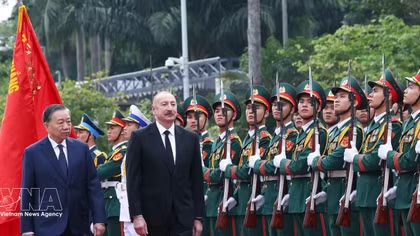
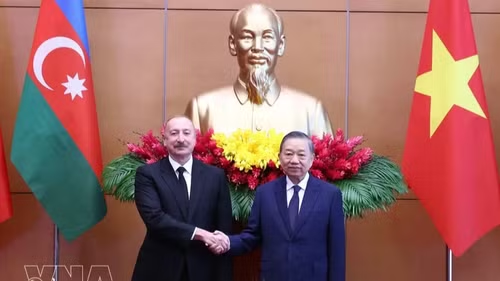
The two leaders walked along the red carpet to the ceremonial podium as military bands performed the national anthems of Azerbaijan and Vietnam. They then reviewed the Guard of Honour of the Vietnam People's Army and introduced members of their respective high-level delegations.
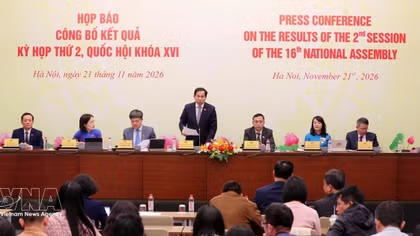
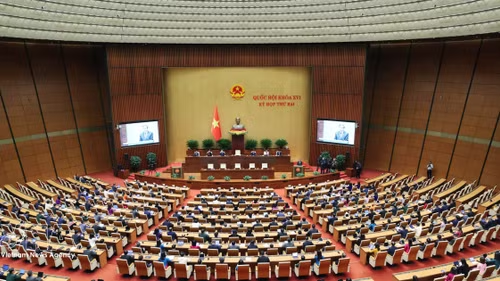
According to NA Secretary-General and Chairman of the NA Office Le Quang Manh, the outcomes reflect the legislature’s strong determination and commitment to reform in response to the country’s development requirements.
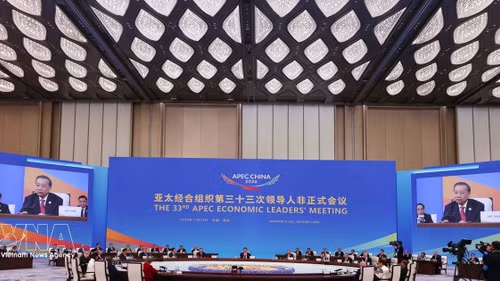
Vietnam participated in APEC 2026 not only as an active and proactive member but also with the responsibility of the host of APEC 2027. Its engagement reflects the country's consistent foreign policy, ambitious and sustainable development goals in the new era, and desire to make greater contributions to the common future of the Asia-Pacific region.
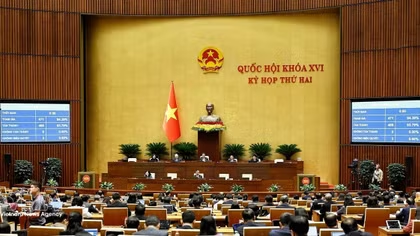
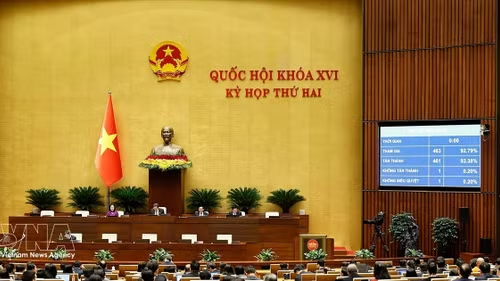
With 463 of the 472 NA deputies present voting in favour, the National Assembly (NA) passed the revised Penal Code, which consists of 25 chapters and 417 articles.
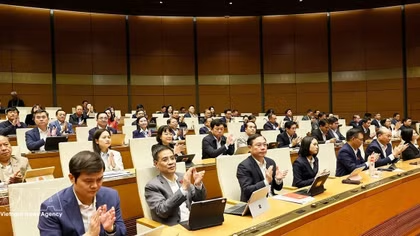
On November 20, the 16th National Assembly (NA) voted to approve the amended Law on International Agreements and the amended Law on the Implementation of Democracy at the Grassroots Level. Both laws are set to take effect on March 1, 2027.
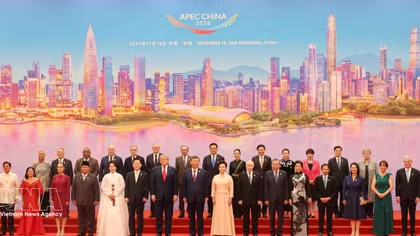
General Secretary of the Communist Party of Vietnam Central Committee and President To Lam’s working trip to China for the 33rd APEC Economic Leaders’ Week and bilateral engagements from November 17–20 has been a success.
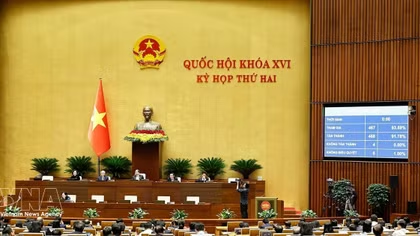
The Law on Protection of Important Works related to National Security passed with 473 of the 473 deputies in favour and will take effect on July 1, 2027.
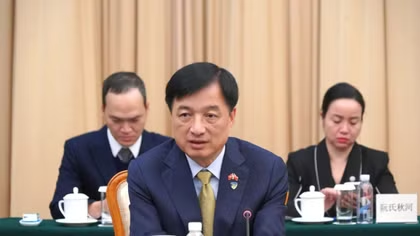
Vietnam treats human capital, science - technology, innovation and digital transformation as drivers of national development, prompting new demands for personnel affairs, including the need for officials with technical expertise and stronger leadership capabilities across Party committees, Head of the Communist Party of Vietnam (CPV) Central Committee’s Organisation Commission Nguyen Duy Ngoc said, adding that Vietnam wants to draw on Yunnan’s experience in this regard.
The Law amending and supplementing several articles of the Law on Corporate Income Tax, the Law on Non-Agricultural Land Use Tax, and the Law on Personal Income Tax was passed with 475 of the 477 NA deputies present voting in favour.
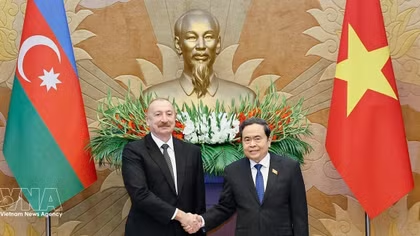
The two sides vowed to expand parliamentary cooperation, education - training, culture, tourism and people-to-people exchanges, and ease travel and cooperation for their citizens and companies, for the two peoples’ interests and for peace, stability and development.
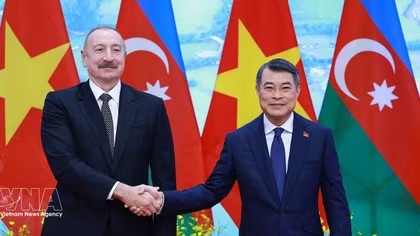
Vietnam is one of Azerbaijan’s important partners in Southeast Asia, Azerbaijani President Ilham Aliyev said, expressing his desire to further develop bilateral cooperation across fields in line with their traditional friendship and established strategic partnership.
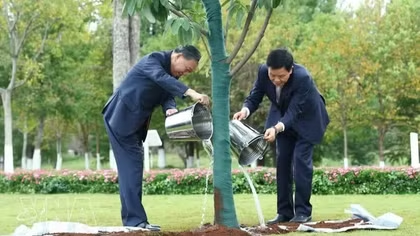
The leader, together with Mo Gaoyi, Secretary of the Communist Party of China Committee of Yunnan province, jointly planted a magnolia tree in the presence of officials from both countries.
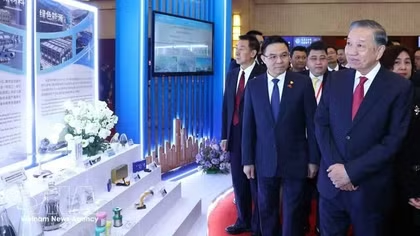
Southwest China has a vast market and increasingly strong industrial and innovation capabilities, while Vietnam boasts a dynamic economy, extensive international integration and seaports connecting it to major global shipping routes. By bringing into full play these advantages, the two sides can create shared development opportunities, linking inland areas with the sea, China with Southeast Asia and both with global markets.
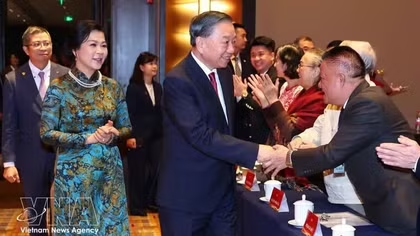
General Secretary and President To Lam called on diplomatic missions and the Vietnamese community to seriously implement the Resolution of the 14th National Party Congress, along with the Party and State’s guidelines on external relations.
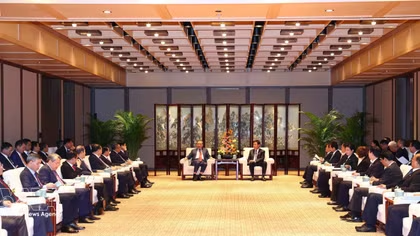
The Vietnamese leader proposed the two sides leverage strategic strengths and geographical proximity to make substantive progress in four connectivity axes of policy, seamless infrastructure, trade and investment, and people-to-people links.
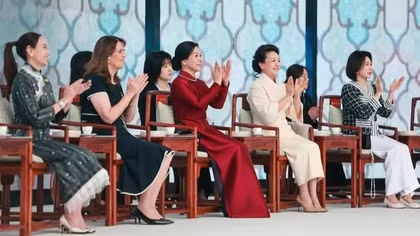
Madame Ngo Phuong Ly, spouse of General Secretary of the Communist Party of Vietnam Central Committee and President To Lam, attended a gathering of spouses of leaders and representatives of APEC economies in Shenzhen on November 19, using the occasion to spread Vietnam’s image on the sidelines of the APEC 2026 Economic Leaders’ Week.
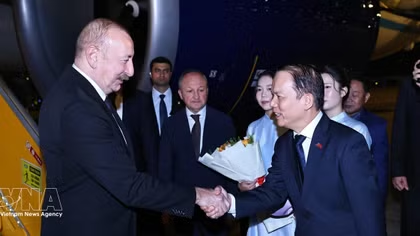
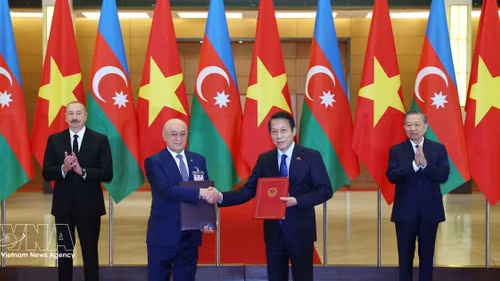
President of Azerbaijan Ilham Aliyev’s visit carries particular significance. It offers high-ranking leaders a chance to reinforce political trust, review the full range of relationship-building directions and set concrete steps to realise the Strategic Partnership, adding new momentum across politics, diplomacy, economy, trade, investment, energy, education, science-technology, and people-to-people exchanges.
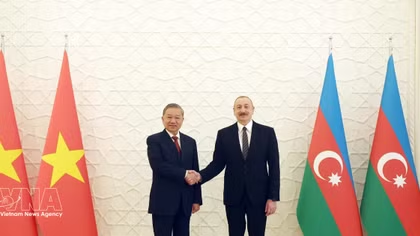
This time's visit will not only mark an important milestone in political and diplomatic ties but also open up tangible cooperation opportunities and deliver practical benefits to the peoples and businesses of both countries.
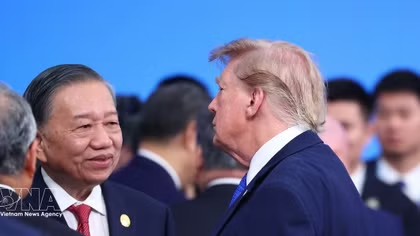
Vietnam considers the US one of its partners of strategic importance and wishes for further efforts to promote stable, balanced, sustainable and mutually beneficial economic, trade and investment ties.
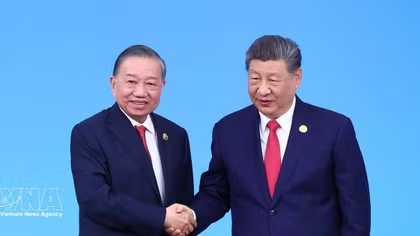
The top Vietnamese leader noted that hosting APEC for the third time marks an important milestone in Vietnam’s integration and development. The country pledges to be a dedicated host, listening to build consensus and connecting members to expand cooperation and deliver lasting results.