Vietnam Fatherland Front Congress charts reform-oriented agenda for 2026–2031

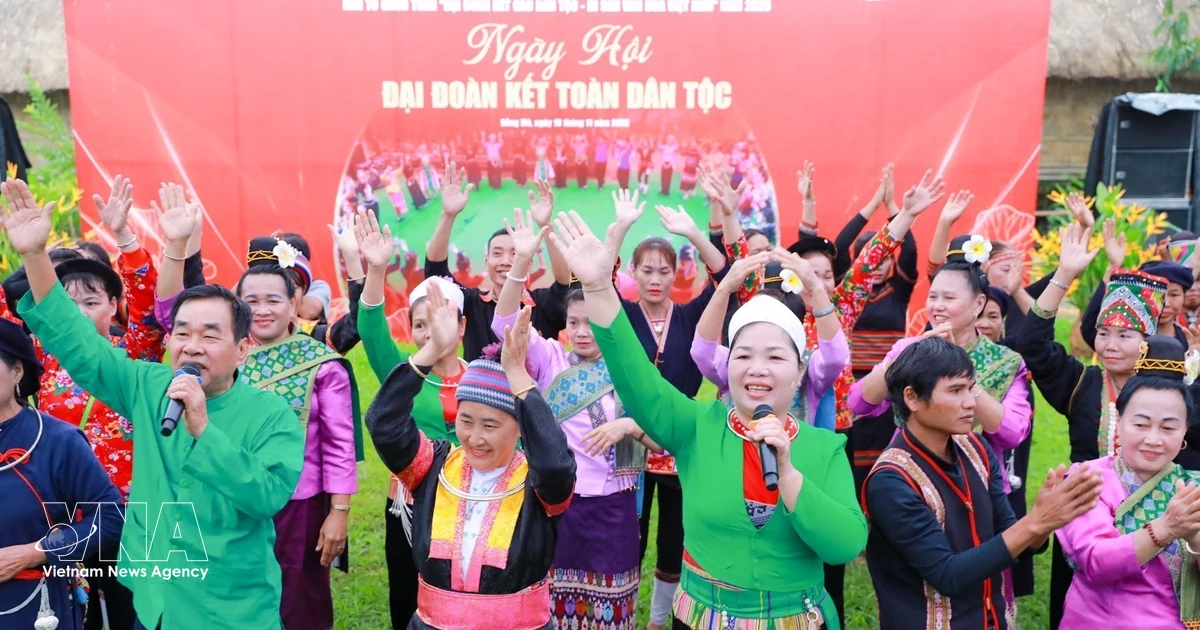
The 11th National Congress of the Vietnam Fatherland Front (VFF) is taking place in Hanoi from May 11 to 13, gathering more than 1,300 delegates representing social organisations, ethnic groups, religious communities, overseas Vietnamese and various sectors across the country.

Held under the theme “Solidarity – Democracy – Innovation – Creativity – Development,” the congress is widely viewed as a key political milestone that will shape the next phase of development for the VFF amid Vietnam’s ongoing efforts to streamline and modernise the political system.

According to organisers, the congress includes 1,138 official delegates, among them incumbent members of the VFF Central Committee, representatives nominated by localities and member organizations, overseas Vietnamese delegates and full-time front officials.
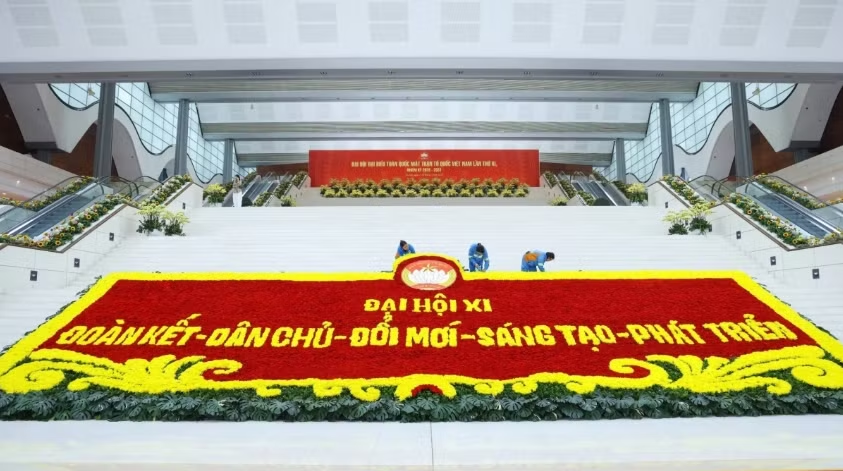
Vietnam Fatherland Front Congress charts reform-oriented agenda for 2026–2031 -0
The 11th National Congress of the Vietnam Fatherland Front opens in Hanoi with over 1,300 delegates, marking a new phase of political reform, digital transformation and national unity-building

The composition reflects the broad-based nature of Vietnam’s national unity bloc. Women account for 33.5% of delegates, non-party members 46.7%, ethnic minorities 24.3%, religious representatives 19.2%, and business representatives 13.8%. Nearly 79% of delegates hold university or postgraduate degrees.

Among the youngest delegates are 23-year-old representatives from ethnic minority communities in Dien Bien and Quang Ngai provinces, while the oldest delegate is 97-year-old Major General Vo So, head of the Vietnam Truong Son–Ho Chi Minh Trail Traditional Association.

Focus on reform and social consensus

The political report submitted to the congress highlights the goal of strengthening the VFF’s role as the political core in promoting democracy, patriotism and national solidarity while contributing to Vietnam’s long-term development and social stability.

Speaking ahead of the congress, Ha Thi Nga, vice chairwoman and secretary general of the VFF Central Committee, noted preparations have been fully completed, including documentation, personnel arrangements and logistics.

She emphasised that the congress is not merely a routine review of the previous term, but a starting point for a more comprehensive transformation of the VFF system.

The coordinating and unifying role of the Vietnam Fatherland Front must become clearer and stronger in order to help build broader social consensus and further promote national solidarity, she said.

Three strategic breakthroughs

Draft documents for the 2026–2031 term outline several major reforms aimed at modernising the organisation and improving operational efficiency. The proposed agenda focuses on three strategic breakthroughs: reforming mechanisms and operational methods to make the VFF more grassroots-oriented and people-centered; enhancing the effectiveness of social supervision and policy criticism from the early stages of policymaking; building a more professional and capable team of VFF officials to meet new governance demand.

The draft also introduces a new action programme dedicated to science, technology, innovation and digital transformation throughout the VFF system.

This year’s congress also marks the VFF’s strongest push yet toward digitalisation. For the first time, delegates will use a dedicated mobile application called “11th Congress – Vietnam Fatherland Front” to access congress documents, seating arrangements, updates and organizational information in real time.

A digital exhibition space featuring virtual reality models, historical displays and digital governance platforms from VFF branches nationwide has also been introduced as part of the event.

Organisational restructuring under one umbrella

The congress comes as Vietnam continues restructuring political and social organisations under the broader umbrella of the VFF in an effort to improve coordination and administrative efficiency.

Politburo member and VFF President Bui Thi Minh Hoai said the restructuring is not simply about reducing administrative layers, but about building a more effective and cohesive political system.

According to her, bringing mass organisations together under a common framework will strengthen social mobilisation efforts, improve coordination in social welfare and rural development programmes, and expand patriotic and community-based movements nationwide.

Officials also noted that the newly reorganised advisory and coordination system from central to local levels has already begun operating more smoothly, helping improve policy implementation and unified action across the VFF network.
VOV

Other News

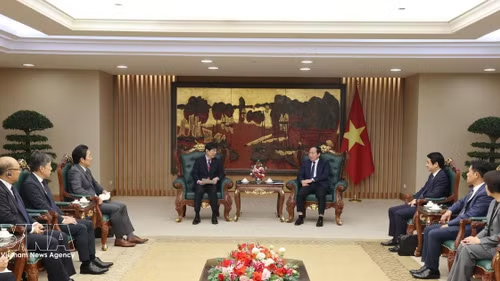
Top Vietnamese leader visits Japan's Kanagawa prefecture, promotes bilateral cooperation

Top Vietnamese leader visits Japan's Kanagawa prefecture, promotes bilateral cooperation

The Vietnamese leader also proposed closer cooperation in healthcare, including the promotion of Kanagawa’s ME-BYO preventive healthcare model to improve the quality of life of elderly people in Vietnam. At the same time, he encouraged the prefecture to facilitate Vietnamese businesses’ access to its market, technologies and innovation ecosystem.

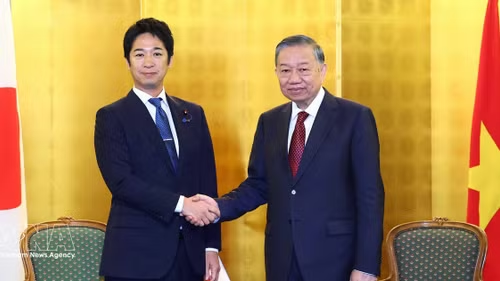
Top Vietnamese leader meets former Japanese PMs

Top Vietnamese leader meets former Japanese PMs

Vietnam and Japan should focus on four cooperation priorities, including strengthening political trust through regular exchanges and meetings across Party, State and parliamentary channels; promoting economic cooperation and connectivity while ensuring economic security; expanding collaboration in innovation, space technology and high-tech agriculture; and enhancing the effectiveness of cooperation between localities of the two countries.

Vietnam, Japan fortify cooperation in environment, agriculture, marine economy

Vietnam, Japan fortify cooperation in environment, agriculture, marine economy

The Vietnamese and Japanese environment ministries will run policy dialogues, expert exchanges, human resources training, feasibility studies and technology transfer, aiming to pull companies and research institutes from both countries into environmental projects, particularly in areas where Vietnam needs capital and technology.

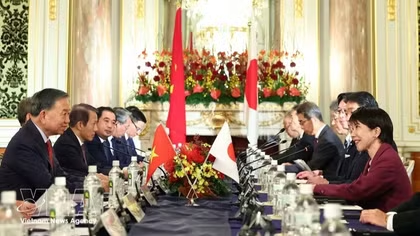
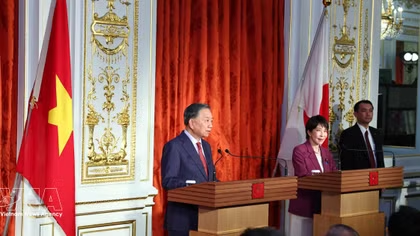
Top Vietnamese leader, Japanese PM meet the press after talks

Top Vietnamese leader, Japanese PM meet the press after talks

The two sides agreed to issue the Vietnam–Japan Joint Vision Statement, lifting the Comprehensive Strategic Partnership to a new height as equal partners that accompany and co-create together on mutual benefit, for quality growth, strategic autonomy and self-reliance.

Lawmakers propose lifetime tobacco sales ban to protect young people

Lawmakers propose lifetime tobacco sales ban to protect young people

VOV.VN - Vietnamese lawmakers have proposed tougher measures to protect children and young people from tobacco-related harm, including a lifetime ban on tobacco sales to people born on or after January 1, 2010, and tighter controls on tobacco-related content in the digital environment.

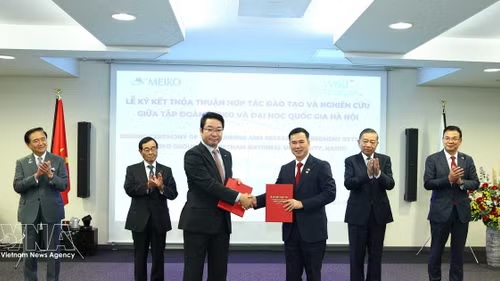
Vietnamese, Japanese leaders witness exchange of cooperation deals

Vietnamese, Japanese leaders witness exchange of cooperation deals

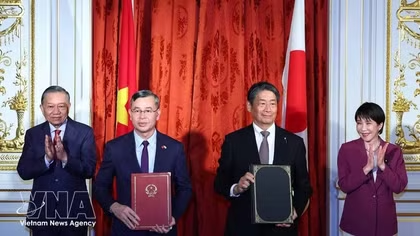
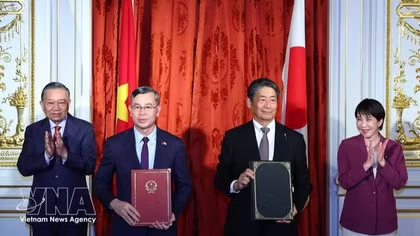
General Secretary of the Communist Party of Vietnam Central Committee and President To Lam and Japanese Prime Minister Takaichi Sanae witnessed the exchange of nine cooperation documents out of 11 signed in total in Tokyo on November 9 evening (local time), as part of the top Vietnamese leader’s official Japan visit.

Vietnam, Japan issue Joint Vision Statement

Vietnam, Japan issue Joint Vision Statement

The leaders of Vietnam and Japan affirmed that bilateral cooperation in areas including defence, security, the economy, economic security, energy resources, trade, investment, science, technology, agriculture, the environment, ocean management, education and training, labour, culture, sports, tourism, law and justice, locality cooperation and people-to-people exchanges has developed substantially and has continued to strengthen and broaden.

Vietnam, Japan exchange three loan and grant aid documents

Vietnam, Japan exchange three loan and grant aid documents

The exchange of the three documents on loans and grant aid reaffirms Japan's position as one of Vietnam's leading economic partners and reflects the strong commitment of both governments to translating high-level agreements into concrete cooperation projects, contributing to further strengthening the Vietnam-Japan Comprehensive Strategic Partnership.

NA approves 2027 central budget allocation plan

NA approves 2027 central budget allocation plan

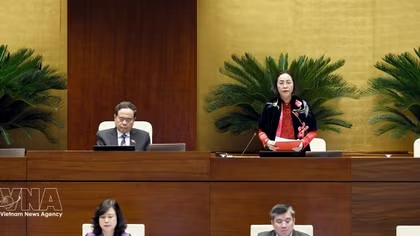
The National Assembly (NA) on November 9 adopted a resolution on the 2027 central budget allocation, with all 469 deputies present and voting in favor. Under the resolution, total central budget revenue in 2027 is estimated at more than 1.7 quadrillion VND (66.62 billion USD), while total expenditure is projected at over 2.3 quadrillion VND.

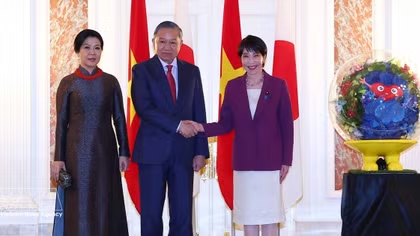
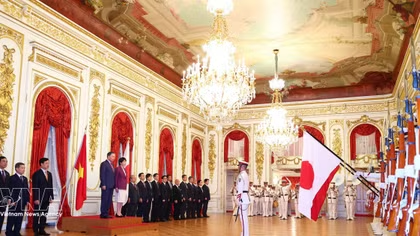
Top Vietnamese leader welcomed in Japan on official visit

Top Vietnamese leader welcomed in Japan on official visit

The visit is expected to turn agreements and commitments reached by high-ranking leaders into practical cooperation schemes and projects across various fields, and make positive contributions to each country’s development goals as well as global and regional peace, cooperation and development.

📝OP-ED: Optimising cultural strength, reinforcing great national unity from grassroots

📝OP-ED: Optimising cultural strength, reinforcing great national unity from grassroots

Harnessing cultural strength and reinforcing the great national unity bloc begin with concrete action at the grassroots level. In this process, Party committees provide leadership, local authorities create favourable conditions, the Vietnam Fatherland Front (VFF) and its member organisations play a central role in mobilising and bringing people together, while citizens are the creators, practitioners and beneficiaries of cultural values.

Top Vietnamese leader's Japan visit to open up new space for bilateral cooperation

Top Vietnamese leader's Japan visit to open up new space for bilateral cooperation

The visit is expected to further deepen ties through Party, State, parliamentary and people-to-people channels, while creating breakthroughs in economic, financial, scientific and technological cooperation, innovation, education and training, digital and green transformation, and supply chain diversification, thereby contributing to a peaceful and stable environment for development in both countries.