- PM Phuc underscores comprehensive solutions for increased exports
- Domestic cement consumption down, export market bright
- Methodical approach to exporting aquatic products to US suggested

The tale of the tropical fruit
Some 10 years ago, a New Zealanger (or Kiwi) living in a provincial town would hardly have known what a dragon fruit tasted like, let alone other exotic fruits like rambutan. Yet now, the dragon fruit imported from Vietnam has become exceedingly popular at provincial supermarkets in New Zealand, according to Emmet McElhatton, commercial manager of the New Zealand Government-to-Government Partnerships Office (G2G Know-How).
McElhatton said that the tropical fruit market in New Zealand is rapidly growing, thanks to the exposure to new flavours that Kiwi travellers have gained after their visits to tropical destinations. “Our supermarkets are more willing now to stock different products, and consumers are really demanding variety,” McElhatton said.
For Vietnamese fruit exporters, the commercial manager stressed that it is important to “get the flavour profile right for all consumers” when looking to export their fresh produce to New Zealand.
“It’s important to have a product that they can easily consume without too much fuss. Think about a banana. A banana is the ultimate consumer product that comes in its own packaging, with beautiful flavour, in different sizes, and is very easy to consume,” McElhatton told VIR on the sidelines of a New Zealand-Vietnam rambutan trade and opportunities event for bilateral horticulture cooperation, recently held in Hanoi.
“I think the diverse Asian population in New Zealand, up to 15% of the population as a whole-with the populations in some parts of Auckland 20-30% Asian, for example-is driving a lot of demand for these products,” he added.
Fruit baskets from Vietnam
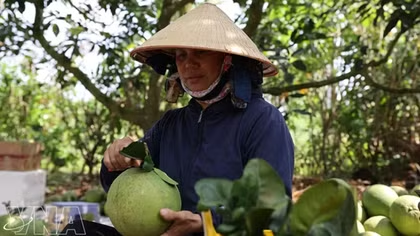
To date, three local tropical fruit types have been granted market access to New Zealand mangos in 2011, dragon fruit in 2014, and rambuttans in mid-April 2018. In fact, Vietnam is the first nation to export fresh rambutans to New Zealand, according to New Zealand’s Ministry of Primary Industries.
Being able to export its fruit to New Zealand means a lot to Vietnam. If it can make it into one of pickiest markets in the world, it can make it to anywhere else, according to Deputy Minister of Agriculture and Rural Development Le Quoc Doanh.
Doanh noted that in 2017, Vietnam exported a record US$3.5 billion worth of fresh fruits. In the first quarter of this year, the country reported US$934 million in exported fresh fruits, an increase of 33% compared to the same quarter in 2017.
The first shipments of local rambutans are expected to reach New Zealand’s shores in the next few months, upon completion of price negotiations and shipment arrangements between local exporters and their New Zealand partners, according to the Ministry of Agriculture and Rural Development. The fruit will then join its compatriots, dragon fruit and mangos, on the shelves of Kiwi supermarkets, where demand for tropical produce is on the rise.
Apart from this trio, more Vietnamese fruits have high hopes to make their move to satisfy the taste buds of not only New Zealand, but many other nations. This hinges on whether local fruit producers and farmers pay due attention to the flavour profile and, above all, the investment that is needed to help them move on from traditional farming to more advanced varieties, in a bid to meet international standards and demand for fresh produce.
Expertise matters
While more investment is definitely needed in the agriculture sector to help switch from traditional farming to more modern approaches, it is essential to note that local agricultural firms and organisations should be prepared to pay a premium for global expertise or consultancy services, which can bring benefits for themselves and the sector as a whole.
For years, Vietnamese fresh produce has struggles to meet international standards for exports in terms of quality and quarantine treatments. Given the aid of international know-how, high tech, and innovations, this could change.
“What we’ve noticed is that a lot of Vietnamese investors are quite comfortable buying equipment and technology, but [when it comes to] the human input (knowledge, intellectual property, and expertise), they are less willing to pay a premium. I think this really is the key thing that needs to change,” said McElhatton of New Zealand G2G Know-How.
“Because once you’ve partnered up with them and access high-quality international expertise at a proper rate, you benefit from that, everybody benefits from that,” he added. “New Zealand is one of the most efficient agricultural economies in the world, with a reputation for producing cutting-edge research and technology, robust and safe agricultural practices, and delicious and high-quality products.”
New Zealand’s world-class agriculture expertise is already making a practical difference in Vietnam by improving farmer income and food safety. Agriculture is one of four priorities for the New Zealand Aid Programme in Vietnam, along with education, disaster risk management, and renewable energy.