Thanh Hoa – the cradle of VN civilization

Thanh Hoa is one of the biggest provinces in Vietnam and a cradle of Vietnamese civilization dating back 6,000 years ago. 
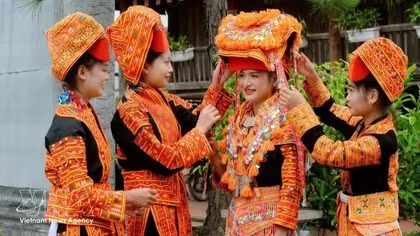
Presently, the size of the population of Thanh Hoa is third in the population chart, just behind Hanoi and HCMC, with 3,400,239 people. Moreover, the community in this province is diverse with many ethnic groups such as Muong, Thai, Tho, Dao, and Mong. But the Kinh are the majority.
Thanh Hoa tourism is famous for many beautiful landscape and historic sites. You can explore the natural and cultural beauty during a 2-day journey.

The God Fish Stream

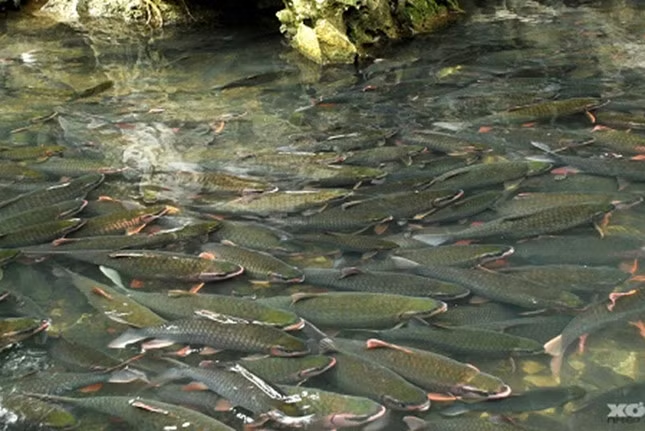
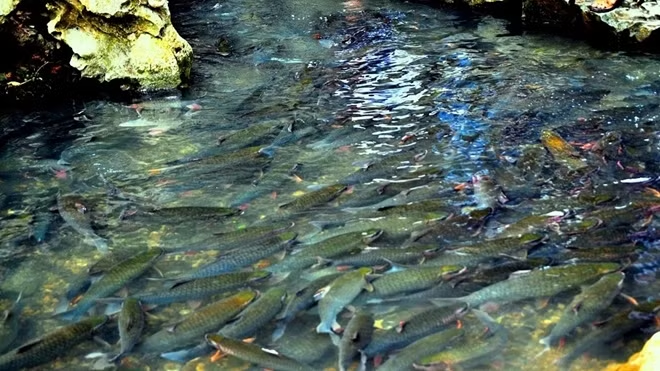
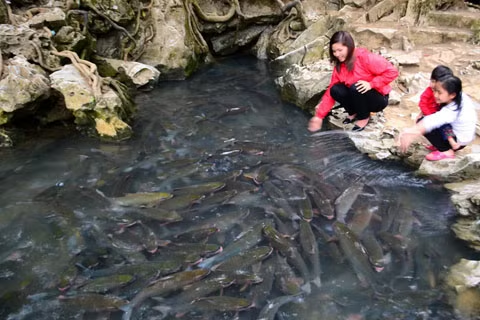
The God Fish Stream is a fascinating tourism destination in Cam Luong commune, Cam Thuy district, Thanh Hoa province. 

This has been around for a thousand years under the base of Truong Sinh Mountain. The place does not only draw travelers because of the majestically natural scenery with the high mountains, long rivers and a huge forest, but is also known for a special type of fish in the stream. \No one in the immediate area knows exactly what type of fish it is, but it is called The God Fish due to many mystical stories of these special creatures. 

The local people believe that the fish can bring misfortune to those who dare to catch and eat them; therefore, they protect the fish carefully and never dare to catch them.

In addition, this area is an interesting destination with many religious and cultural attractions. Besides the temple that local residents construct to worship the God Fish, there is also another pagoda in the area named Snake God Pagoda. 

The old stories say that on a specific day during the year, the snakes come to this stream and protect the fish, so the people in this area have built a pagoda for these snakes as well to appreciate their work and also pray for a peaceful life. 

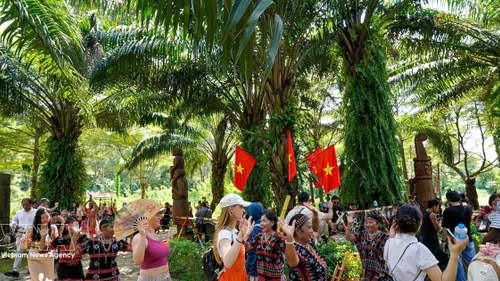
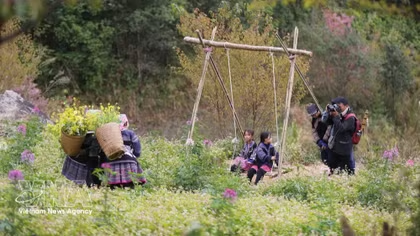
The area also has a considerable number of Muong people, which give visitors the chance to understand more about the culture of this ethnic group by participating in their traditional activities such as Pon Pong Dance, brocade textile or pipe wine.
Hai Hoa Sea

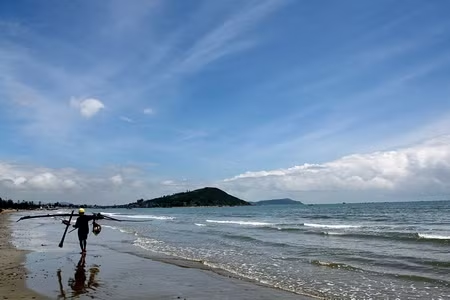
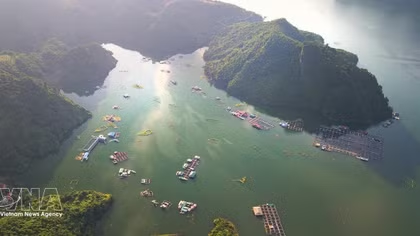
Located 2 km of Tinh Gia town, Hai Hoa boasts a peaceful sandy beach with crystal clear sea and rows of green casuarinas.
Hai Hoa looks best when it is at dawn with the image of Me Island and the economic zone of Nghi Son in the distance.
Hai Hoa also offers excellent tourist services with special foods and sea products. The local people are friendly and hospitable of these have made Hai Hoa an attractive destination for visitors.

Ben En National Park

This park is located in Nhu Thanh and Nhu Xuan districts, 36km from Thanh Hoa City. It was first established in 1992, and then expanded to now encompass an area of about 16,634 hectares, including 8,544ha of primary and recovered forest. 
This place is not only a protected breeding ground of many rare creatures, but also an attractive destination for ecotourism with its poetic and majestic scenery.
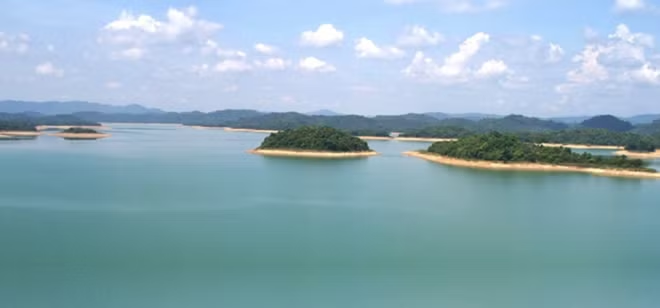
Ben En national Park has a wide and diverse system of lakes, caves, mountains and forest that is utilized to develop ecotourism. The two biggest lakes here are Ben En Lake and Muc Lake. 
While Ben En Lake has a tranquil feel with cool and fresh air, Muc Lake is a moreexciting destination for the many types of animals like fish and bird that populate the caves and islets of the lake.  
Forests in Ben En are rich with a vast number of valuable woods such as green ironwood and mahogany.
In addition, Ben En has a limestone mountain with a beautiful and diverse system of primary caves. Among the caves, Ngoc cave is the more outstanding with its complex structure and bigger size. The inside of this cave is sparkling with rosin, and there is a giant rosin rock that resembles a pearl. 

The cave is named after this rock, as “Ngoc” literally means “pearl” in Vietnamese. Next to Ngoc Cave lies Can Cave, where the visitors can see all of Ben En area from the top.

Ho Dynasty Citadel - World Cultural Heritage
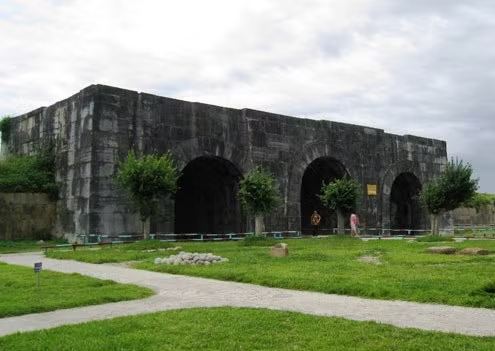
Recognized as a World Cultural Heritage Site at the 35th meeting in Bahrain in June, 2011, the Citadel is not only the pride of Thanh Hoa people, but also the pride of Vietnamese people.

This monument is a rare intact stone citadel in Vietnam, the only one in Southeast Asia and one of the few surviving stone castles in the world. After six centuries, the citadel is still stable with some intact portions of the walls.

It is surprisingly said that Ho Dynasty Citadel had been built in only three months from January to March 1397. This citadel used to be the capital of both Dai Viet nation during the final years of Tran Dynasty and Dai Ngu nation for seven years. 

It was officially named “Tay Do” (Western Capital) in order to distinguish from Thang Long – Dong Do Citadel (Eastern Capital). Ho Citadel is the only stone one in Vietnam constructed during a short period of time. It includes two layers: the inner called “Hoang Thanh” built with stone and the outer called “La Thanh” built with soil.

The outstanding feature of Ho Dynasty Citadel is that its stone walls were built to bear earthquakes with an average height of five meters. It is strange that the stones were laid without cement, each of them weighing up to 20 tons. 
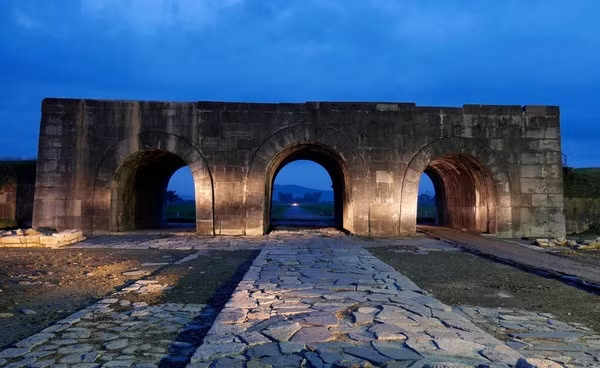
Besides four gates at Ho citadel, there was a canal surrounding the citadel as an extra layer of protection. Witnessing the ups and downs of over its six-century history, some parts of the citadel are still standing. Ho Dynasty Citadel was the symbol of power and military fortress. It was also built to represent both royalty and divine powers. It helped to link natural and human space. Time and weather cannot damage the major stone sections because of the citadel’s unique construction techniques. In addition to visiting the gates, and the wall, you can visit the Museum of the Ho dynasty, the temples to understand the building's history. Peanut candies and Vinh Loc tea are also interesting options for you to enjoy the historic stories about a mysterious dynasty.If visiting in harvesting season, you can enjoy a great scene with bright yellow paintings inside the 600 year old citadel. The straight path and the ancient wall will give you a memorable photo opportunity. You should eat lunch at Vinh Loc to discover the land in the afternoon.

Sam Son

Traveling to Sam Son beach, tourists not only are strongly impressed by a long coastline of white sandy beach, plentiful scenes, and historical vestiges, but are also welcomed by friendly and hospitable people. Don't miss the chance to enjoy delicious specialties of the northern province of Vietnam here.
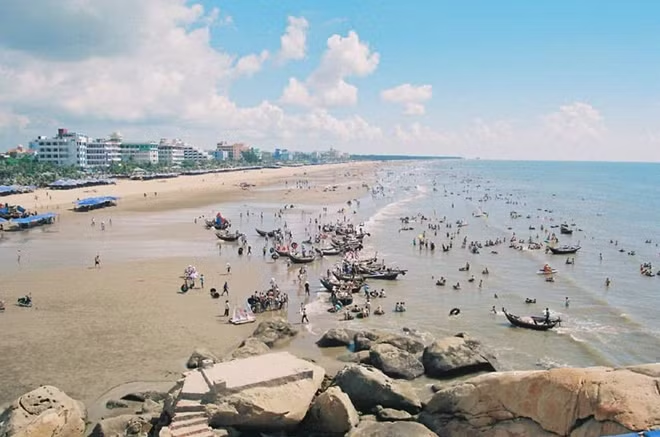
This place has been a famous spot for tourism in Vietnam since the beginning of the previous century, when the French begun to build facilities to serve themselves and the courts of the Nguyen regime. In addition to the gifts that nature presents, Sam Son also has many attractions for travelers to explore.
Sam Son has a long and beautiful beach reaching more than 16km in length. The very flat and gentle sandbank, combined with the clean and blue water makes the scenery of Sam Son beach magnificent and attractive. 

Visitors will have some unforgettable moments when they wallow in the cool blue sea, listen to songs of the wave and the wind, and take a nap on the sunlight sandbanks or build sand castles. Also, this is a good place to try various local seafood varieties such as shrimp, crabs, and fish and to bring back home some nice souvenirs.
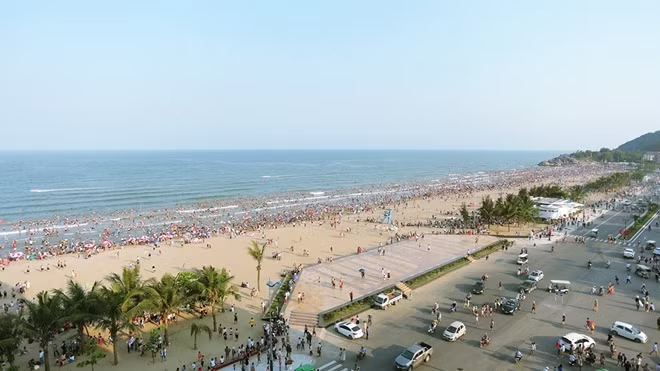
Besides the beaches, Sam Son also has another fascinating destination with many natural attractions and historical relics: the Truong Le Mountain range. 

The part that is contiguous to the sea is called Co Giai Islet. On top of this islet, there is a small pagoda named “Doc Cuoc”, which means “One Leg”. 

The pagoda is the place for the local people to recall the epic legend of a giant that manages to slay a sea monster and to guard the sea in the past.  

Also, there is a special rock name “Trong Mai”, formed with two huge boulders on a flat rock. There is a story that these rocks represent a husband and wife, who love each other passionately even after both were transformed into birds.

Pu Luong Nature Reserve

Pu Luong is not only the habitat of plentiful of flora, but the living environment of many species of fauna as well. With an area of 17,662 ha, Pu Luong Nature Reserve is an ideal place for developing Vietnam tourism. 
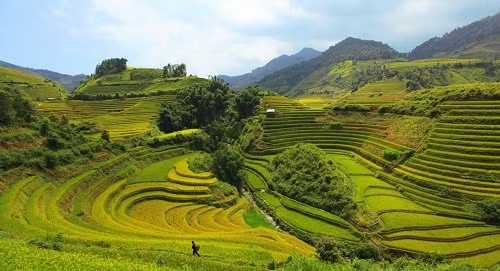
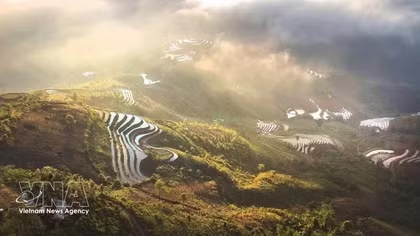
The Nature Reserve is situated along two parallel mountain ridges running from the northwest to the southwest. In the middle of the nature reserve is a valley that separates into two parts. This valley contains the settlements of several local people and a large area of agricultural land.

Pu Luong is the habitat of plentiful of flora. It hasa primary forest, regarded as an evergreen tropical seasonal forest. A diverse flora covers the forest with at least 1,109 vascular plant species. Three primary forest subtypes found at the site also play an important role, including primary lowland forest on limestone and schist/shale, primary coniferous submontane forest on limestone and primary submontane forest on basalt.
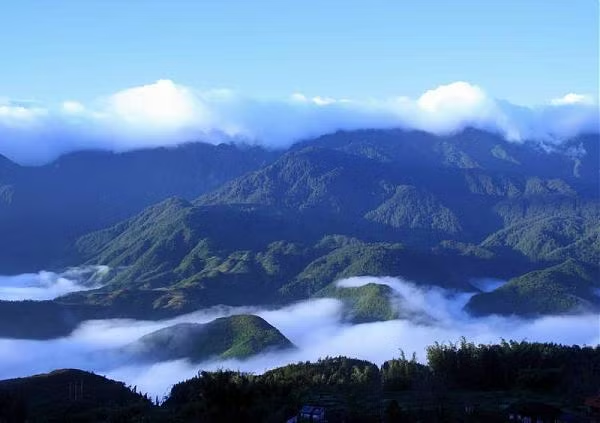
Pu Luong is also the living environment of total of 84 mammal species, in which there are 24 bat species, 162 bird species, 55 fish species, 28 reptile species, 13 amphibian species, 158 species of butterfly and 96 species of land snail. Here is an important place for the safeguarding of Delacour's Leaf Monkey.

Thanks to the variety of flora and fauna inside, Pu Luong Nature Reserve should be an ideal destination for tourists in Vietnam travel, especially for those who enjoy eco-tourism and adventure tours.

Vietnamnet

Other News

Vietnam secure berth at FIFA U17 World Cup 2026 for first time

Vietnam secure berth at FIFA U17 World Cup 2026 for first time

Vietnam national U17 football team secured a place at the FIFA U17 World Cup 2026 for the first time after defeating United Arab Emirates national U17 football team 3-2 on in the final Group C match of the AFC U17 Asian Cup 2026 in Saudi Arabia on early May 14 (Vietnam time).

Vietnam’s most beautiful railway station twins with French counterpart

Vietnam’s most beautiful railway station twins with French counterpart

A twinning agreement between Da Lat Railway Station in Vietnam and Trouville-Deauville Railway Station in France was signed at the French Embassy in Vietnam on May 7, creating new opportunities for cooperation in station management and operations, as well as cultural and tourism promotion between the two sides.

Hanoi gains two more craft villages in World Crafts Cities network

Hanoi gains two more craft villages in World Crafts Cities network

The recognition of Chuyen My and Son Dong craft villages as members of the World Crafts Cities network represents international acknowledgement of the cultural value, artisanal techniques, creativity and sustainable vitality of Vietnam’s traditional craft villages, he said.

Thang Long - Hanoi Festival 2026 to return in September

Thang Long - Hanoi Festival 2026 to return in September

Co-hosted by the municipal People’s Committee, the Department of Culture and Sports, and domestic and foreign agencies, the whole spectacle is meant to honour the city’s millennia-old heritage while reafffirming its strategy of establishing culture as a development engine.

Spreading Vietnamese cultural identity in digital space

Spreading Vietnamese cultural identity in digital space

In the context of deep international integration, cultural identity serves as both a “shield” against assimilation and a defining marker of a nation’s image. Protecting and promoting uniquely Vietnamese cultural values has therefore become a pressing task, particularly in an increasingly complex digital environment.

ITE HCMC 2026 to promote Vietnam’s tourism on global map

ITE HCMC 2026 to promote Vietnam’s tourism on global map

With its large scale, the ITE HCMC 2026 aims to promote tourism cooperation between Vietnam and priority markets such as Northeast Asia, Western Europe, North America, Southeast Asia, and Oceania while also boosting visitor arrivals from the Indian market

Vietnamese puppetry seeks renewal amid preservation challenges

Vietnamese puppetry seeks renewal amid preservation challenges

Although widely regarded as a cultural “speciality” attracting tourists, Vietnamese puppetry is facing multiple challenges in preservation and development, requiring renewed efforts to both safeguard its identity and adapt to contemporary cultural currents.

Project on digital transformation in cultural sector approved

Project on digital transformation in cultural sector approved

By 2030, the project targets the establishment of shared digital platforms across 100% of cultural sectors. All digitised cultural heritage will be standardised under the national data framework and shared in accordance with regulations, while 80% of public digital heritage assets are expected to receive digital identifiers to clarify ownership and management, encouraging organisations and individuals to do the same and support market development.

Vietnam eyes becoming region’s leading tourism destination

Vietnam eyes becoming region’s leading tourism destination

Vietnam has in recent years undergone a notable transformation in its tourism development strategy, placing a strong emphasis on nature-based and eco-tourism. This shift is not merely aligned with global trends, but represents a necessary step towards safeguarding valuable natural resources, while appealing to a growing segment of environmentally conscious travellers.