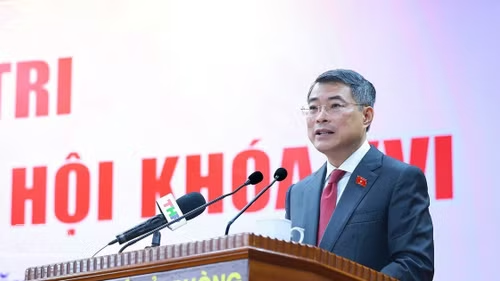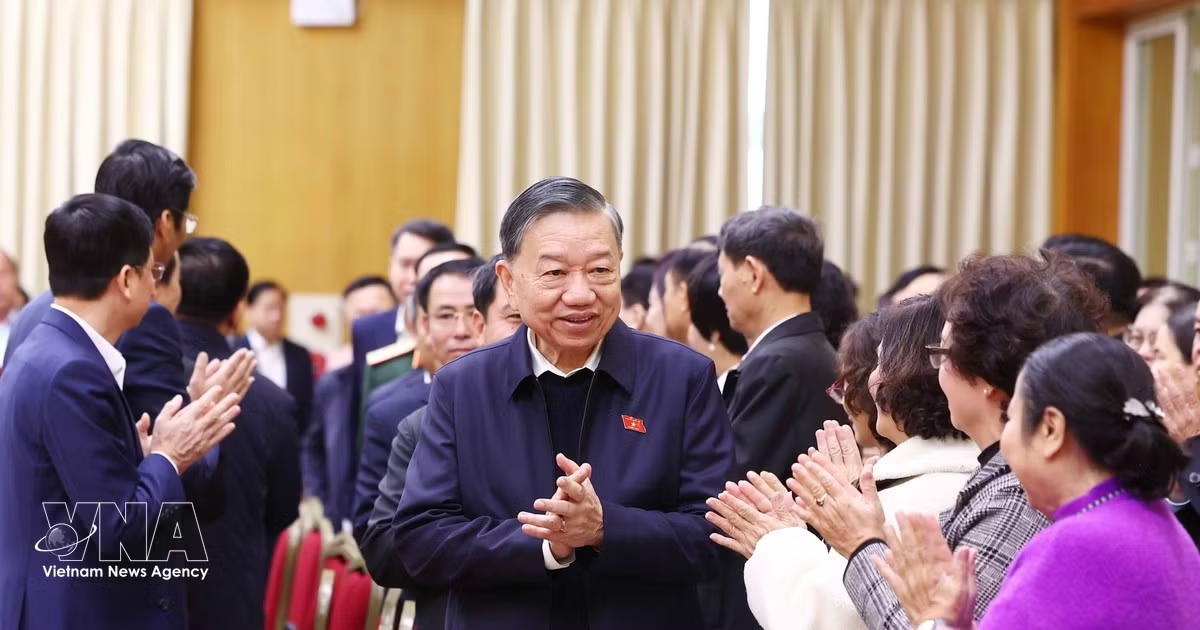
Hanoi (VNA) – General Secretary of the Communist Party of Vietnam Central Committee and President To Lam on November 25 asked Hanoi to place people’s quality of life at the centre of development, ensure more efficient use of public resources and strengthen its role in driving regional and national growth.
He made the remarks at a meeting with voters from 10 wards in the capital city, following the second session of the 16th National Assembly (NA).
On behalf of NA deputies representing Constituency No. 1, General Secretary and President Lam thanked voters for their frank and heartfelt opinions raised at the meeting.
He requested Hanoi to promptly address the consequences of a deadly explosion on Nguyen Van Tuyet Street in Dong Da Ward on November 24, conveying condolences to the bereaved families and wishing the injured a speedy recovery. He praised the efforts by local authorities and emergency forces while urging stronger preventive measures to reduce fire and explosion risks.
Responding to voters’ concerns, he said that the city’s delegation to the NA will propose the Government assess the implementation of social policies in urban areas, taking into account living costs and budget capacity when considering expanding beneficiaries of social allowances and gradually lowering the qualifying age.
He also called for better support and professional training for grassroots youth union officials, particularly those serving as youth union secretaries in residential areas.
Regarding public assets, the top leader urged the city to guide wards in using public land, buildings and cultural facilities for their intended purposes, ensuring transparency in cooperation with businesses, artisans and social organisations and safeguarding public property and the rights of creative workers.
He stressed the need to connect databases across ministries and local authorities, reuse verified information and protect personal data. Valid documents should not be required to be reissued solely because of administrative restructuring, unless otherwise stipulated by law.
For major projects, Hanoi should prepare site clearance plans early and provide affected households with clear information on compensation, implementation schedules and relocation arrangements. As the city has issued its 100-year master plan, it should also ensure that investment priorities serve not only the capital but the wider region and the country.
He stressed that Hanoi’s development must create greater opportunities for neighbouring localities. When planning ring roads or metro lines, the city should coordinate with surrounding localities to identify potential production and service hubs, agree on connections and determine construction priorities and timelines.
The capital should contribute more to national competitiveness through knowledge, technology and innovation. Although Hanoi accommodates numerous universities, research institutes, engineers and entrepreneurs, research findings have yet to be translated into production quickly enough.
To sustain high growth, the city must help businesses develop higher-value products and ensure skilled workers receive fair wages. Traditional craft industries should also strengthen links between skilled artisans, designers and market insiders to increase product value and create sustainable livelihoods for younger generations, he stated.
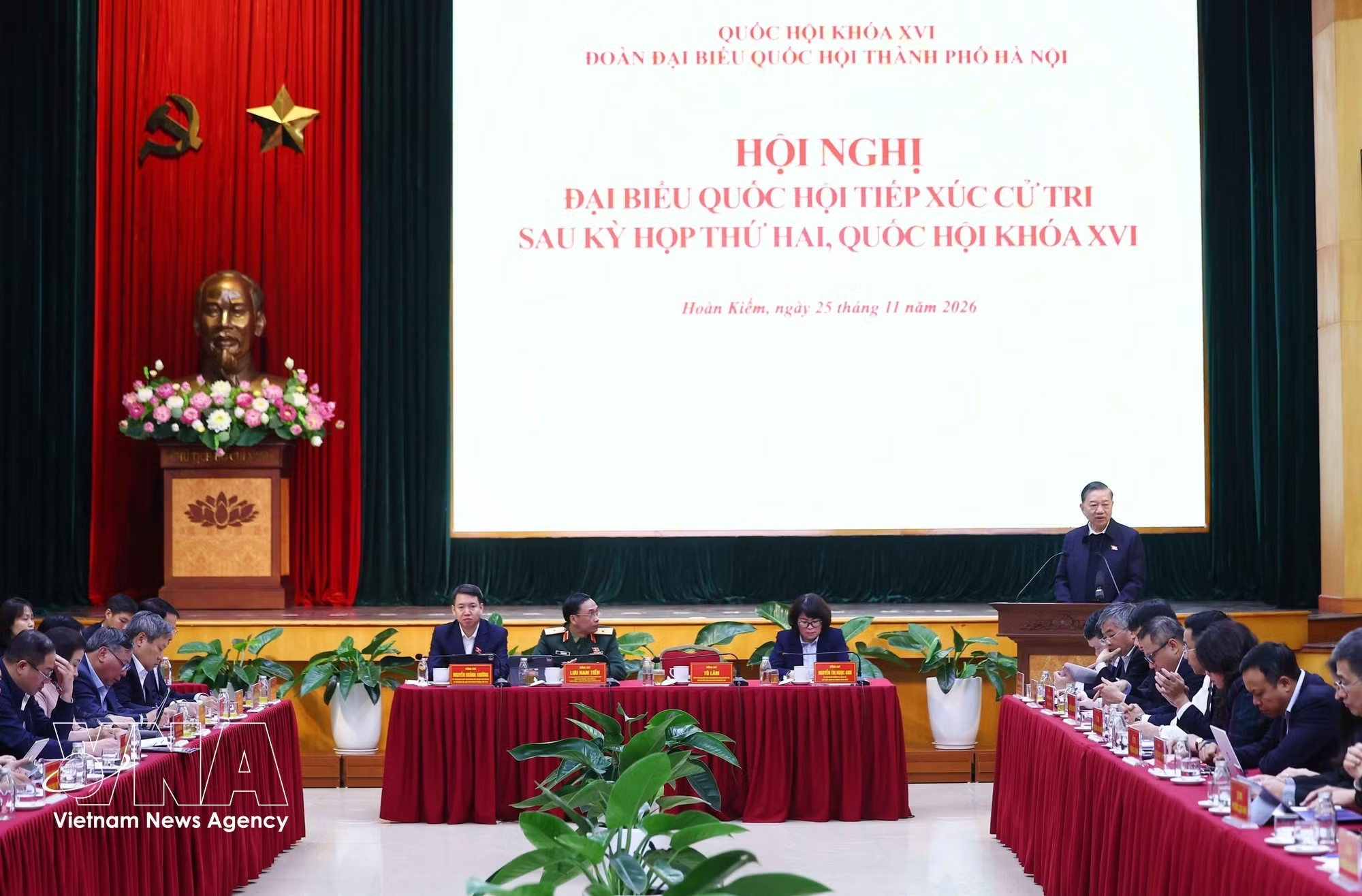
The top leader emphasized that every stage of Hanoi’s development must improve people’s quality of life while preserving the values that define the capital. New residential areas should include schools, healthcare facilities and playgrounds from the planning stage, while residents in suburban areas should gain access to quality essential services near their homes.
The General Secretary and President asked the city to consult residents when renovating old neighborhoods and listen to those who have lived there for generations. For social housing, people should be clearly informed of eligibility criteria, rental or rent-to-own options, and the distance from new homes to workplaces, schools and hospitals.
He also called for comprehensive wastewater collection and treatment along entire river systems to restore clean waterways across multiple wards.
The Party and State leader said greater autonomy for Hanoi must go hand in hand with stronger accountability for land management and every Vietnamese dong of public spending. The city should prioritize funding for unfinished components that are necessary to put entire projects into operation.
He further urged Hanoi to publicize plans for surplus public offices following administrative restructuring, giving priority to local needs such as schools, elderly care facilities and cultural institutions.
Under the two-tier local administration model, the city must ensure grassroots authorities have sufficient powers, personnel and funding to fulfill their responsibilities.
General Secretary and President Lam concluded that effective practices in Hanoi that ease people’s difficulties and improve the use of public resources could serve as useful examples for other localities nationwide.