- UKVFTA ushers in new opportunities for Vietnam-UK trade
- Vietnam, UK sign free trade deal
- IMF: Vietnamese economy to see full recovery in 2021
The UKVFTA, signed on December 29, is said to be an achievement of breakthrough strides in the UK-Vietnam economic and trade cooperation during the 47 years since their diplomatic relations were established and 10 years since the strategic partnership was founded.
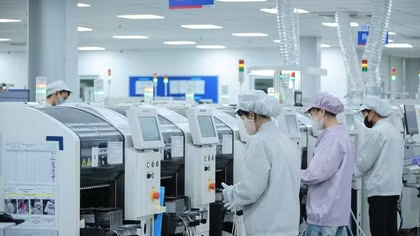
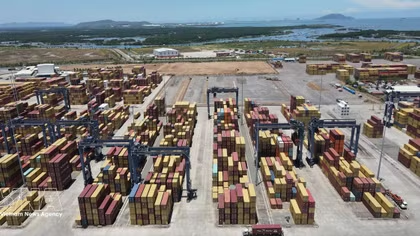
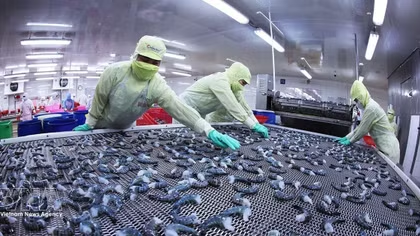
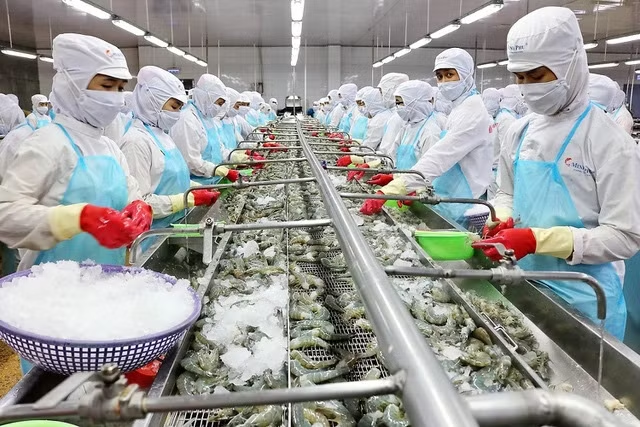
Between 2011 and 2019, bilateral trade grew 12.1% annually on average. Major Vietnamese exports included mobile phones and components, apparel, footwear, aquatic products, timber and wood products, computers and components, cashew kernel, coffee, and peppercorn. Meanwhile, the country mainly imported machinery, equipment, pharmaceutical, steel, and chemicals from the UK.
The commodities traded between them are complementary to, instead of compete with, each other.
The UK is currently the third largest trading partner of Vietnam in Europe, with their trade exceeding US$6.6 billion in 2019, up 9.5%. It also views Vietnam as a very important trading partner in Southeast Asia.
Thanks to GDP growth among the highest in the region and the world for the last three decades and, especially, the early containment of COVID-19 and sustained growth, Vietnam is increasingly attractive to British businesses and investors.
The signing of the UKVFTA at this point of time is greatly significant and practical to both sides, particularly when countries around the world are wishing for stronger trade and investment links to swiftly recover their pandemic-hit economies.
Notably, the deal will keep bilateral trading activities uninterrupted when the UK concludes the Brexit transition period on December 31, after which the UK will no longer a member of the EU market and the EU Customs Union or benefit from preferential treatments under the EU-Vietnam FTA that took effect on August 1, 2020.
The deal will help the two countries increase exports to each other’s market considerably as right from January 1, 2021, it will slash tariffs on over 70% of Vietnamese exports and 65% of British exports, many of which will be subject to zero-percent duties. After six years, more than 99% percent of their commodities will benefit from a zero-percent tariff.
The UKVFTA will ensure 3,000 British firms’ continued shipments to Vietnam and, as Vice Chairman of the Vietnam-UK Network Paul Smith said, encourage more British businesses to choose Vietnam as their destination.
This will create more opportunities for British businesses to expand operations in the Southeast Asian nation since although the UK was the world’s fifth largest exporter in 2019, its products still account for less than 3% of Vietnam’s total imports. Major beneficiaries will be pharmaceutical, machinery, equipment, chemical, automobile, banking, and insurance sectors.
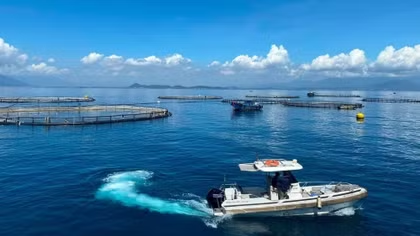
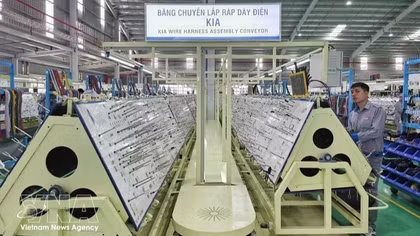
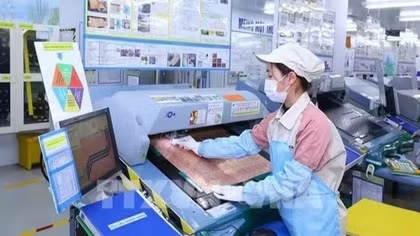
For Vietnam, tariff elimination under the agreement will generate many benefits for its key export staples like smartphones, electronic devices, textile-garment, footwear, wood products, ceramics, and such farm produce as rice, coffee, rubber, and aquatic products.
Speaking after the UKVFTA signing ceremony on December 29, Vietnamese Ambassador to the UK Tran Ngoc An described this as a historic event, noting that the deal will elevate their strategic partnership in line with their aspirations and political resolve shown in the foreign ministers’ joint statement signed in September on the occasion of the 10th anniversary of the strategic partnership.
Echoing the view, British Ambassador to Vietnam Gareth Ward considered the deal signing as a turning point and a milestone in bilateral relations.
He held that it will present a big chance for the UK because amid the worst global economic crisis since World War II, Vietnam is expected to obtain growth of over 2.9% and be the world’s fastest growing economy in 2020.
The UKVFTA will ensure that bilateral trade will keep accelerating when the UK is paying more attention to relations in the Indo-Pacific region, he added.
Besides, via this FTA, Vietnam will become a gateway for British enterprises to get access to a large regional market.
During a trip to Vietnam last November to sign the minutes on the conclusion of the UKVFTA talks, British Secretary of State for International Trade Liz Truss noted that the two countries share a common strategic commitment to global trade and the liberalisation of capital flows and investment. Therefore, the deal is an important step forward as the UK is preparing to apply for membership of the Comprehensive and Progressive Agreement for Trans-Pacific Partnership (CPTPP) in early 2021.
According the Vietnamese Ambassador, the UKVFTA will help the UK move closer to the target of becoming a dialogue partner of ASEAN and a member of the CPTPP as Vietnam is an active member of ASEAN and a founding member of the CPTPP.
Via the CPTPP, not only the UK’s relations with Vietnam will be strengthened but its ties with 11 dynamic economies in the Indo-Pacific region will also be expanded, thus bringing about more benefits to the British economy and people.