Vietnam and Australia are expected to elevate their relations to a strategic partnership during the upcoming official visit of Prime Minister Nguyen Xuan Phuc, as a result of long-standing and sound partnership over the past more than four decades.
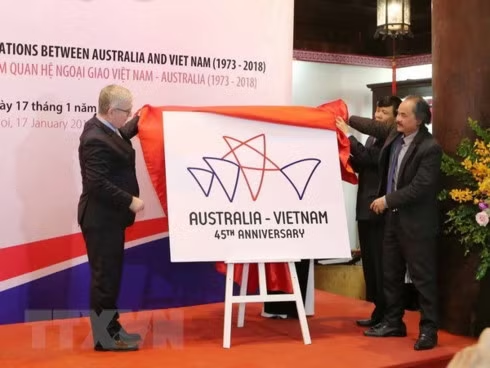 |
| A logo on the 45th anniversary of Vietnam-Australia diplomatic relations was announced in early 2018 |
2018 is a year of special significance to Vietnam and Australia, as the two countries mark the 45th anniversary of their diplomatic ties. Through the decades, they have built a strong partnership with the establishment of comprehensive partnership in 2009. They signed a declaration on enhancing bilateral comprehensive partnership in 2015.
During the APEC Economic Leaders’ Week in Da Nang in November last year, PM Nguyen Xuan Phuc and his Australian counterpart Malcom Turnbull announced their intention to upgrade the bilateral ties to a strategic partnership, which is expected to be realised during the Vietnamese PM’s upcoming visit to Australia.
Trade and economic partnership is an outstanding example in bilateral ties, with trade revenue increasing 200 times since 1990 to reach US$6.46 billion in 2017 and expected to hit US$10 billion in 2020.
Australia currently ranks 19th out of 116 foreign investors in Vietnam with total investment of US$1.82 billion in 396 projects. The two sides have signed the Comprehensive and Progressive Agreement for Trans-Pacific Partnership (CPTPP) and actively engage in negotiations on the Regional Comprehensive Economic Partnership (RCEP).
Australia has been a regular ODA provider of Vietnam in various fields, including infrastructure, poverty reduction, innovation, climate change response, gender equality and startup support.
In tourism, Australian tourists to Vietnam have increased through years, reaching over 370,400 in 2017, making it one of the 10 leading source markets of Vietnam’s tourism.
Australia is the fourth most favourite destination of Vietnamese students with about 30,000 Vietnamese students. Meanwhile, Vietnam is also one of the five popular options for study of Australian students.
Along with economic cooperation, Vietnam and Australia have enjoyed effective affiliation in all fields of politics-diplomacy, security-defence, science-technology and culture-education.
The two countries have maintained effective cooperation and coordination at regional and global multilateral forums, especially the ASEAN Regional Forum (ARF), the East Asia Summit, the Asia-Europe Meeting (ASEM), and the Asia-Pacific Economic Cooperation Forum (APEC).
In terms of defence, the two sides have expanded their cooperation to many new areas on the foundation of the memorandum of understanding signed in July 2010. Australia has assisted Vietnam in improving capacity to join the UN peacekeeping operations, along with cooperation in maritime and sea patrol. Australia has provided many English training scholarships for Vietnamese officers.
In October 2017, the two sides held the first annual defence dialogue. They are now working to build a joint vision on defence cooperation.
Talking about the upcoming Australia visit of PM Nguyen Xuan Phuc from March 14-18, Vietnamese Ambassador to Australia Ngo Huong Nam said that the visit will affirm Vietnam’s consistent policy of prioritizing the enhancement of relations with Australia, for the benefits of the two nations’ people and for peace, security and prosperity in the region and the world.
The bilateral partnership is strong enough to turn a new chapter, he said, holding that the visit on the threshold of the ASEAN-Australia Summit shows that the Vietnam-Australia relations have grown beyond bilateral framework and are significant to the region and the world.
At the same time, Australian Ambassador to Vietnam Craig Chittick said that he is optimistic about the future of the Vietnam-Australia relations, especially when the two sides lift up their ties to strategic partnership. This is a strong effort of both sides to implement their commitments to develop bilateral relations, while creating favourable conditions for both countries to make more contributions for the growth of the region and the world, he said.
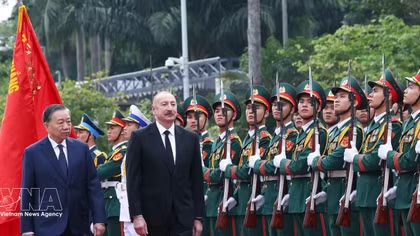
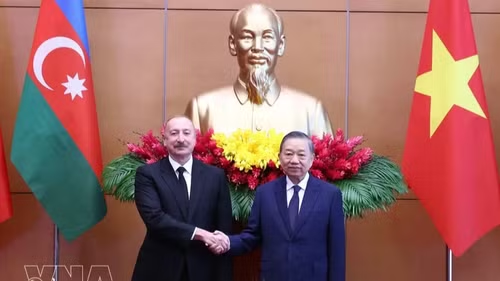
The two leaders walked along the red carpet to the ceremonial podium as military bands performed the national anthems of Azerbaijan and Vietnam. They then reviewed the Guard of Honour of the Vietnam People's Army and introduced members of their respective high-level delegations.
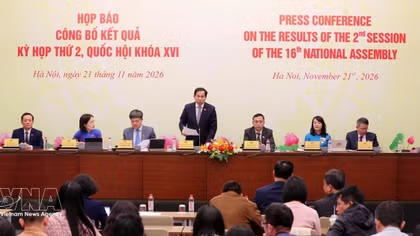
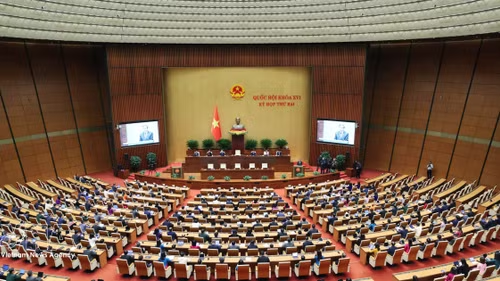
According to NA Secretary-General and Chairman of the NA Office Le Quang Manh, the outcomes reflect the legislature’s strong determination and commitment to reform in response to the country’s development requirements.
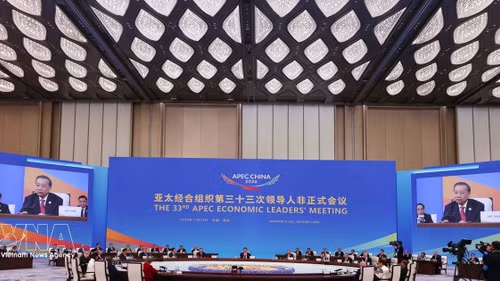
Vietnam participated in APEC 2026 not only as an active and proactive member but also with the responsibility of the host of APEC 2027. Its engagement reflects the country's consistent foreign policy, ambitious and sustainable development goals in the new era, and desire to make greater contributions to the common future of the Asia-Pacific region.
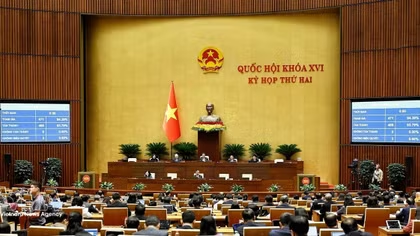
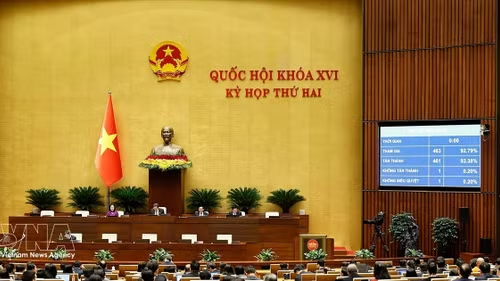
With 463 of the 472 NA deputies present voting in favour, the National Assembly (NA) passed the revised Penal Code, which consists of 25 chapters and 417 articles.
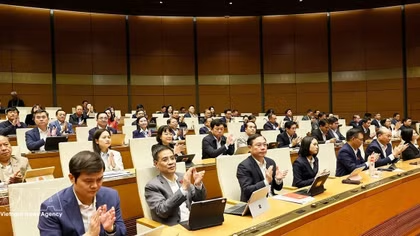
On November 20, the 16th National Assembly (NA) voted to approve the amended Law on International Agreements and the amended Law on the Implementation of Democracy at the Grassroots Level. Both laws are set to take effect on March 1, 2027.
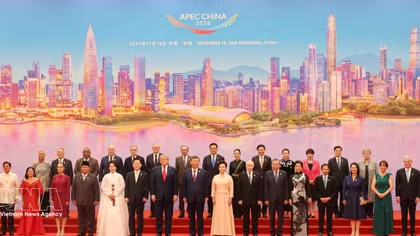
General Secretary of the Communist Party of Vietnam Central Committee and President To Lam’s working trip to China for the 33rd APEC Economic Leaders’ Week and bilateral engagements from November 17–20 has been a success.
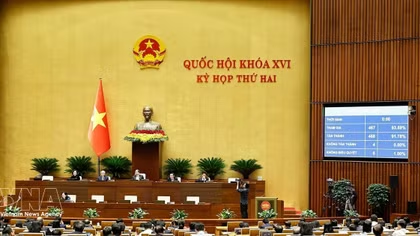
The Law on Protection of Important Works related to National Security passed with 473 of the 473 deputies in favour and will take effect on July 1, 2027.
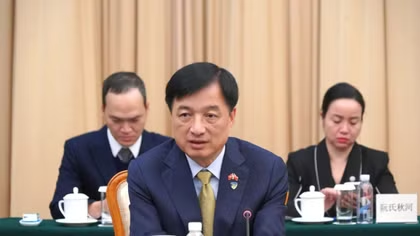
Vietnam treats human capital, science - technology, innovation and digital transformation as drivers of national development, prompting new demands for personnel affairs, including the need for officials with technical expertise and stronger leadership capabilities across Party committees, Head of the Communist Party of Vietnam (CPV) Central Committee’s Organisation Commission Nguyen Duy Ngoc said, adding that Vietnam wants to draw on Yunnan’s experience in this regard.
The Law amending and supplementing several articles of the Law on Corporate Income Tax, the Law on Non-Agricultural Land Use Tax, and the Law on Personal Income Tax was passed with 475 of the 477 NA deputies present voting in favour.
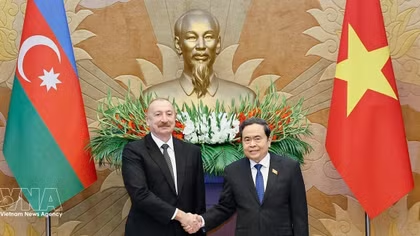
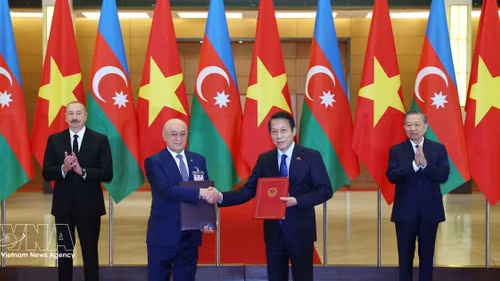
The two sides vowed to expand parliamentary cooperation, education - training, culture, tourism and people-to-people exchanges, and ease travel and cooperation for their citizens and companies, for the two peoples’ interests and for peace, stability and development.
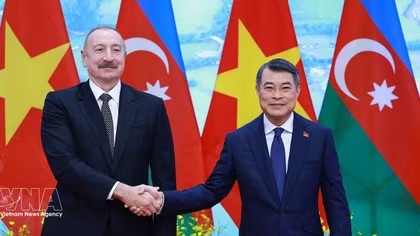
Vietnam is one of Azerbaijan’s important partners in Southeast Asia, Azerbaijani President Ilham Aliyev said, expressing his desire to further develop bilateral cooperation across fields in line with their traditional friendship and established strategic partnership.
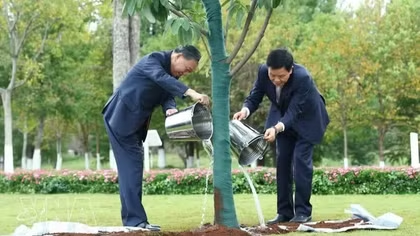
The leader, together with Mo Gaoyi, Secretary of the Communist Party of China Committee of Yunnan province, jointly planted a magnolia tree in the presence of officials from both countries.
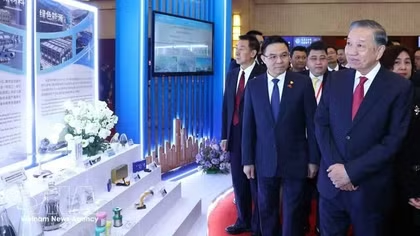
Southwest China has a vast market and increasingly strong industrial and innovation capabilities, while Vietnam boasts a dynamic economy, extensive international integration and seaports connecting it to major global shipping routes. By bringing into full play these advantages, the two sides can create shared development opportunities, linking inland areas with the sea, China with Southeast Asia and both with global markets.
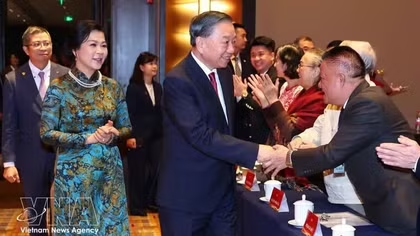
General Secretary and President To Lam called on diplomatic missions and the Vietnamese community to seriously implement the Resolution of the 14th National Party Congress, along with the Party and State’s guidelines on external relations.
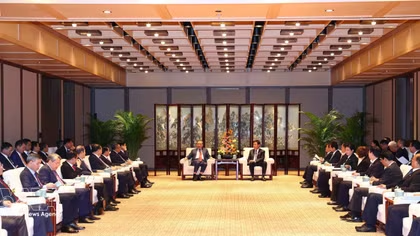
The Vietnamese leader proposed the two sides leverage strategic strengths and geographical proximity to make substantive progress in four connectivity axes of policy, seamless infrastructure, trade and investment, and people-to-people links.
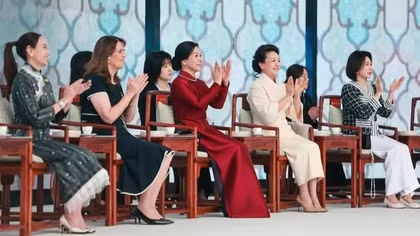
Madame Ngo Phuong Ly, spouse of General Secretary of the Communist Party of Vietnam Central Committee and President To Lam, attended a gathering of spouses of leaders and representatives of APEC economies in Shenzhen on November 19, using the occasion to spread Vietnam’s image on the sidelines of the APEC 2026 Economic Leaders’ Week.
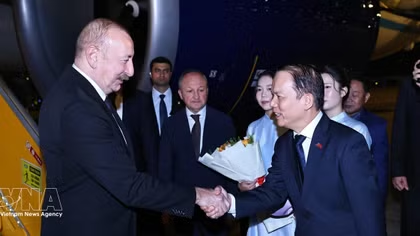
President of Azerbaijan Ilham Aliyev’s visit carries particular significance. It offers high-ranking leaders a chance to reinforce political trust, review the full range of relationship-building directions and set concrete steps to realise the Strategic Partnership, adding new momentum across politics, diplomacy, economy, trade, investment, energy, education, science-technology, and people-to-people exchanges.
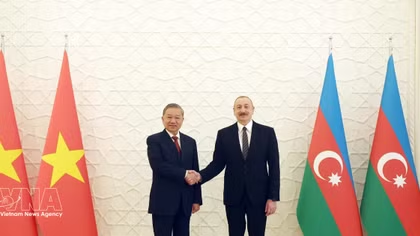
This time's visit will not only mark an important milestone in political and diplomatic ties but also open up tangible cooperation opportunities and deliver practical benefits to the peoples and businesses of both countries.
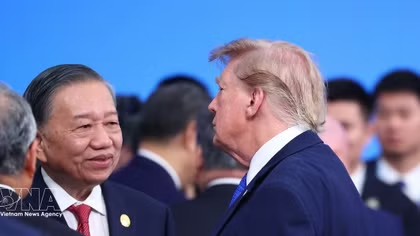
Vietnam considers the US one of its partners of strategic importance and wishes for further efforts to promote stable, balanced, sustainable and mutually beneficial economic, trade and investment ties.
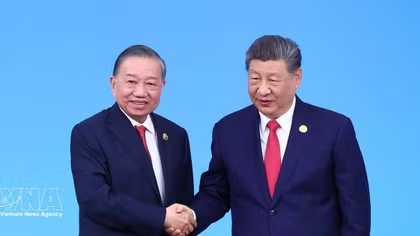
The top Vietnamese leader noted that hosting APEC for the third time marks an important milestone in Vietnam’s integration and development. The country pledges to be a dedicated host, listening to build consensus and connecting members to expand cooperation and deliver lasting results.