- Vietnam's 400-year-old town rated among world's 15 best tourism cities
- Lake neighborhood develops community tourism
- Forum promotes sustainable economic and tourism development

Vietnam and Indonesia had many similarities in terms of nature, history and social and cultural traits, giving the two countries the ideal conditions to enhance tourism cooperation, officials agreed the meeting.
Chau said that before arriving in Bali, he had only been aware of its beautiful white sandy beaches, but had come to realise that Bali was a cradle of Hindu culture with the respected traditions and values.
“Bali has an age-old culture attached to Hinduism,” he said. “Visitors are impressed by the many impressive statues and temples and carved rich in culture.”
He pointed out some of the problems Bali faced including traffic jams, a lack of shopping malls, and inadequate tourism products and services.
Chau suggested that local authorities should invest more in water sports, shopping malls and infrastructure. “Bali has huge potential thanks to its beautiful landscape and diversified culture. The tourism industry should be promoted more effectively to attract more tourists and increase revenue," he said.
Sharing experience from developing tourism at UNESCO World Heritage sites in Vietnam, he said development and heritage conservation needed to be balanced.
“Proceeds from tourism are spent on staff who work at the sites and on conservation work. We focus on preservation, and never sacrifice heritage sites for development. We target sustainable development and protecting traditions.”
“When we repair heritage sites, we work with professional experts from foreign countries to keep the site as intact as we can. For example, to repair the Hindu temples at the UNESCO-recognised My Son Sanctuary in Quang Nam province, we asked Indian experts to help us preserve the Hindu characteristics and Italian experts to supervise the work.”
His remarks were followed by a Q&A session.
Dewa Ayu Laksmiadi, a representative from the Bali Government Tourism Office, said last year Bali received 4 million foreign tourists, mainly from China, Malaysia, the Republic of Korea, Japan and Australia. The Tourism Ministry had set a target of attracting 7 million foreign tourists to Bali next year, she said.
Laksmiadi said every year, Indonesia’s tourism industry sends delegates to attend international events in Vietnam, such as the Vietnam International Travel Mart (VITM) in Hanoi and the International Travel Expo (ITE) in Ho Chi Minh City.
She expected more tourists from Vietnam to visit Indonesia and vice versa.
Iwayan Wiranata, head of the Jatiluwih Tourism Village Management Board, said he appreciated the development of the Vietnamese tourism industry.
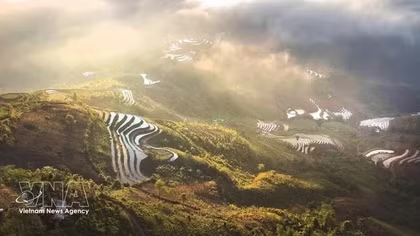
Jatiluwih Rice Terrace which is very similar to the terraced fields in Vietnam was recognised as a UNESCO World Heritage site in 2012 and is a famous tourist destination featuring breathtaking views of the terraces running from the mountains down to the coast.
“I think we can learn a lot from Vietnam’s tourism development,” he said.
“Vietnam also boasts beautiful terraced fields and beaches, but we still want to invite Vietnamese people to come and discover the unique culture and traditions of Bali.”
Vietnam and Indonesia had many similarities in terms of nature, history and social and cultural traits, giving the two countries the ideal conditions to enhance tourism cooperation, officials agreed the meeting.
Chau said that before arriving in Bali, he had only been aware of its beautiful white sandy beaches, but had come to realise that Bali was a cradle of Hindu culture with the respected traditions and values.
“Bali has an age-old culture attached to Hinduism,” he said. “Visitors are impressed by the many impressive statues and temples and carved rich in culture.”
He pointed out some of the problems Bali faced including traffic jams, a lack of shopping malls, and inadequate tourism products and services.
Chau suggested that local authorities should invest more in water sports, shopping malls and infrastructure. “Bali has huge potential thanks to its beautiful landscape and diversified culture. The tourism industry should be promoted more effectively to attract more tourists and increase revenue," he said.
Sharing experience from developing tourism at UNESCO World Heritage sites in Vietnam, he said development and heritage conservation needed to be balanced.
“Proceeds from tourism are spent on staff who work at the sites and on conservation work. We focus on preservation, and never sacrifice heritage sites for development. We target sustainable development and protecting traditions.”
“When we repair heritage sites, we work with professional experts from foreign countries to keep the site as intact as we can. For example, to repair the Hindu temples at the UNESCO-recognised My Son Sanctuary in Quang Nam province, we asked Indian experts to help us preserve the Hindu characteristics and Italian experts to supervise the work.”
His remarks were followed by a Q&A session.
Dewa Ayu Laksmiadi, a representative from the Bali Government Tourism Office, said last year Bali received 4 million foreign tourists, mainly from China, Malaysia, the Republic of Korea, Japan and Australia. The Tourism Ministry had set a target of attracting 7 million foreign tourists to Bali next year, she said.
Laksmiadi said every year, Indonesia’s tourism industry sends delegates to attend international events in Vietnam, such as the Vietnam International Travel Mart (VITM) in Hanoi and the International Travel Expo (ITE) in Ho Chi Minh City.
She expected more tourists from Vietnam to visit Indonesia and vice versa.
Iwayan Wiranata, head of the Jatiluwih Tourism Village Management Board, said he appreciated the development of the Vietnamese tourism industry.
Jatiluwih Rice Terrace which is very similar to the terraced fields in Vietnam was recognised as a UNESCO World Heritage site in 2012 and is a famous tourist destination featuring breathtaking views of the terraces running from the mountains down to the coast.
“I think we can learn a lot from Vietnam’s tourism development,” he said.
“Vietnam also boasts beautiful terraced fields and beaches, but we still want to invite Vietnamese people to come and discover the unique culture and traditions of Bali.”
Vietnam and Indonesia had many similarities in terms of nature, history and social and cultural traits, giving the two countries the ideal conditions to enhance tourism cooperation, officials agreed the meeting.
Chau said that before arriving in Bali, he had only been aware of its beautiful white sandy beaches, but had come to realise that Bali was a cradle of Hindu culture with the respected traditions and values.
“Bali has an age-old culture attached to Hinduism,” he said. “Visitors are impressed by the many impressive statues and temples and carved rich in culture.”
He pointed out some of the problems Bali faced including traffic jams, a lack of shopping malls, and inadequate tourism products and services.
Chau suggested that local authorities should invest more in water sports, shopping malls and infrastructure. “Bali has huge potential thanks to its beautiful landscape and diversified culture. The tourism industry should be promoted more effectively to attract more tourists and increase revenue," he said.
Sharing experience from developing tourism at UNESCO World Heritage sites in Vietnam, he said development and heritage conservation needed to be balanced.
“Proceeds from tourism are spent on staff who work at the sites and on conservation work. We focus on preservation, and never sacrifice heritage sites for development. We target sustainable development and protecting traditions.”
“When we repair heritage sites, we work with professional experts from foreign countries to keep the site as intact as we can. For example, to repair the Hindu temples at the UNESCO-recognised My Son Sanctuary in Quang Nam province, we asked Indian experts to help us preserve the Hindu characteristics and Italian experts to supervise the work.”
His remarks were followed by a Q&A session.
Dewa Ayu Laksmiadi, a representative from the Bali Government Tourism Office, said last year Bali received 4 million foreign tourists, mainly from China, Malaysia, the Republic of Korea, Japan and Australia. The Tourism Ministry had set a target of attracting 7 million foreign tourists to Bali next year, she said.
Laksmiadi said every year, Indonesia’s tourism industry sends delegates to attend international events in Vietnam, such as the Vietnam International Travel Mart (VITM) in Hanoi and the International Travel Expo (ITE) in Ho Chi Minh City.
She expected more tourists from Vietnam to visit Indonesia and vice versa.
Iwayan Wiranata, head of the Jatiluwih Tourism Village Management Board, said he appreciated the development of the Vietnamese tourism industry.
Jatiluwih Rice Terrace which is very similar to the terraced fields in Vietnam was recognised as a UNESCO World Heritage site in 2012 and is a famous tourist destination featuring breathtaking views of the terraces running from the mountains down to the coast.
“I think we can learn a lot from Vietnam’s tourism development,” he said.
“Vietnam also boasts beautiful terraced fields and beaches, but we still want to invite Vietnamese people to come and discover the unique culture and traditions of Bali.”