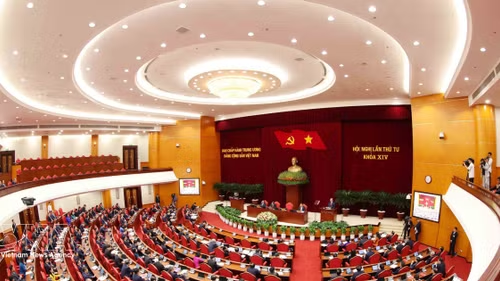
Prime Minister Nguyen Xuan Phuc’s visit to New Zealand from March 12-14 is a reiteration of Vietnam’s policy of attaching importance to its diplomatic ties with the country, looking towards a strategic partnership and enhanced cooperation in major spheres.
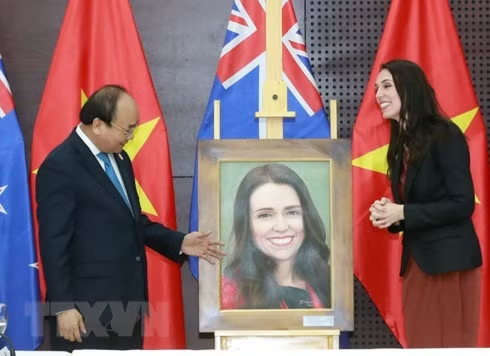 |
| Prime Minister Nguyen Xuan Phuc (L) presents a special gift to New Zealand Prime Minister Jacinda Ardern during their meeting in Vietnam's central Da Nang city in November 2017. |
Vietnam and New Zealand officially set up diplomatic ties on June 19, 1975.
They established comprehensive partnership in September 2009, which created a new momentum for the bilateral cooperation in all fields, both bilaterally and multilaterally, for the sake of the two countries’ people, as well as for peace, stability, cooperation and development in the region and the world at large.
The relationship has developed strongly in recent years, as reflected through high-level visits and meetings, along with the exchange of delegations and citizens of the two countries.
New Zealand always treasures ties with Vietnam and considers the country an important factor in its policy towards Asia-Pacific.
During the APEC Economic Leaders’ Week in Vietnam’s central Da Nang city in November 2017, the two countries signed an action programme for 2017-2020, aiming to deepen the bilateral relations more firmly and stably in the time ahead.
The programme has charted orientations for the relationship in the next four years, focusing on collaboration in politics, national defence and security, economy and trade, and development support and people-to-people exchange.
Trade between Vietnam and New Zealand has expanded by about 20 percent annually, from US$707 million in 2016 to US$907.5 million last year. The figure is expected to reach US$1.7 billion in 2020, making economic cooperation a pillar of the bilateral ties.
Currently, Vietnam is New Zealand’s 16th largest import market and the country’s19th biggest export market.
In the field of agriculture, Vietnam ships fruits, cashew nuts, coffee, pepper and seafood to New Zealand. Meanwhile, New Zealand’s agricultural exports to Vietnam make up more than 60 percent of the country’s total export revenue to the Southeast Asian nation, mainly dairy products, garment-textile materials, fruits, wood materials and minerals.
Thanks to close and effective collaboration between Vietnamese and New Zealand agricultural agencies in terms of quarantine, other agricultural products of Vietnam have been sold in NZ, such as tra fish, Hoa Loc mango and dragon fruit.
In the realm of investment, as of the end of December 2017, New Zealand had run 29 valid projects in Vietnam with total registered capital of some US$102.4 million, ranking 45th among 125 countries and territories investing in the country.
New Zealand has increased its investments in such sectors as agriculture, renewable energy and infrastructure in Vietnam, while helping the country improve capacity and technology for the production, manufacturing and preservation of farm produce in order to meet high standards of the international market.
New Zealand always offers stable and annually increasing official development assistance (ODA) to Vietnam, focusing on social welfare, agriculture and rural development, human resources development, and natural disaster and climate change management and combat.
The country has committed 26.66 million NZD (US$18.6 million) to Vietnam between July 2015 and June 2018.
The affiliation in culture-education has also created a firm foundation for the relationship, with about 2,500 Vietnamese students studying in New Zealand.
At regional and international forums, Vietnam and New Zealand have maintained their close coordination and mutual support, particularly within ASEAN mechanisms, the East Asia Summit, the ASEAN Regional Forum, the Asia-Pacific Economic Cooperation (APEC) and the UN.
Vietnam highly values New Zealand’s stance on the East Sea issue in the spirit of respect for international law and wishes that the country will continue to support the stance and viewpoints of Vietnam as well as ASEAN on this issue.
New Zealand Ambassador to Vietnam Wendy Matthews said the connectivity between Vietnamese and New Zealanders is developing and the year 2018 is expected to witness more hallmarks in the bilateral ties.
The diplomat held that the two countries still have a lot of potential for cooperation in trade, economy, education and tourism.
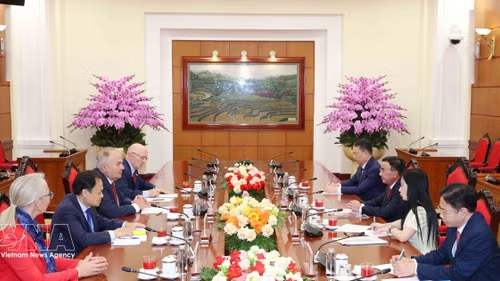
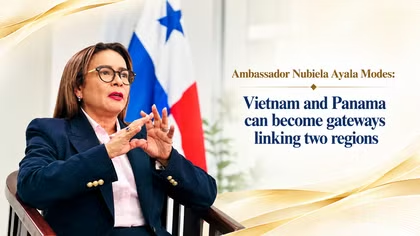
"Panama can serve as a strategic platform for Vietnamese companies seeking greater access to Latin America and the Caribbean, while Vietnam represents an important gateway for strengthening Panama’s engagement with Southeast Asia", Ambassador Nubiela Ayala Modes confirmed.
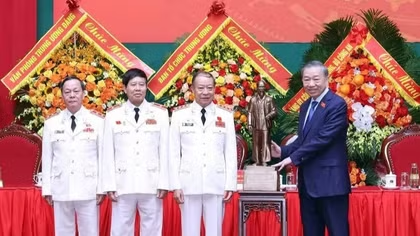
The Vietnam Association of Former People's Public Security Officers must truly serve as a common home that fosters comradeship and solidarity among former public security officers and those who have contributed to the cause of safeguarding security and social order, said top leader To Lam.
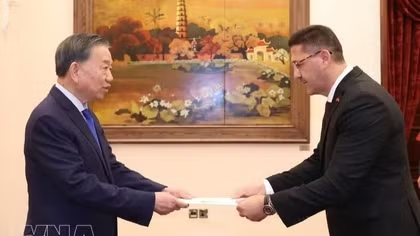
General Secretary and President To Lam receives newly accredited ambassadors
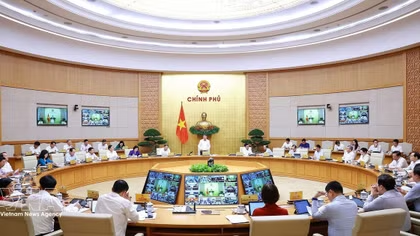
Localities nationwide hailed effective and flexible directions delivered by the Government so far this year, resulting in positive nine-month socio-economic growth, and reaffirmed their commitment to achieving targets set for the whole 2026 at an online Government-locality conference on October 3.
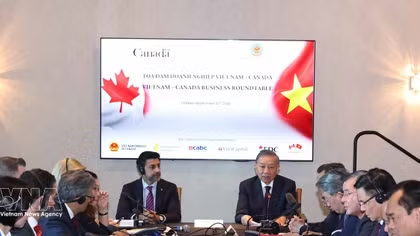
The elevation of bilateral ties to a Strategic Partnership shows that Vietnam and Canada increasingly view each other not simply as trading partners, but as long-term partners in addressing economic, technological and regional challenges.
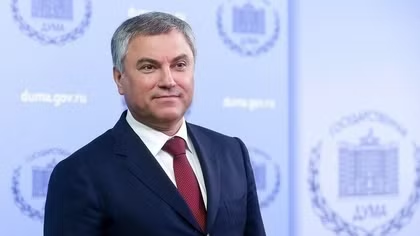
National Assembly President Tran Thanh Man on October 1 sent a congratulatory letter to Vyacheslav Volodin on his re-election as Chairman of the State Duma of the Federal Assembly of Russia.
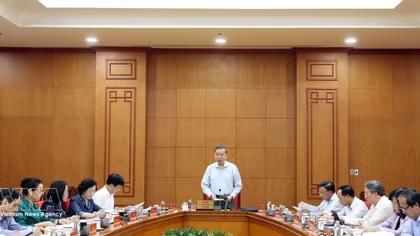
The top leader applauded the efforts of ministries, sectors, localities, social organisations, coaches, athletes, experts in developing physical education and sports in recent times, stressing that Resolution No. 08 has provided an important political foundation for sports development over the past 15 years, while Conclusion No. 70 set important orientations for the new period.
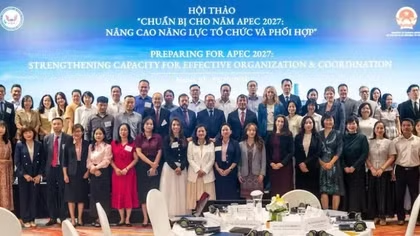
PSNews - Vietnam is recognised by its partners as an influential member of the Asia-Pacific Economic Cooperation (APEC) forum, with expectations that it will continue to demonstrate leadership when it hosts APEC for the third time in 2027, according to Standing Deputy Minister of Foreign Affairs Nguyen Minh Vu.
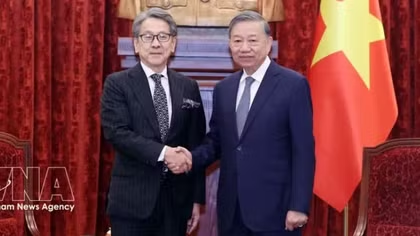
General Secretary and President Lam urged JBIC to continue promoting the substantive implementation of projects under the Asia Zero Emission Community (AZEC), and step up discussions on potential cooperation within the framework of the POWERR Asia (Partnership on Wide Energy and Resources Resilience Asia) initiative, including the development of strategic energy reserves.
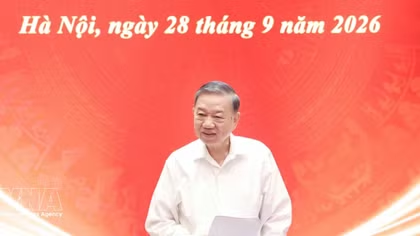
Overhauling the Party’s leadership methods is an objective, inevitable and urgent requirement to elevate the Party’s governing capacity and combat strength and keep the political system effective in the new development era.
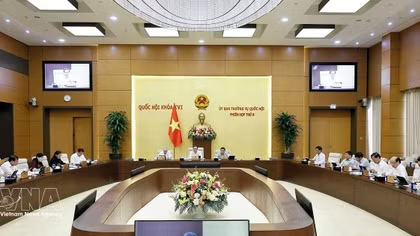
During the session, the NA Standing Committee will give opinions on a number of draft laws, namely the revised Land Law, the revised Housing Law, the revised Law on Real Estate Business, the Law on Legal Normative Documents, and the consolidated Law on the State Budget.
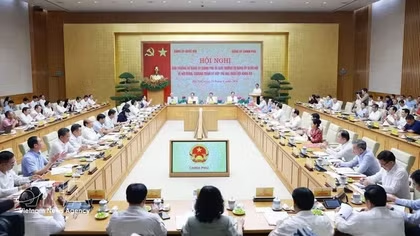
National Assembly President Tran Thanh Man coordination must go beyond finishing the agenda to improve the quality of NA decisions and Government enforcement; deal with policies rather than just paperwork, especially in the fight against corruption and other negative phenomena; and pin down final responsibility for each product, not just progress.
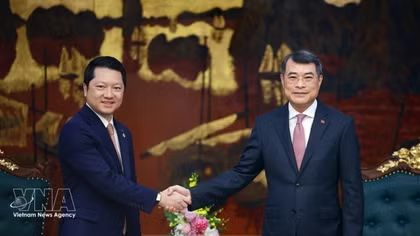
Prime Minister Le Minh Hung asked the two countries' inspection agencies to build on their achievements by regularly exchanging information and experience, maintaining delegation exchanges, and coordinating inspections in areas related to bilateral economic, trade and investment cooperation.
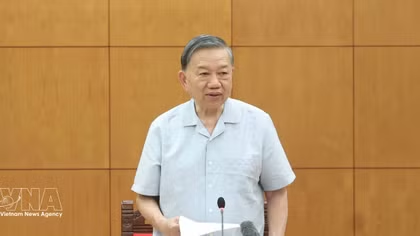
General Secretary and President To Lam demanded a sweeping review rather than piecemeal amendments to individual laws, so that people's rights are protected on a continuing basis.
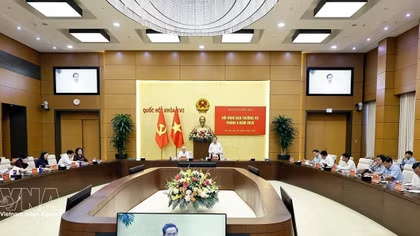
The meeting approved a plan to develop the project on reviewing the 2013 Constitution and studying and proposing comprehensive amendments to the Constitution.
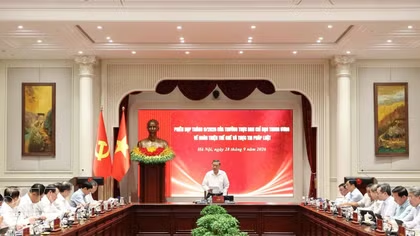
General Secretary of the Communist Party of Vietnam Central Committee and President To Lam on September 28 called for urgent and fundamental improvements in law enforcement, stressing that legislation and its enforcement must form a unified whole and ultimately serve development, protect legitimate rights and interests, and strengthen public trust.
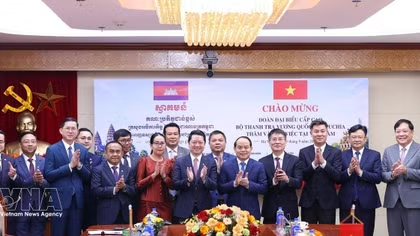
The Government Inspectorate of Vietnam broadly accepted the Cambodian ministry's proposals to maintain, renew and make more effective regular meetings between professional units and training establishments, and increase exchanges of senior, expert and specialised working-group delegations.
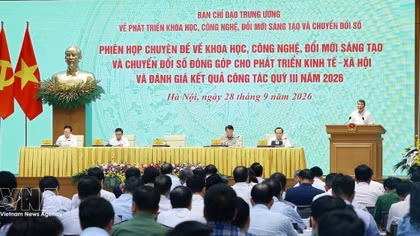
Prime Minister Le Minh Hung said Vietnam can no longer depend on capital and cheap labour. The only way to maintain strong double-digit growth, he said, is by boosting productivity through science, technology, innovation, and digital transformation.
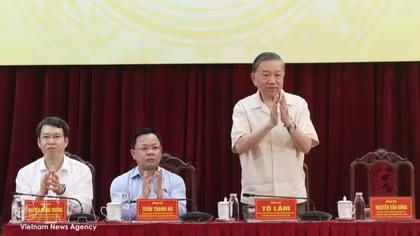
The General Secretary and President stressed that there must be no delay between resolutions and action, or between decisions and results in people’s lives, adding that laws must not only serve management but also facilitate development, while outdated regulations must not hinder growth.
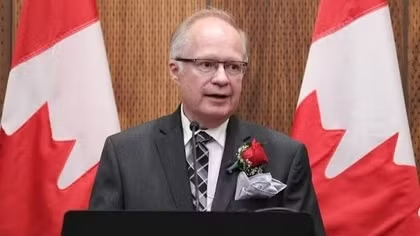
Regarding Vietnam’s role in multilateral affairs, Wilfert highlighted four areas where Vietnam could further contribute to multilateral cooperation, beginning with its contribution to regional peace and stability through ASEAN and the UN.