- Vietnam listed among world’s cheapest destinations
- Ha Giang to offer free wifi in major tourist destinations
As more Chinese tourists are traveling the world, regional destinations are usually their favored options, including Vietnam.
Vietnam has been ranked seventh in a top 10 list recently released by the Chinese Tourism Administration, with more than 600,000 visitors between April and June this year.
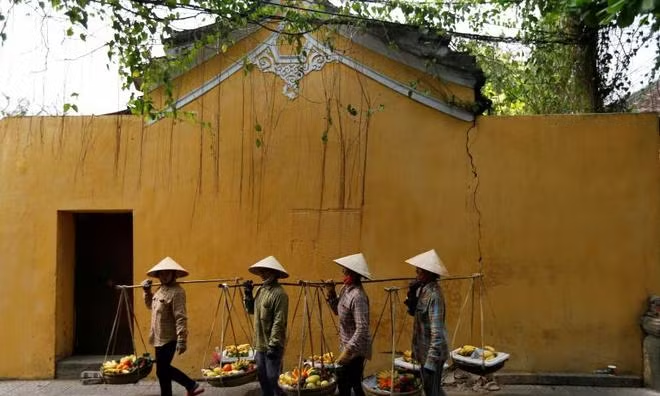 |
| Women wearing traditional hats, known as non la, sell fruits in Hoi An, Vietnam. Photo by Reuters |
The Vietnam National Administration of Tourism itself posted impressive numbers of Chinese visitors. The country has received more than 2.2 million Chinese arrivals this year, up 55 percent from the same period last year.
China is now accounting for roughly a quarter of all foreign visitors to Vietnam.
Short flights and a strong cross-border relationship between the countries have played important roles for tourism.
Most Chinese tourists to Vietnam entered via northern border provinces, particularly Quang Ninh, home to the much loved Ha Long Bay.
Quang Ninh announced earlier this month that it will ease visa requirements for Chinese visitors on January 1, allowing groups of Chinese travelers to stay for up to three days without a visa.
On the list of top 10 destinations in the second quarter for Chinese tourists, Thailand has come first with 2.4 million visits, followed by South Korea, Japan, Hong Kong, Taiwan and Macau.
The number of Chinese tourists traveling abroad increased 19.5 percent year-on-year to 120 million in 2015 and the number was 13 times higher than that of 1998, according to China's tourism administration, adding that overseas spending hitting $229 billion in 2015.
As more Chinese tourists are traveling the world, regional destinations are usually their favored options, including Vietnam.
Vietnam has been ranked seventh in a top 10 list recently released by the Chinese Tourism Administration, with more than 600,000 visitors between April and June this year.
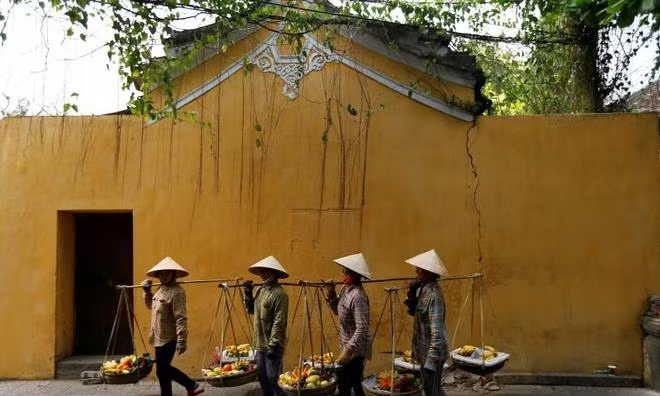 |
| Women wearing traditional hats, known as non la, sell fruits in Hoi An, Vietnam. Photo by Reuters |
The Vietnam National Administration of Tourism itself posted impressive numbers of Chinese visitors. The country has received more than 2.2 million Chinese arrivals this year, up 55 percent from the same period last year.
China is now accounting for roughly a quarter of all foreign visitors to Vietnam.
Short flights and a strong cross-border relationship between the countries have played important roles for tourism.
Most Chinese tourists to Vietnam entered via northern border provinces, particularly Quang Ninh, home to the much loved Ha Long Bay.
Quang Ninh announced earlier this month that it will ease visa requirements for Chinese visitors on January 1, allowing groups of Chinese travelers to stay for up to three days without a visa.
On the list of top 10 destinations in the second quarter for Chinese tourists, Thailand has come first with 2.4 million visits, followed by South Korea, Japan, Hong Kong, Taiwan and Macau.
The number of Chinese tourists traveling abroad increased 19.5 percent year-on-year to 120 million in 2015 and the number was 13 times higher than that of 1998, according to China's tourism administration, adding that overseas spending hitting $229 billion in 2015.
As more Chinese tourists are traveling the world, regional destinations are usually their favored options, including Vietnam.
Vietnam has been ranked seventh in a top 10 list recently released by the Chinese Tourism Administration, with more than 600,000 visitors between April and June this year.
The Vietnam National Administration of Tourism itself posted impressive numbers of Chinese visitors. The country has received more than 2.2 million Chinese arrivals this year, up 55 percent from the same period last year.
China is now accounting for roughly a quarter of all foreign visitors to Vietnam.
Short flights and a strong cross-border relationship between the countries have played important roles for tourism.
Most Chinese tourists to Vietnam entered via northern border provinces, particularly Quang Ninh, home to the much loved Ha Long Bay.
Quang Ninh announced earlier this month that it will ease visa requirements for Chinese visitors on January 1, allowing groups of Chinese travelers to stay for up to three days without a visa.
On the list of top 10 destinations in the second quarter for Chinese tourists, Thailand has come first with 2.4 million visits, followed by South Korea, Japan, Hong Kong, Taiwan and Macau.
The number of Chinese tourists traveling abroad increased 19.5 percent year-on-year to 120 million in 2015 and the number was 13 times higher than that of 1998, according to China's tourism administration, adding that overseas spending hitting $229 billion in 2015.