 |
| Illustrative image. Source: Wiki. |
According to General Statistics Office (GSO), processing and manufacturing industries were most heavily impacted with 1.2 million jobs affected during the first quarter; followed by wholesale and retail, 1.1 million; plus accommodation and catering services, 740,000. Of those affected, 59 percent are temporarily out of work, 28 percent are taking turns to work, and the remaining 13 percent have lost their jobs.
The monthly headline CPI decreased significantly by 1.6 percent in April, bringing the year-on-year CPI increase to 2.9 percent, down from 4.9 percent in March. Lower prices are mainly associated to the softening of the domestic demand for food and the record low oil price on international markets that was transmitted to domestic fuel and gasoline prices.
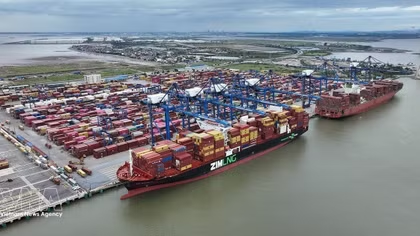
Vietnam was more resilient on external frontOn the external front, Vietnam’s merchandise exports continued to grow in the first months of 2020 but at a slower pace than during the pre- COVID period, indicating weaker external demand and some disruption of global supply chains as well as the temporary ban on rice exports (lifted since then). The value of merchandise exports is estimated to have increased 4.7 percent (y/y) in January-April period compared to the growth of 6.5 percent in the same period of 2019.
The export value of the foreign-invested sector – the engine of Vietnam’s exports, grew by only 1.5 percent compared to 4.4 percent in the same period last year. While there are not yet official estimates, the trade service and income balance (other components of the country’s current account) have most certainly significantly deteriorated due to the almost stop in foreign tourist arrivals (down by 98 percent in April 2020 compared to a year earlier and the expected large decline in remittances.
In the first four months of 2020, committed Foreign Direct Investment (FDI) amounted to $12.3 billion, a year-on-year decrease of 15.5 percent. Surprisingly, the value of FDI commitment rebounded in April, up by 81 percent over March 2020 and 62 percent over April 2019.
Vietnam looks for an economic rebound
Credit grow has gradually rebounded in March after sluggish growth in the first two months of 2020. The State Bank of Vietnam (SBV) reported that credit rose by the end of March 1.3 percent year-to date – equivalent to about 11 percent year-on-year. The SBV provided support through a package of measures in early March designed to allow banks to restructure loans and lower interest rates on borrowers. The SBV also considered liquidity support through credit growth for certain commercial banks that would contribute to more lending to businesses facing liquidity shortages.
Fiscal outturns in the first quarter of 2020 have started to reflect the trends that are expected to materialize over the remainder of the year; declining revenue and higher spending. According to the Ministry of Finance, estimated budget revenue in the first quarter 2020 increased by only 1.8 percent compared to the same period last year.
The result reflects, better collection performance in the first two months before the slowdown in economic activity and the implementation of various tax deferrals that came into full effect in April. During the first quarter, total expenditure rose 8.7 percent (y/y), which is about 5 percent higher than the GDP growth rate during this period. This increase is explained by the Government’s willingness to accelerate the implementation of key infrastructure projects.
Fitch Ratings has revised the Outlook on Vietnam to Stable, from Positive, and has affirmed the rating at 'BB'. The Outlook revision reflects the impact of the escalating COVID-19 pandemic on Vietnam's economy through its tourism and export sectors, and weakening domestic demand. The Outlook has confirmed Vietnam's strong medium-term growth prospects based on its record of macroeconomic stability, low government debt levels and resilient external sector, including relatively large foreign- exchange reserves.