Austria's Kurz steps down over corruption probe to save coalition

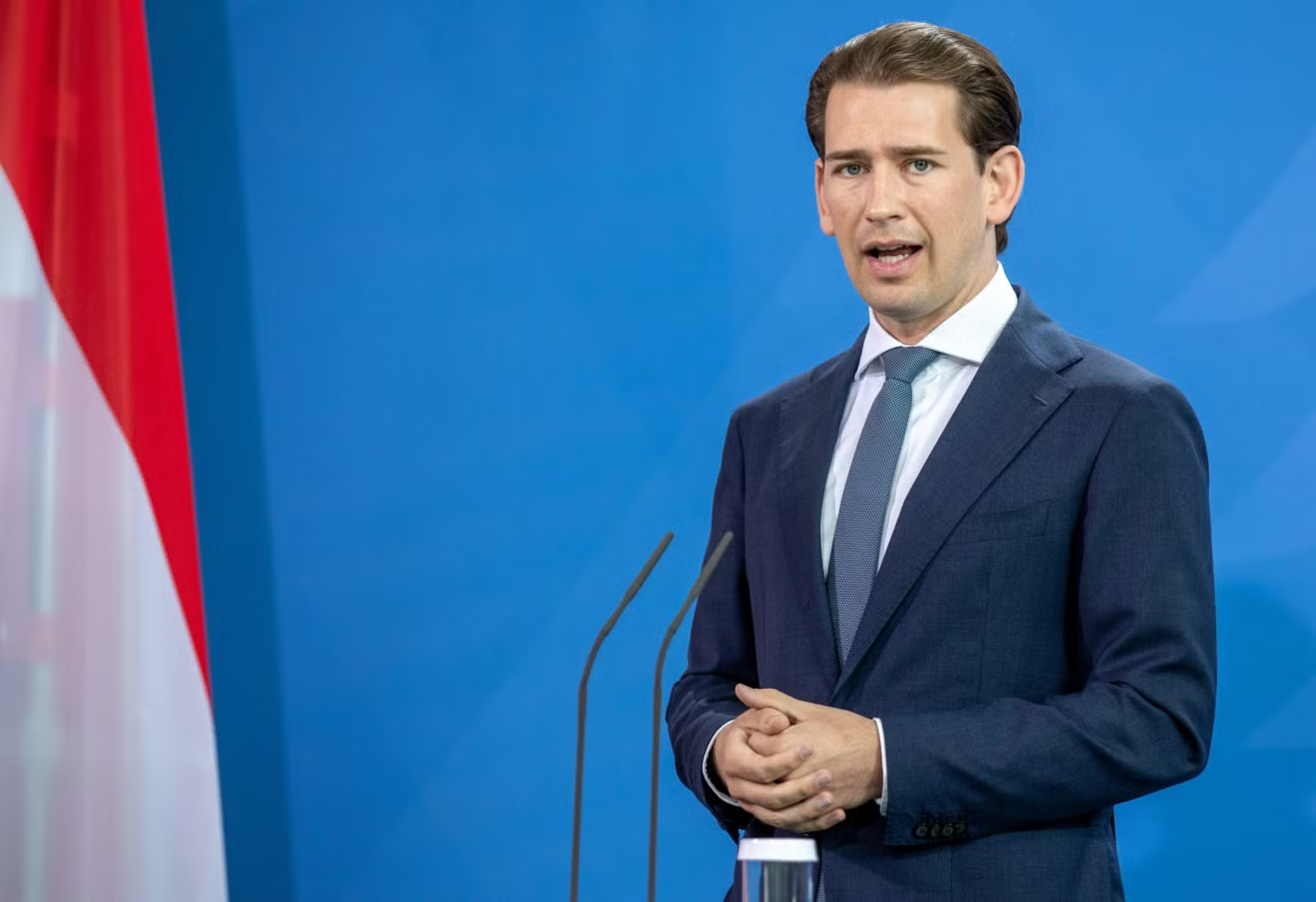
Austria's conservative Chancellor Sebastian Kurz resigned on Saturday to pull his coalition government back from the brink of collapse after the junior party demanded his head because he has been placed under investigation on suspicion of corruption.

The move by Kurz, who denies wrongdoing, satisfied his coalition partner, the Greens, and came just three days before a special session of parliament at which they were preparing to back a motion of no-confidence that would have forced him out. 
Austria's Kurz steps down over corruption probe to save coalition -0
Austria's Kurz steps down over corruption probe to save coalition

At the same time, his resignation is more a matter of form than substance in terms of policy. He plans to stay on as his party's leader and become its top lawmaker in parliament, and he is likely to continue to call the shots in the coalition.

"I would therefore like to make way in order to end the stalemate, to prevent chaos and to ensure stability," Kurz said in a statement to the media.

He added that he was proposing Foreign Minister Alexander Schallenberg, a career diplomat backed by Kurz's party, take over as chancellor, whom the Greens soon made clear they accepted.

"I believe this is the right step for future government work," Greens leader and Vice Chancellor Werner Kogler said in a statement, adding he had had a "very constructive" working relationship with Schallenberg and would meet him on Sunday.

A star among Europe's conservatives known for his hard line on immigration, Kurz, 35, became one of the continent's youngest leaders in 2017 when he formed a coalition with the far-right Freedom Party that collapsed in scandal in 2019. Parliament sacked him but he won the snap election that followed.

He has so far been unchallenged as leader of the People's Party (OVP) - he was reappointed in August with 99.4% support.
Reuters

Other News

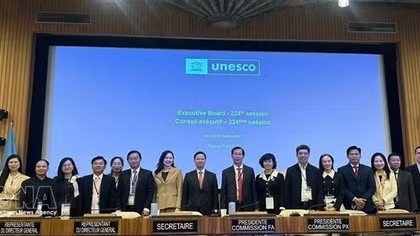
Vietnam supports UNESCO's people-centred approach, multilateral cooperation: official

Vietnam supports UNESCO's people-centred approach, multilateral cooperation: official

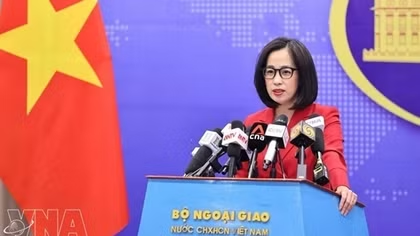
Van affirmed Vietnam’s support for the UNESCO80 reform roadmap, focusing on the organisation’s core mandate, priority areas, interdisciplinary approach, and the special status of the Vietnam National Commission for UNESCO, and UNESCO representative offices, alongside efforts to diversify resources and strengthen global partnerships to enhance the organisation’s effectiveness.

Regional media highlight significant step in Vietnam’s leadership structure

Regional media highlight significant step in Vietnam’s leadership structure

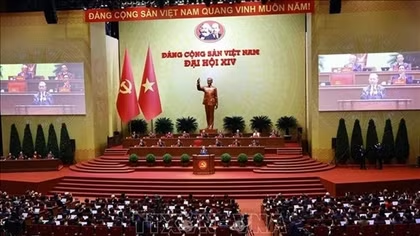
Under General Secretary and President Lam’s leadership, Vietnam is expected to maintain a balanced foreign policy, strengthen its regional standing and accelerate economic development, thereby improving living standards and creating new opportunities for international investors, according to the India-based platform Devdiscourse.

Laos identifies 10 key tasks to build independent, self-reliant economy

Laos identifies 10 key tasks to build independent, self-reliant economy

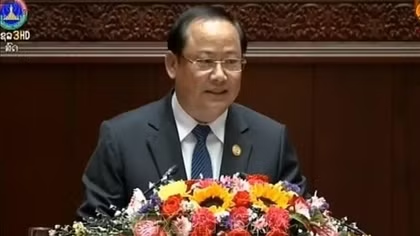
Laos will step up agricultural production to ensure food security, meet domestic demand and expand exports; encourage the development of agro-processing industries, including those related to rubber, aquatic products, cassava and sugarcane, as well as fertiliser and animal feed production, in order to increase added value and create jobs in rural areas.

Malaysia steps up cyber security resilience

Malaysia steps up cyber security resilience

To ensure accountability, Malaysia plans to finalise the Cybercrime Bill this year which addresses both cyber-dependent and cyber-enabled offences, introducing stricter penalties and prison terms to enhance deterrence.

US public opinion positive about PM Pham Minh Chinh’s visit

US public opinion positive about PM Pham Minh Chinh’s visit

Public opinion in the US is generally positive about Vietnamese Prime Minister Pham Minh Chinh’s trip to the US from September 17-23 to attend the 78th session of the United Nations General Assembly, which took place immediately after the upgrading of the Vietnam - US relations to a comprehensive strategic partnership on the occasion of US President Joe Biden’s official visit to Vietnam.