The Government of Laos has identified ten key tasks aimed at ensuring macroeconomic stability and promoting sustainable growth, with a view to building an independent and self-reliant economy.
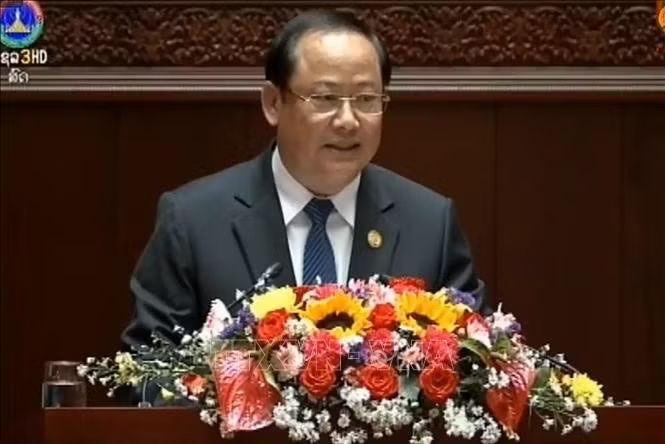
Speaking at a conference to disseminate the country’s 10th five-year socio-economic development plan, Lao Prime Minister Sonexay Siphandone said the tasks focus on diversifying production and service sectors, addressing economic and financial difficulties, and creating momentum for fast and quality growth.
First, Laos will step up agricultural production to ensure food security, meet domestic demand and expand exports. At the same time, the country will encourage the development of agro-processing industries, including those related to rubber, aquatic products, cassava and sugarcane, as well as fertiliser and animal feed production, in order to increase added value and create jobs in rural areas.
The Lao Government will also prioritise the development of clean energy projects such as hydropower, solar, wind and biomass energy. At the same time, it plans to expand electricity transmission networks to strengthen connectivity with neighbouring countries and facilitate regional energy trade.
In the resource sector, Laos aims to increase domestic mineral processing while limiting exports of raw materials. Priority will be given to producing semi-processed and finished products from minerals such as gold, iron, copper, aluminum and potash.
The country will also promote the development of processing industries capable of joining regional supply chains, particularly in special economic zones and industrial parks, while encouraging the production of import substitutes.
Tourism has been identified as another key sector, with Laos planning to develop eco-tourism, cultural, historical and agricultural tourism products in a green and sustainable manner.
Regarding infrastructure, Laos aims to improve logistics systems and cross-border transportation, gradually positioning itself as a regional transit hub for goods within the Association of Southeast Asian Nations (ASEAN). Dry ports in Vientiane and the provinces of Savannakhet, Khammouane and Champasak will continue to be upgraded and utilised more efficiently.
In addition, the government plans to accelerate the development of telecommunications infrastructure and high-speed internet, establish a national data centre, and promote digital government, e-commerce and digital finance.
Alongside economic development measures, Laos will strengthen macroeconomic management, reform the revenue collection system, control inflation, tighten foreign exchange management and gradually address public debt challenges.
The government will also improve the efficiency of public investment, enhance the business climate, promote private sector development and continue reforming state-owned enterprises to improve performance, contribute more to the state budget and enhance the overall competitiveness of the economy.