- Catalonia's leaders fight off direct rule from Madrid
- Spain plans new elections in Catalonia to end independence bid
- Spain sacks Catalan government after independence declaration
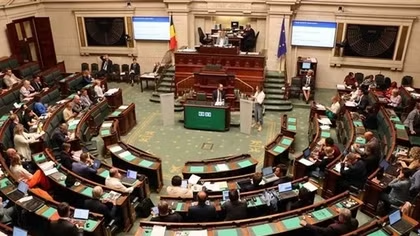
Spanish Prime Minister Mariano Rajoy dismissed the Catalan government, took over the administration and called a new election after the regional parliament made a unilateral declaration of independence on Friday, aggravating Spain’s worst political crisis in four decades.
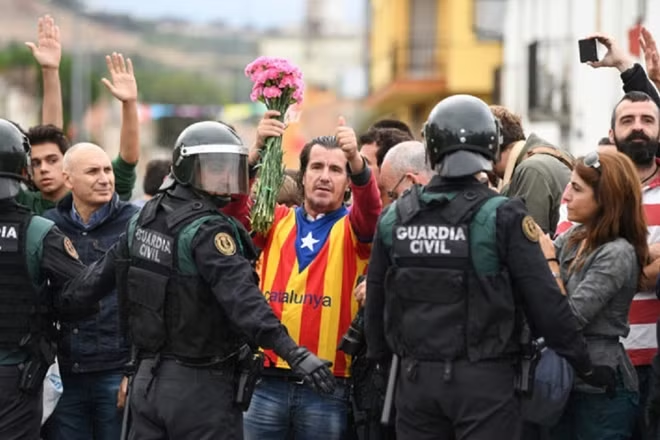 |
| Catalonia’s police force told its officers to remain neutral in the struggle over the region’s fight for independence on Saturday, a step toward averting possible conflict as the Madrid government starts to impose direct control. |
The declaration of Catalonia as a separate nation was almost immediately rendered futile by Rajoy’s actions, while other European countries, the United States and Mexico also rejected it and expressed support for Spain’s prime minister.
But emotions are running high and the next few days will be tricky for Madrid as it embarks on enforcing direct rule. Rajoy designated Deputy Prime Minister Soraya Saenz Santamaria to oversee the process.
The regional parliament’s vote, which was boycotted by three national opposition parties, capped a battle of wills between the independence movement, headed by the now-sacked Carles Puigdemont and the Madrid government.
The separatists say a referendum on Oct. 1 gave them a mandate for independence. However, less than half of eligible voters turned out for the ballot, which Madrid declared illegal and tried to stop.
Opinion polls show that more than half of the 5.3 million people eligible to vote in the wealthy northeastern region, which is already autonomous, do not want to break from Spain.
In an effort to defuse tensions, the regional police force urged its officers not to take sides, an internal note seen by Reuters showed.
There have been doubts over how the Mossos d‘Esquadra, as the Catalan police are called, would respond if ordered to evict Puigdemont and his government.
The force is riven by distrust between those for and against independence and is estranged from Spain’s national police forces, Mossos and national officers have told Reuters. Some Catalan officers stood between national police and those trying to vote during the banned referendum.
“Given that there is it is likely to be an increase in gatherings and rallies of citizens in all the territory and that there are people of different thoughts, we must remember that it is our responsibility to guarantee the security of all and help these to take place without incident,” said the memo, which had no name attached to it.
Government buildings, the headquarters of national political parties, ports, airports, courts, and the Bank of Spain were being guarded, the Interior Ministry said. Units of the regional force could be replaced if events made that necessary, it said.
The Madrid government also sacked the Mossos’ chief, Josep Lluis Trapero, the official gazette announced on Saturday.
Trapero became a hero to the secessionists after his force took a much softer stance than national police in enforcing the ban on the referendum.
Spain’s High Court banned Trapero from leaving the country and seized his passport as part of an investigation for alleged sedition, although it did not order his arrest.