Both sides, which fought a war in the 1990s, reported fatalities. Armenia and Nagorno-Karabakh, a breakaway region that is inside Azerbaijan but is run by ethnic Armenians, declared martial law and mobilised their male populations.
Armenia said Azerbaijan had carried out an air and artillery attack on Nagorno-Karabakh. Azerbaijan said it had responded to Armenian shelling and that it had seized control of up to seven villages, but Nagorno-Karabakh denied this.
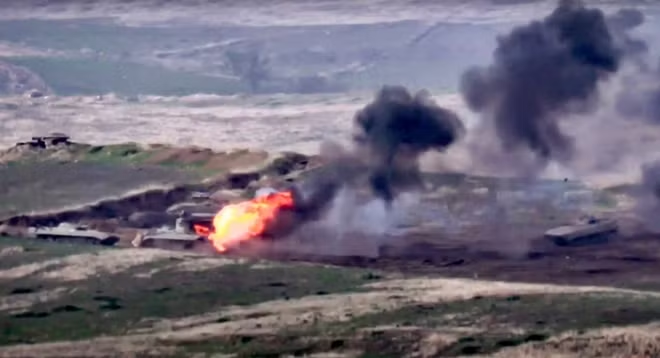 |
| A still image from a video released by the Armenian Defence Ministry shows what is said to be Azerbaijani armoured vehicles, one of which is destroyed by Armenian armed forces in the breakaway region of Nagorno-Karabakh, in this still image from footage released September 27, 2020. Defence Ministry of Armenia/Handout via REUTERS |
The clashes prompted a flurry of diplomacy to prevent a new flare-up of a decades-old conflict between majority Christian Armenia and mainly Muslim Azerbaijan, with Russia calling for an immediate ceasefire and Pope Francis leading calls for talks.
Pipelines shipping Caspian oil and natural gas from Azerbaijan to the world pass close to Nagorno-Karabakh. Armenia also warned about security risks in the South Caucasus in July after Azerbaijan threatened to attack Armenia’s nuclear power plant as possible retaliation.
Nagorno-Karabakh broke away from Azerbaijan in a conflict that broke out as the Soviet Union collapsed in 1991.
Though a ceasefire was agreed in 1994, after thousands of people were killed and many more displaced, Azerbaijan and Armenia frequently accuse each other of attacks around Nagorno-Karabakh and along the separate Azeri-Armenian frontier.
In Sunday’s clashes, Armenian right activists said an ethnic Armenian woman and child had been killed. Azerbaijan said an unspecified number of its civilians had been killed. Nagorno-Karabakh denied a report that 10 of its military were killed.
Armenia said Azeri forces had attacked civilian targets including Nagorno-Karabakh’s capital, Stepanakert, and promised a “proportionate response”.
“We stay strong next to our army to protect our motherland from Azeri invasion,” Armenian Prime Minister Nikol Pashinyan wrote on Twitter.
Azerbaijan denied an Armenian defence ministry statement saying Azeri helicopters and tanks had been destroyed, and accused Armenian forces of launching “deliberate and targeted” attacks along the front line.
“We defend our territory, our cause is right!” Azerbaijan’s president, Ilham Aliyev, said in an address to the nation.
INTERNATIONAL DIPLOMACY
Russian Foreign Minister Sergei Lavrov, whose country has mediated between former Soviet republics Armenia and Azerbaijan, spoke by phone to the Armenian, Azeri and Turkish foreign ministers.
Turkey said Armenia must immediately cease what it said was hostility towards Azerbaijan that will “throw the region into fire”, and Turkish President Tayyip Erdogan said on Twitter that Ankara would continue to show solidarity with Azerbaijan.
Erdogan urged the Armenian people to “take hold of their future against their leadership that is dragging them to catastrophe and those using it like puppets”.
France also urged the sides to end hostilities and immediately restart dialogue. The pope appealed to Armenia and Azerbaijan to resolve their differences through negotiations, saying he was praying for peace.
At least 200 people were killed in a flare-of the conflict between Armenia and Azerbaijan in April 2016. There are frequent skirmishes and at least 16 were reported killed in clashes in July.