Cambodia, Laos, Myanmar and Vietnam (CLMV) leaders agreed on a score of cooperation measures to enhance their connectivity at the 8th CLMV Cooperation Summit (CLMV 8) in Hanoi on October 26.
At CLMV 8 Summit, themed “Seize Opportunities, Shape the Future”, they shared the view that the CLMV countries are holding many big economic development chances from the global science-technology revolution, the region’s strong economic integration, and the formation of the ASEAN Economic Community.
They also boast a number of important competitive edges like the location in close proximity to major markets, rich natural resources, abundant and young workforce, and favourable trade and investment policies.
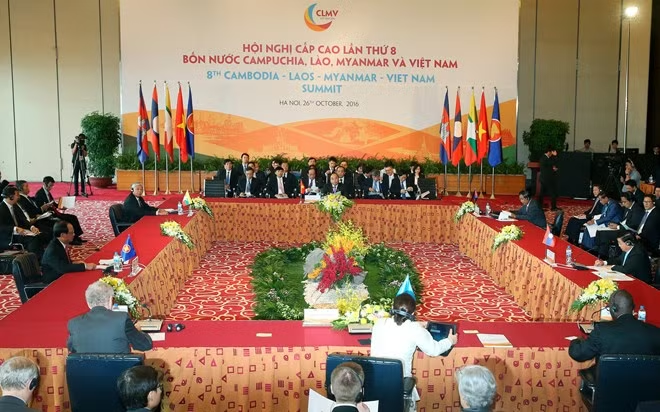 |
| The 8th CLMV Cooperation Summit in Hanoi on October 26 (Photo: VNA) |
The leaders also pointed to the challenges facing the Mekong Region, including limited human resources, underdeveloped infrastructure, climate change impacts, regional and global economic instability, and small, open economies’ vulnerability.
To maintain growth momentum and improve competitiveness, they agreed to concurrently reform domestic economy, maintain macro-economic stability, create an optimal business environment, and proactively integrate more strongly into the regional and global economies.
They also agreed to implement concrete measures toward a seamless regional economy so as to link their economies and markets ever closer together.
In transport connectivity, the CLMV nations will accelerate the building of missing links and upgrading roads along the North – South Economic Corridor (NSCE), East – West Economic Corridor (EWEC), and the Southern Economic Corridor (SEC).
They will construct an expressway connecting Vientiane and Hanoi to facilitate the movement of goods and people between the two capitals. A feasibility study on a route linking Myanmar, Laos and Vietnam will also be conducted.
To facilitate trade and investment, the leaders agreed to step up the simplification and harmonisation of cross-border procedures and further develop industrial zones along the corridors. They will promote border trade via harmonising member countries’ border trade procedures and developing a network of border markets, carry out trade and investment promotion activities, and facilitate the investment of CLMV enterprises in each other’s markets.
The participants endorsed the economic ministers’ plan to develop a framework for CLMV development which aims at advancing economic development, enhancing the capacity to reap the benefits arising from regional integration, and raising the living standards of our people.
Regarding industrial cooperation, the four countries will foster collaboration in industrial policy development, standardisation and conformance, and small and medium enterprise policy development.
In tourism, they are bound to fully implement the 2016 – 2018 Action Plan on Tourism Cooperation, particularly measures to ensure sustainable and responsible tourism, and encourage greater coordination and exchanges of information and experiences among the member countries.
They will facilitate the participation of CLMV tourism agencies, associations and enterprises in the regional events and fairs, while promoting public – private partnerships, particularly in tourism promotion activities and tourist product development.
In human resource development cooperation, the four countries will continuously implement the CLMV Scholarship Programme funded by the Vietnamese Government for the 2016-2020 period, and establish a database of labor market’s demand and vocational training programs in CLMV countries.
They will also promote joint programs among CLMV universities, language training institutions and exchange programmes between educational leaders, high officials, experts, teachers, administrators and students. The nations are set to promote mutual recognition of qualification among them.
In his speech at the event, Prime Minister Nguyen Xuan Phuc called on the countries to make timely adjustments to keep abreast with new global trends and not to be left behind.
He suggested the four countries should create a new development momentum characterised by technologies, high-quality human resources, innovations and creations, instead of pursuing the growth model based on natural resources, cheap labour costs and outdated technologies.
He affirmed the Vietnamese Government's determination to serve people and businesses, adding that Vietnam will exert every effort to ensure macro economic stability and accelerate economic restructuring towards innovations, creations, higher productivity and competitiveness.
At the same time, the country will implement three breakthrough strategies on institutions, human resources and infrastructure, while removing administrative barriers to offer the best possible climate for domestic and foreign investors and enterprises, he stated.
To improve the four countries’ competitiveness, the PM proposed boosting their connectivity in infrastructure, trade, investment, tourism and human resources development.
The cabinet leader urged development partners to continue supporting the four countries’ efforts in socio-economic development, regional integration and sustainable development.
The same day, PM Nguyen Xuan Phuc chaired an international media conference after a series of events as part of the 3 Mekong-related summits.
PM Phuc said Vietnam was successful in hosting the 3 summits, in which the World Economic Forum on the Mekong was inspired by Vietnam and praised by its development partners.
The forum outlined directions for green growth, inclusive growth, a people-oriented society, and prompt response to climate change, while adopting measures to link ACMECS and CLMV.
Member countries stressed the need to boost better intra-bloc connectivity, develop the relationship with developed countries from ASEAN founding members, EU countries, and China to their development partners such as the World Bank and the Asian Development Bank.
“The summits discussed ways to mobilize resources for tapping the potential of the Mekong region and pointed out opportunities and challenges that the 4th industrial revolution brings to the Mekong region’s industrialization. The forum also worked out measures to increase cooperation between the government and the business community.
Member countries said as Cambodia, Laos, Myanmar, and Vietnam saw their growth come in later periods due to historical circumstances and harsh natural conditions, they should improve the investment environment and work on the digital economy quickly to tap advantages, including tourism, organic technology, and IT," the government leader said.
He said development partners praised the host country’s agenda as practical and called for major projects to link countries.
Phuc suggested what Vietnam should do to seize opportunities.
“Vietnam should prepare highly-feasible projects for intra-bloc connectivity as it realizes its weaknesses and responsibility. Vietnam raises the issue of reforming itself to improve the business and investment climate and to be included in the top rankings of ASEAN, not just of CLMV.
Effort should be made to operate a facilitating government, better manage the society and economy, serve the people and businesses, and create the best resources for national development to catch up with other countries," he added.
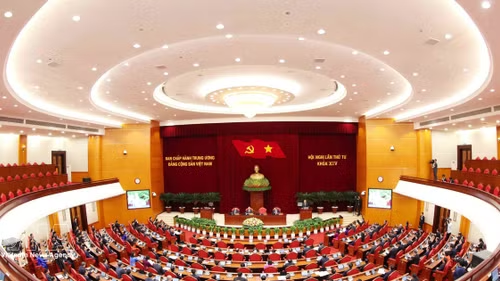
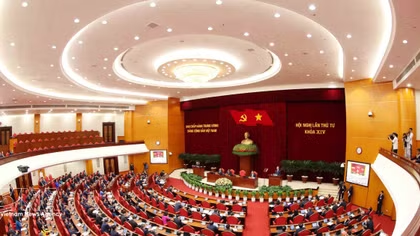
Delegates held group discussions on the CPV Central Committee resolution calling for stronger building and rectification towards a clean, strong and comprehensive Party and political system able to meet the country's development needs in the new era.
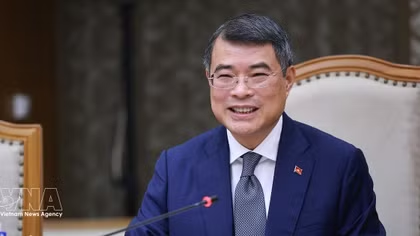
Prime Minister Le Minh Hung will lead a high-level Vietnamese delegation on official visits to Laos and Cambodia from October 8 to 10.
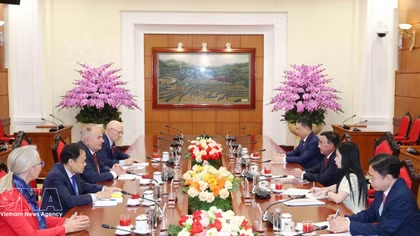
The Communist Party of Vietnam always values its solidarity and friendship with the Hungarian Workers' Party and communist and workers' parties worldwide, which helps build political trust and supports Vietnam's relations with other countries, said key Party leader Tran Cam Tu.
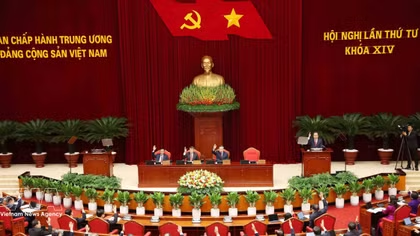
In his opening remarks, General Secretary and President To Lam said that the 14th National Party Congress set out major orientations and strategic goals, while the second and third plenums adopted important policies on Party building, personnel, development and national defence. The fourth plenum must focus on creating conditions for effective implementation while preparing the theoretical, organisational and human resources foundations for the country’s long-term development.
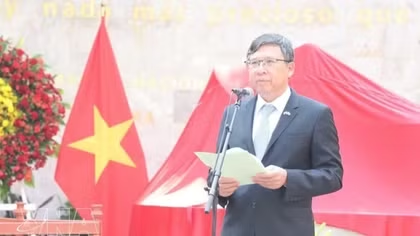
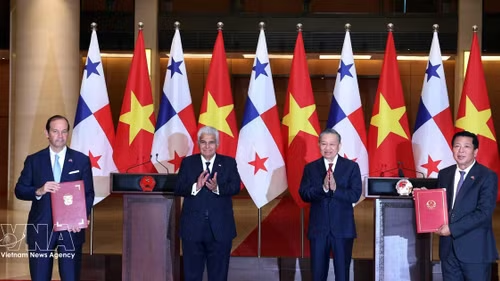
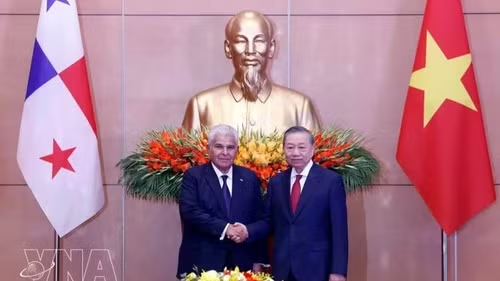
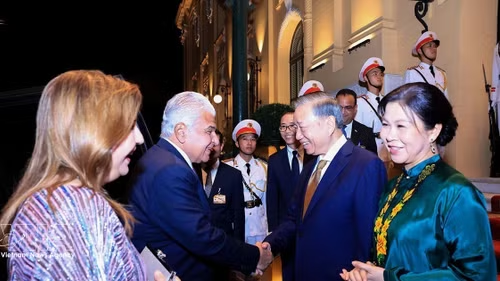
Vietnamese Ambassador to Mexico and Panama Nguyen Van Hai noted that the visit is particularly significant as the first high-level exchange between the two countries in nearly 15 years, following then-President Ricardo Martinelli’s visit to Vietnam in 2012, and came shortly after the 50th anniversary of diplomatic relations in 2025.
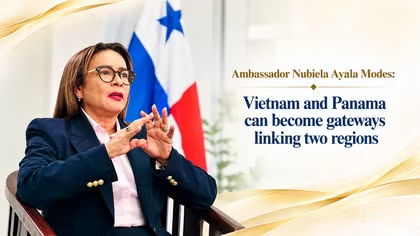
"Panama can serve as a strategic platform for Vietnamese companies seeking greater access to Latin America and the Caribbean, while Vietnam represents an important gateway for strengthening Panama’s engagement with Southeast Asia", Ambassador Nubiela Ayala Modes confirmed.
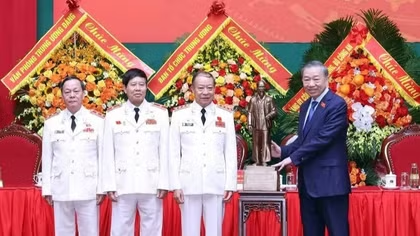
The Vietnam Association of Former People's Public Security Officers must truly serve as a common home that fosters comradeship and solidarity among former public security officers and those who have contributed to the cause of safeguarding security and social order, said top leader To Lam.
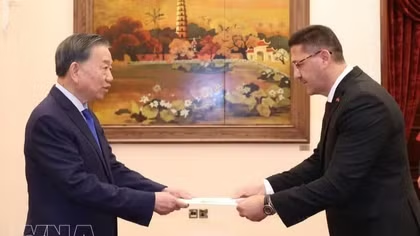
General Secretary and President To Lam receives newly accredited ambassadors
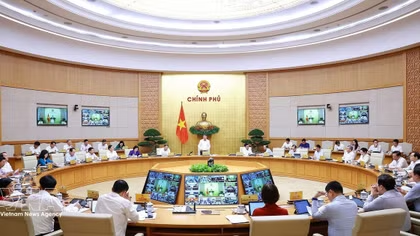
Localities nationwide hailed effective and flexible directions delivered by the Government so far this year, resulting in positive nine-month socio-economic growth, and reaffirmed their commitment to achieving targets set for the whole 2026 at an online Government-locality conference on October 3.
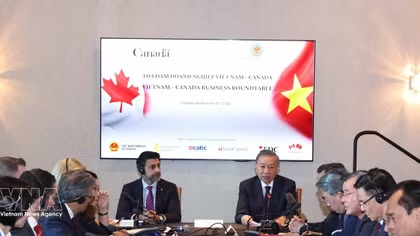
The elevation of bilateral ties to a Strategic Partnership shows that Vietnam and Canada increasingly view each other not simply as trading partners, but as long-term partners in addressing economic, technological and regional challenges.
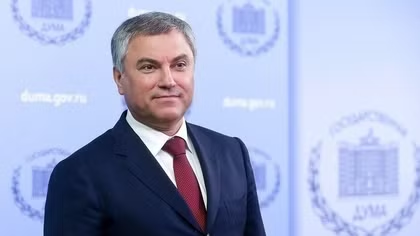
National Assembly President Tran Thanh Man on October 1 sent a congratulatory letter to Vyacheslav Volodin on his re-election as Chairman of the State Duma of the Federal Assembly of Russia.
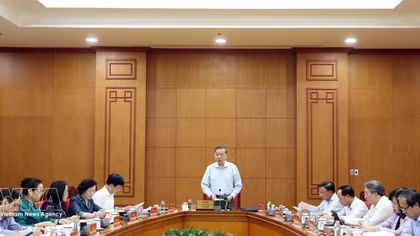
The top leader applauded the efforts of ministries, sectors, localities, social organisations, coaches, athletes, experts in developing physical education and sports in recent times, stressing that Resolution No. 08 has provided an important political foundation for sports development over the past 15 years, while Conclusion No. 70 set important orientations for the new period.
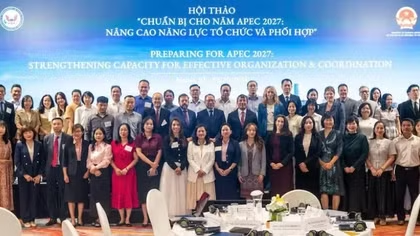
PSNews - Vietnam is recognised by its partners as an influential member of the Asia-Pacific Economic Cooperation (APEC) forum, with expectations that it will continue to demonstrate leadership when it hosts APEC for the third time in 2027, according to Standing Deputy Minister of Foreign Affairs Nguyen Minh Vu.
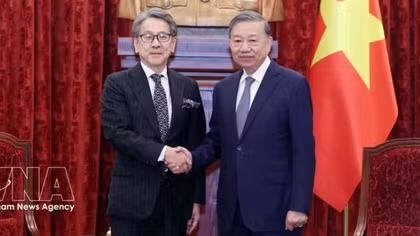
General Secretary and President Lam urged JBIC to continue promoting the substantive implementation of projects under the Asia Zero Emission Community (AZEC), and step up discussions on potential cooperation within the framework of the POWERR Asia (Partnership on Wide Energy and Resources Resilience Asia) initiative, including the development of strategic energy reserves.
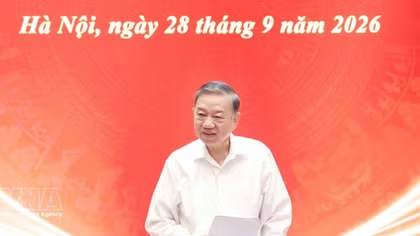
Overhauling the Party’s leadership methods is an objective, inevitable and urgent requirement to elevate the Party’s governing capacity and combat strength and keep the political system effective in the new development era.
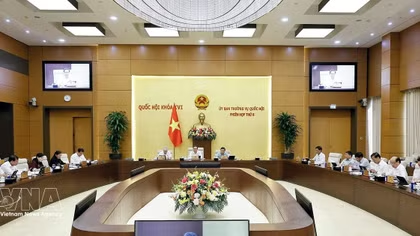
During the session, the NA Standing Committee will give opinions on a number of draft laws, namely the revised Land Law, the revised Housing Law, the revised Law on Real Estate Business, the Law on Legal Normative Documents, and the consolidated Law on the State Budget.
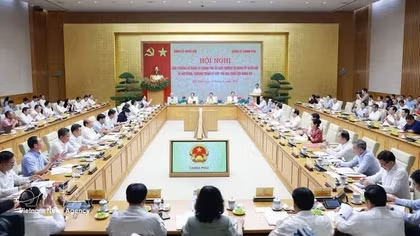
National Assembly President Tran Thanh Man coordination must go beyond finishing the agenda to improve the quality of NA decisions and Government enforcement; deal with policies rather than just paperwork, especially in the fight against corruption and other negative phenomena; and pin down final responsibility for each product, not just progress.
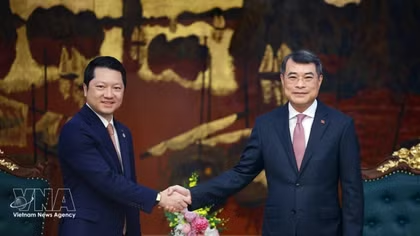
Prime Minister Le Minh Hung asked the two countries' inspection agencies to build on their achievements by regularly exchanging information and experience, maintaining delegation exchanges, and coordinating inspections in areas related to bilateral economic, trade and investment cooperation.
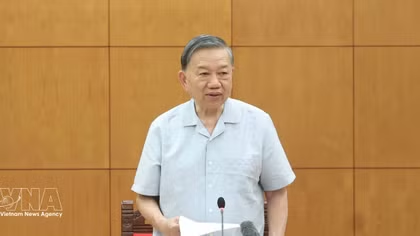
General Secretary and President To Lam demanded a sweeping review rather than piecemeal amendments to individual laws, so that people's rights are protected on a continuing basis.
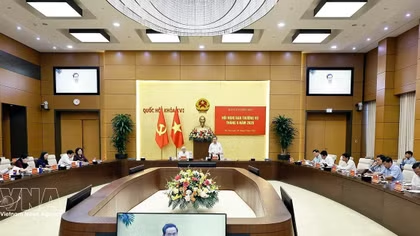
The meeting approved a plan to develop the project on reviewing the 2013 Constitution and studying and proposing comprehensive amendments to the Constitution.