- Vietnam strongly condemns bomb attacks in Philippines
- Church bombs in Philippines kill at least 17, wound 42
- Bomb attack in Egypt: Three injured victims set out for home
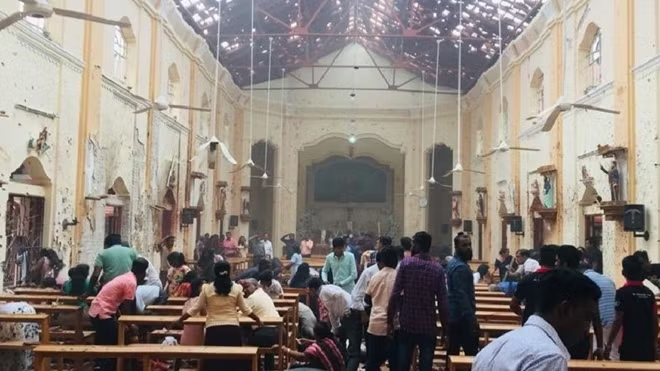
In just one church, St. Sebastian’s in Katuwapitiya, north of Colombo, more than 50 people had been killed, a police official told Reuters, with pictures showing bodies on the ground, blood on the pews and a destroyed roof.
 |
Media reported 25 people were also killed in an attack on a church in Batticaloa in Eastern Province.
The three hotels hit were the Shangri-La Colombo, Kingsbury Hotel and Cinnamon Grand Colombo. It was unclear whether there were any casualties in the hotels.
Nine foreigners were among the dead, the officials said.
There were no immediate claims of responsibility for the attacks in a country which was at war for decades with Tamil separatists until 2009 during which bomb blasts in the capital were common.
Prime Minister Ranil Wickremesinghe called a national security council meeting at his home for later in the day.
“I strongly condemn the cowardly attacks on our people today. I call upon all Sri Lankans during this tragic time to remain united and strong,” he said in a Tweet.
“Please avoid propagating unverified reports and speculation. The government is taking immediate steps to contain this situation.”
One of the explosions was at St Anthony’s Church in Kochcikade, Colombo.
St. Sebastian’s church posted pictures of destruction inside the church on its Facebook page, showing blood on pews and the floor, and requested help from the public.
Last year, there were 86 verified incidents of discrimination, threats and violence against Christians, according to the National Christian Evangelical Alliance of Sri Lanka (NCEASL), which represents more than 200 churches and other Christian organizations.
This year, the NCEASL recorded 26 such incidents, including one in which Buddhist monks allegedly attempted to disrupt a Sunday worship service, with the last one reported on March 25.
Out of Sri Lanka’s total population of around 22 million, 70 percent are Buddhist, 12.6 percent Hindu, 9.7 percent Muslim, and 7.6 percent Christian, according to the country’s 2012 census.
In its 2018 report on Sri Lanka’s human rights, the U.S. State Department noted that some Christian groups and churches reported they had been pressured to end worship activities after authorities classified them as “unauthorized gatherings.”
The report also said Buddhist monks regularly tried to close down Christian and Muslim places of worship, citing unidentified sources.