Expelled Russian diplomats leave Britain in nerve agent crisis

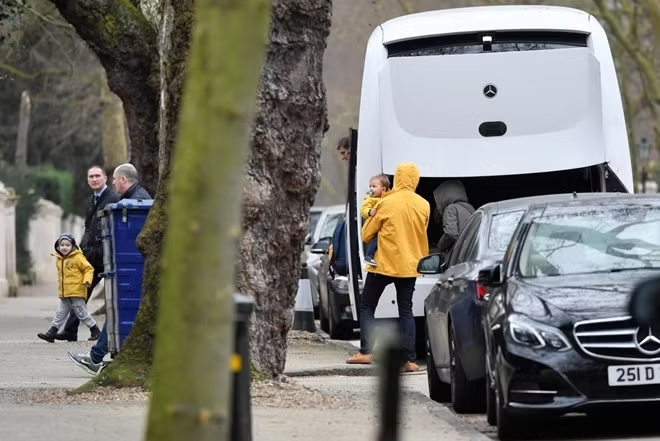
Twenty three expelled Russian diplomats and their families left the embassy in London and headed back to Moscow on Tuesday in the deepest crisis in Russian-British relations since the Cold War sparked by a nerve agent attack in England.

Prime Minister Theresa May blamed Russia for the attack on a Russian double agent and his daughter - the first known offensive use of a nerve toxin in Europe since World War Two - and gave 23 Russians whom she said were spies working under diplomatic cover one week to leave London.
Expelled Russian diplomats leave Britain in nerve agent crisis ảnh 1
Expelled Russian diplomats leave Britain in nerve agent crisis

Russia has repeatedly denied any involvement in the attack on Sergei Skripal and his daughter and on Saturday gave 23 British diplomats a week to leave Moscow as well as closing the British Council in Russia.

Three buses with diplomatic number plates left the Russian embassy compound in London on Tuesday morning, a Reuters photographer at the scene said. Embassy workers waved to the leaving diplomats as the buses pulled away. One diplomat held a pet in a cage.

As the diplomats leave London in the biggest tit-for-tat expulsions since Margaret Thatcher ordered Soviet spies to leave in 1985, May was due to chair a National Security Council meeting on the crisis.

Russia has refused to explain how Novichok, a nerve agent first developed by the Soviet military, was used to strike down Skripal, a former colonel in Russian military intelligence who betrayed dozens of spies to Britain.

Skripal, 66, and his 33-year-old daughter Yulia have been critically ill since they were found unconscious on a bench in the English city of Salisbury on March 4. A British policeman who was also poisoned is in a serious but stable condition.

Russia says it knows nothing about the poisoning and has repeatedly asked Britain to supply a sample of the nerve agent that was used against Skripal.

The United States and European powers say they share Britain’s belief that Russia is culpable for the poisoning though they given no indication of what they will do about it.
Reuters

Other News

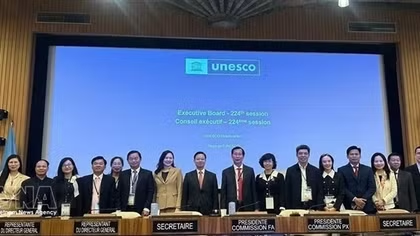
Vietnam supports UNESCO's people-centred approach, multilateral cooperation: official

Vietnam supports UNESCO's people-centred approach, multilateral cooperation: official

Van affirmed Vietnam’s support for the UNESCO80 reform roadmap, focusing on the organisation’s core mandate, priority areas, interdisciplinary approach, and the special status of the Vietnam National Commission for UNESCO, and UNESCO representative offices, alongside efforts to diversify resources and strengthen global partnerships to enhance the organisation’s effectiveness.

Regional media highlight significant step in Vietnam’s leadership structure

Regional media highlight significant step in Vietnam’s leadership structure

Under General Secretary and President Lam’s leadership, Vietnam is expected to maintain a balanced foreign policy, strengthen its regional standing and accelerate economic development, thereby improving living standards and creating new opportunities for international investors, according to the India-based platform Devdiscourse.

Laos identifies 10 key tasks to build independent, self-reliant economy

Laos identifies 10 key tasks to build independent, self-reliant economy

Laos will step up agricultural production to ensure food security, meet domestic demand and expand exports; encourage the development of agro-processing industries, including those related to rubber, aquatic products, cassava and sugarcane, as well as fertiliser and animal feed production, in order to increase added value and create jobs in rural areas.

Malaysia steps up cyber security resilience

Malaysia steps up cyber security resilience

To ensure accountability, Malaysia plans to finalise the Cybercrime Bill this year which addresses both cyber-dependent and cyber-enabled offences, introducing stricter penalties and prison terms to enhance deterrence.

US public opinion positive about PM Pham Minh Chinh’s visit

US public opinion positive about PM Pham Minh Chinh’s visit

Public opinion in the US is generally positive about Vietnamese Prime Minister Pham Minh Chinh’s trip to the US from September 17-23 to attend the 78th session of the United Nations General Assembly, which took place immediately after the upgrading of the Vietnam - US relations to a comprehensive strategic partnership on the occasion of US President Joe Biden’s official visit to Vietnam.