- Battle for Iraq's Mosul could take months: ICRC
- ISIS uses water as weapon in Mosul fight
- Civilian victims of mortar, sniper fire pour into Mosul clinic
The original campaign strategy called for Iraqi forces to close in around Mosul in a horseshoe formation, blocking three fronts but leaving open the fourth - to the west of the city leading to Islamic State territory in neighboring Syria.
That model, used to recapture several Iraqi cities from the ultra-hardline militants in the last two years, would have left fighters and civilians a clear route of escape and could have made the Mosul battle quicker and simpler.
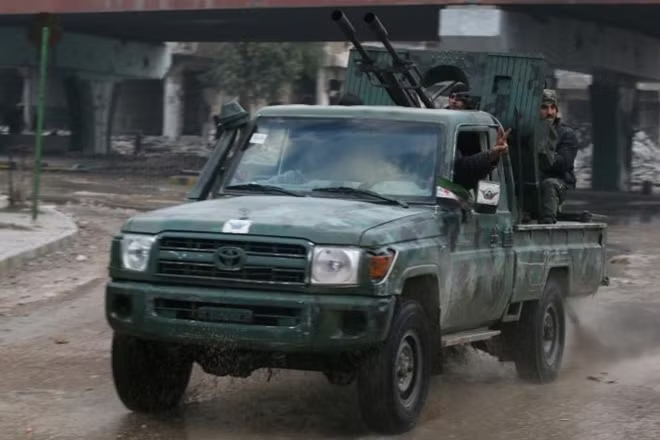 |
| Rebel fighters ride on a pick-up truck mounted with a weapon as they drive in a rebel-held area of Aleppo, Syria December 7, 2016. REUTERS/Abdalrhman Ismail |
But Tehran, anxious that retreating fighters would sweep back into Syria just as Iran's ally President Bashar al-Assad was gaining the upper hand in his country's five-year civil war, wanted Islamic State crushed and eliminated in Mosul.
The sources say Iran lobbied for Iranian-backed Popular Mobilization fighters to be sent to the western front to seal off the link between Mosul and Raqqa, the two main cities of Islamic State's self-declared cross-border caliphate.
That link is now broken. For the first time in Iraq's two-and-half-year, Western-backed drive to defeat Islamic State, several thousand militants have little choice but to fight to the death, and 1 million remaining Mosul citizens have no escape from the front lines creeping ever closer to the city center.
"If you corner your enemy and don’t leave an escape, he will fight till the end," said a Kurdish official involved in planning the Mosul battle.
"In the west, the initial idea was to have a corridor ... but the Hashid (Popular Mobilisation) insisted on closing this loophole to prevent them going to Syria," he told Reuters.
The battle for Mosul is the biggest in Iraq since the U.S.-led invasion of 2003. In all, around 100,000 people are fighting on the government side, including Iraqi soldiers and police, "peshmerga" troops of the autonomous Kurdish region and fighters in the Popular Mobilisation units. A U.S.-led international coalition is providing air and ground support.
Iraqi army commanders have repeatedly said that the presence of civilians on the battlefield has complicated and slowed their seven-week-old operation, restricting air strikes and the use of heavy weapons in populated areas.
They considered a change in strategy to allow civilians out, but rejected the idea because they feared that fleeing residents could be massacred by the militants, who have executed civilians to prevent them from escaping other battles. Authorities and aid groups would also struggle to deal with a mass exodus.