Israeli expert: International cooperation bridges efforts to protect maritime security

The rapid development of AI and digital technology helps the maritime industry operate more efficiently, but it also brings about new security risks. According to Israeli expert Ilona Drozdov, to protect critical maritime infrastructure against increasingly complex threats, nations need to enhance their response capabilities and strengthen international cooperation.

Technology creates new maritime security challenges

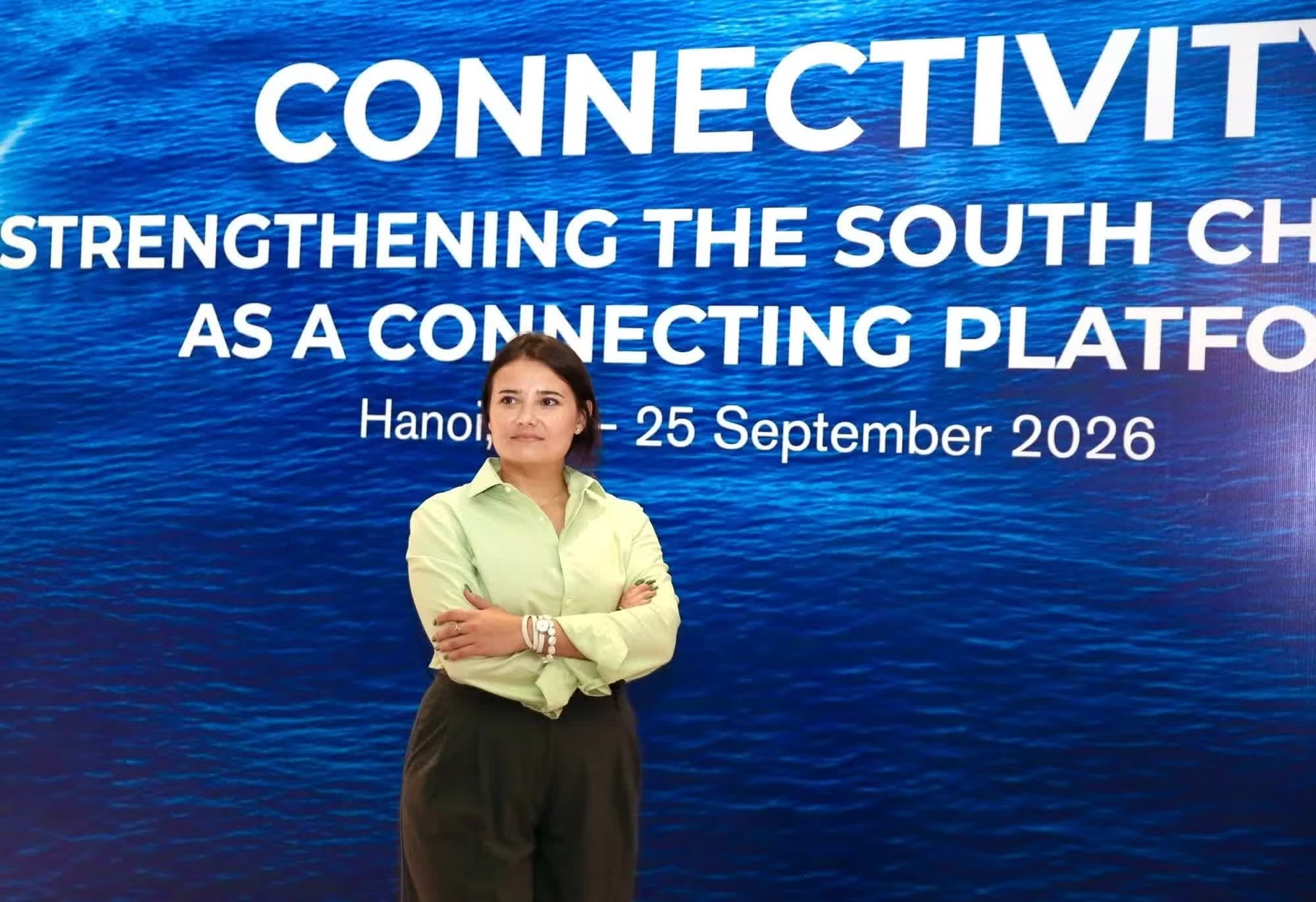
Talking to reporters from the People's Public Security Newspaper on the sidelines of a seminar on promoting maritime diplomacy in Southeast Asia in Hanoi, Ms. Ilona Drozdov, an Israeli expert on international cooperation in maritime security, stated that along with the digitization process, perspectives on maritime security are changing rapidly.
d94df8999dfa1da444eb.jpg
Ms. Ilona Drozdov.

Previously, the scope of protection mainly targeted tangible assets such as seaports, ships, and maritime routes. But today, that scope has expanded to include operating computer systems that connect these infrastructures together.

Taking the recent situation of GPS/GNSS signal interference or spoofing targeting vessels as an example, Ms. Drozdov warned that the consequences could be very severe. "For now, we almost do not have cases of actual collision, but operational procedures at sea have been significantly affected," Ms. Drozdov noted.

One easily overlooked point, according to her, is that information systems and equipment on ships and in seaports do not operate independently, but depend closely on each other; when one system fails, it can trigger a chain reaction of malfunctions in other systems. Therefore, wanting to protect the ship's steering system or the cargo handling system at the port cannot be done by just looking at that system itself, but must trace what factors it relies on to operate.

"Vulnerabilities or threats often stem from third-party software, data collection sensors, or the underlying data itself," she explained.

In other words, a hacker does not necessarily have to attack a ship or port directly; just infiltrating a small supplier in the supply chain is enough to inversely affect the entire system.

Taking a typical example of this interdependence, subsea fiber optic cables, the lifeline of the global internet, Ms. Drozdov noted that not all incidents are caused by targeted attacks; dropping anchors or fishing by vessels can also cut cables. But because subsea cables are increasingly important to the digital economy, countries need the capability to detect, handle, and recover as quickly as possible when incidents occur.

Commenting on AI and automation, the Israeli expert assessed that these new technologies are strongly changing the way seaports, shipping, and the logistics industry operate. However, alongside a series of positive changes helping to increase operational productivity, the application of AI technology comes with certain security risks.

"When we talk about artificial intelligence, we must understand that technological capability is not equivalent to resilience," she said, recommending that before deploying AI, agencies and businesses must clearly define what tasks AI will undertake, how critical its role is, and where vulnerabilities might lie throughout the operational chain.

International cooperation is a key requirement

From the above challenges, expert Drozdov recommended that nations and organizations enhance the resilience of the entire chain, strengthen coordination between state agencies and businesses, and share experiences to proactively respond to new risks.
6ghqgnkhmnjnnfdmeyv42pgo4m.jpg
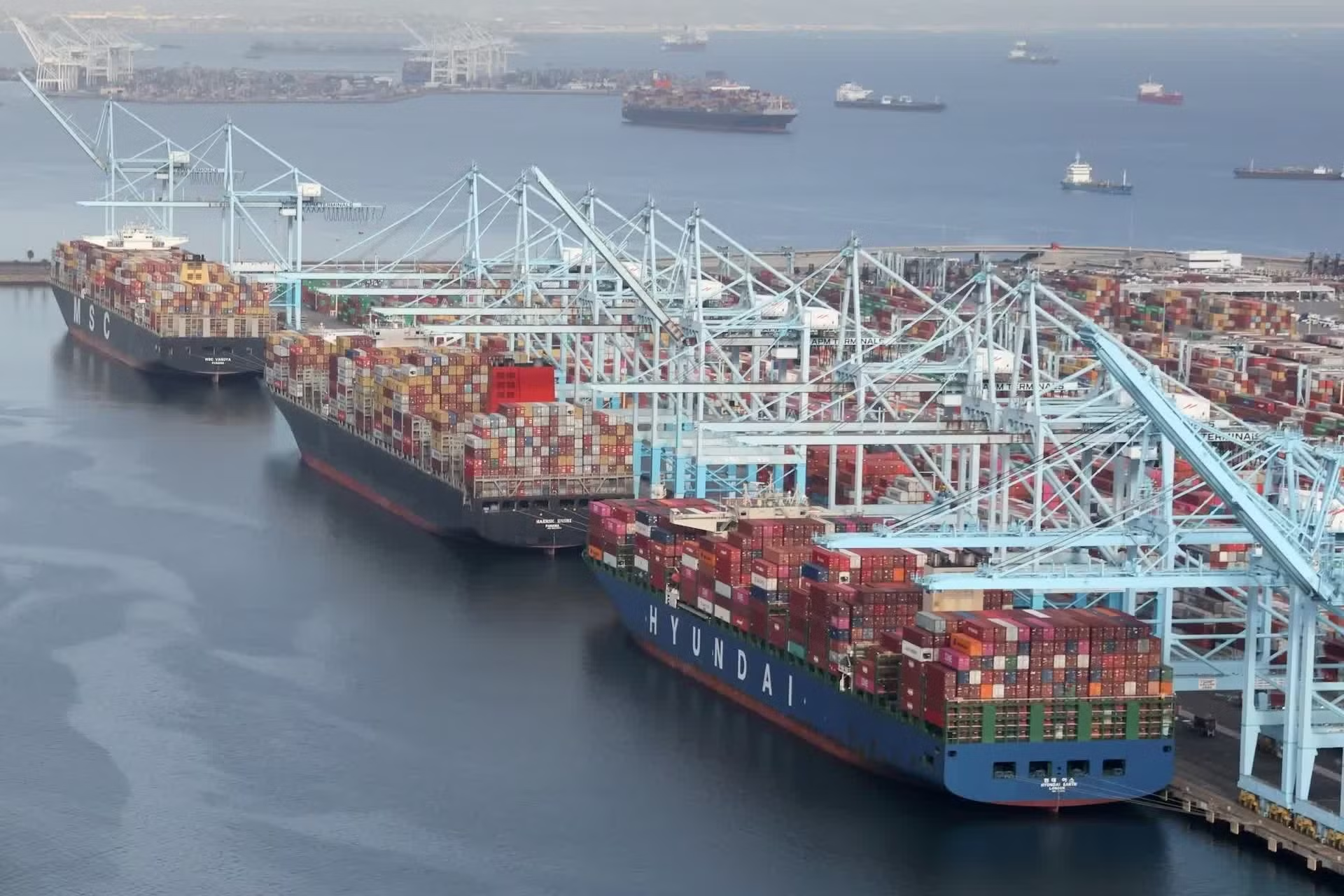
International cooperation is the bridge connecting pieces to protect maritime security, according to Ms. Drozdov. Photo: Reuters

For dynamic economies in Southeast Asia, Ms. Drozdov believes that first of all, countries need to clearly recognize the level of interdependence in maritime activities, from seaports, transportation, and logistics to technological systems and cross-border supply chains.

Therefore, the Israeli expert called for promoting international cooperation early, not only to handle incidents when they occur but also for countries to jointly prepare for new risks in advance. Exchanging information, experiences, and technology can help each country access additional solutions that a single nation would struggle to fully develop on its own.

One of the fields clearly demonstrating this requirement is the protection of subsea fiber optic cables. This is an infrastructure system spanning the waters of multiple countries, while ownership, operation, and protection responsibilities may belong to different entities. Ensuring the safety of this system requires coordination that goes beyond the scope of any single nation.

Besides technology and infrastructure issues, the Israeli expert also stated that international cooperation needs to be further expanded in legal terms. The emergence of new threats poses issues that existing international treaties do not fully address.
By TM

Other News

Vietnam, US strengthen cooperation to ease suffering of AO/dioxin victims

Vietnam, US strengthen cooperation to ease suffering of AO/dioxin victims

A delegation from the Vietnam Association for Victims of Agent Orange/dioxin's chapter in Ho Chi Minh City (VAVA HCMC) visited the US directly inform American friends about the long-term consequences of AO/dioxin in Vietnam and seek the support of progressive groups, veterans, legal experts and youth organisations in efforts to care for the victims.

Indonesia earthquake death toll rises, 2,000 evacuated

Indonesia earthquake death toll rises, 2,000 evacuated

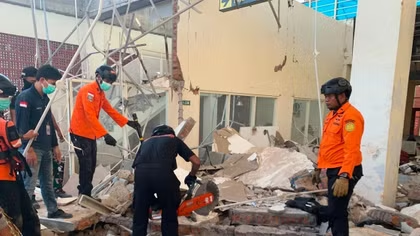
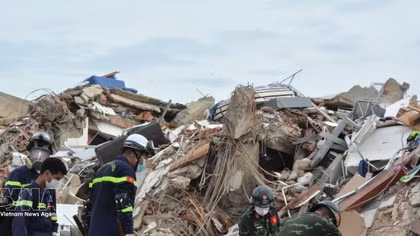
The earthquake struck off Flores Island near Mbay town in Nagekeo district, East Nusa Tenggara province, triggering strong aftershocks. Several houses and other structures were damaged, while landslides disrupted roads in some areas.

Indian Embassy thanks Vietnam for support after Phu Quoc boat tragedy

Indian Embassy thanks Vietnam for support after Phu Quoc boat tragedy

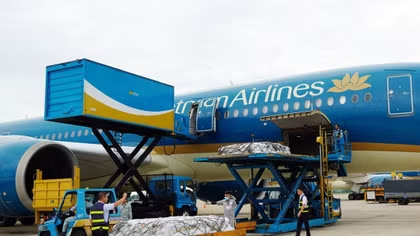
The embassy said on its official X account that the flight carrying the victims' mortal remains departed Ho Chi Minh City on July 13 and arrived in Mumbai later the same day. Authorities in the Indian states of Andhra Pradesh, Kerala and Tamil Nadu coordinated the transportation of the remains to their final destinations.

Vietnamese community in Venezuela backs rescue team on humanitarian mission

Vietnamese community in Venezuela backs rescue team on humanitarian mission

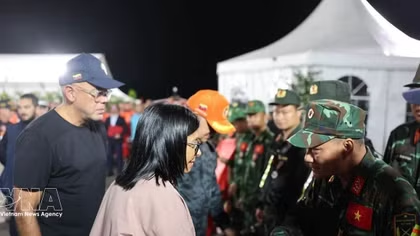
All members of the Vietnamese rescue team in Venezuela have maintained strict discipline, a strong sense of responsibility and unwavering focus when carrying out search, rescue and disaster recovery tasks, with the determination to successfully fulfil the international humanitarian mission entrusted by the Party, State and military.

Key issues ex high agenda at the ASEAN Future Forum 2026

Key issues ex high agenda at the ASEAN Future Forum 2026

PSNews - Nearly six decades after its founding, ASEAN is entering a new phase of transformation. Geopolitical turbulence, intensifying competition among major powers, non-traditional security challenges, and rapid technological change are raising fundamental questions about the region’s future trajectory. In this context, the ASEAN Future Forum (AFF) 2026 is more than a platform for regional countries to discuss current issues; it is designed to identify strategic pathways for ASEAN in the years ahead.

Malaysia bans social media accounts for children under 16

Malaysia bans social media accounts for children under 16

Under the new rules, social media platforms are required to implement age-verification systems and prevent users under 16 from creating accounts. The regulations apply to platforms with at least eight million users in Malaysia, including Facebook, Instagram, TikTok and YouTube.

Cambodia ranked world's top country for natural environment in 2026

Cambodia ranked world's top country for natural environment in 2026

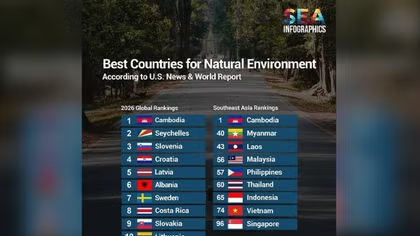
Cambodia currently manages 73 protected natural areas covering more than seven million hectares, equivalent to about 41% of the country’s total land area. These protected areas play a vital role in forest conservation, wildlife habitat protection and biodiversity preservation through stricter law enforcement and conservation measures.

ASEAN chief spotlights Vietnam’s role in shaping bloc’s future

ASEAN chief spotlights Vietnam’s role in shaping bloc’s future

Vietnam is expected to maintain active contributions across ASEAN’s three pillars - the political-security community, the economic community, and the socio-cultural community; while further enhancing regional connectivity through infrastructure projects and stronger economic linkages.

Vietnam supports UNESCO's people-centred approach, multilateral cooperation: official

Vietnam supports UNESCO's people-centred approach, multilateral cooperation: official

Van affirmed Vietnam’s support for the UNESCO80 reform roadmap, focusing on the organisation’s core mandate, priority areas, interdisciplinary approach, and the special status of the Vietnam National Commission for UNESCO, and UNESCO representative offices, alongside efforts to diversify resources and strengthen global partnerships to enhance the organisation’s effectiveness.

Regional media highlight significant step in Vietnam’s leadership structure

Regional media highlight significant step in Vietnam’s leadership structure

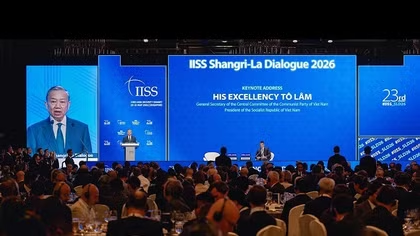
Under General Secretary and President Lam’s leadership, Vietnam is expected to maintain a balanced foreign policy, strengthen its regional standing and accelerate economic development, thereby improving living standards and creating new opportunities for international investors, according to the India-based platform Devdiscourse.