Palm oil blamed for 39 percent of forest loss in Borneo island

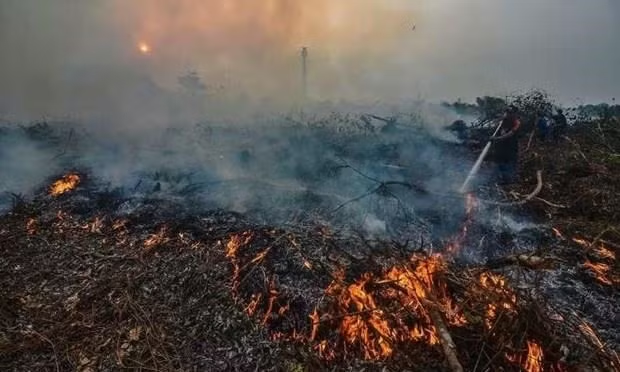
The palm oil industry was responsible for at least 39 percent of forest loss on the biodiversity-rich island of Borneo between 2000 and 2018, according to data from the Centre for International Forest Research (CIFOR), a research firm based in Indonesia.

The palm oil industry was responsible for at least 39 percent of forest loss on the biodiversity-rich island of Borneo between 2000 and 2018. (Photo: OI)
The palm oil industry was responsible for at least 39 percent of forest loss on the biodiversity-rich island of Borneo between 2000 and 2018. (Photo: OI)

The palm oil industry was responsible for at least 39 percent of 

forest loss on the biodiversity-rich island of Borneo between 2000 and 2018, according to data from the Centre for International Forest Research (CIFOR), a research firm based in Indonesia.

The data comes as forest clearance fires in Borneo and parts of Indonesia spread smog across Southeast Asia, causing air quality to drop to unhealthy levels in neighbouring Singapore and Malaysia.

Borneo, shared by Brunei, Indonesia and Malaysia, lost 6.3 million hectares of forest cover during the period, of which palm oil companies accounted for about 2.4 million hectares while pulpwood firms accounted for 461,319 hectares.

Palm oil was responsible for 35 percent of forest loss in the Indonesian part of Borneo, and 46 percent on the Malaysian side.

Indonesia and Malaysia produce about 85 percent of the world’s palm oil, which is used in everything from soaps, lipstick to pizza and biodiesel.

CIFOR determined the amount of deforestation caused by companies by calculating the area of forest cleared and converted to industrial plantations within the same year. The data does not include plantations farmed by smallholders, who account for 40 percent of palm oil production globally, industry estimates show.

According to David Gaveau, a climate scientist at CIFOR, the conversion from forest area to plantations has slowed since 2012 due to lower prices for palm oil and Indonesia’s bans on new plantations. Last year, forest loss from expansion of palm oil plantations fell to 22 percent from 28.5 percent in the previous year.
VNA

Other News

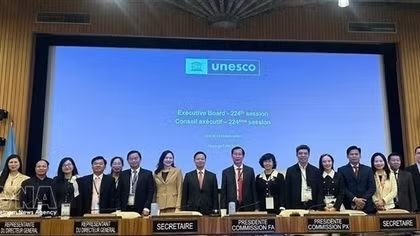
Vietnam supports UNESCO's people-centred approach, multilateral cooperation: official

Vietnam supports UNESCO's people-centred approach, multilateral cooperation: official

Van affirmed Vietnam’s support for the UNESCO80 reform roadmap, focusing on the organisation’s core mandate, priority areas, interdisciplinary approach, and the special status of the Vietnam National Commission for UNESCO, and UNESCO representative offices, alongside efforts to diversify resources and strengthen global partnerships to enhance the organisation’s effectiveness.

Regional media highlight significant step in Vietnam’s leadership structure

Regional media highlight significant step in Vietnam’s leadership structure

Under General Secretary and President Lam’s leadership, Vietnam is expected to maintain a balanced foreign policy, strengthen its regional standing and accelerate economic development, thereby improving living standards and creating new opportunities for international investors, according to the India-based platform Devdiscourse.

Laos identifies 10 key tasks to build independent, self-reliant economy

Laos identifies 10 key tasks to build independent, self-reliant economy

Laos will step up agricultural production to ensure food security, meet domestic demand and expand exports; encourage the development of agro-processing industries, including those related to rubber, aquatic products, cassava and sugarcane, as well as fertiliser and animal feed production, in order to increase added value and create jobs in rural areas.

Malaysia steps up cyber security resilience

Malaysia steps up cyber security resilience

To ensure accountability, Malaysia plans to finalise the Cybercrime Bill this year which addresses both cyber-dependent and cyber-enabled offences, introducing stricter penalties and prison terms to enhance deterrence.

US public opinion positive about PM Pham Minh Chinh’s visit

US public opinion positive about PM Pham Minh Chinh’s visit

Public opinion in the US is generally positive about Vietnamese Prime Minister Pham Minh Chinh’s trip to the US from September 17-23 to attend the 78th session of the United Nations General Assembly, which took place immediately after the upgrading of the Vietnam - US relations to a comprehensive strategic partnership on the occasion of US President Joe Biden’s official visit to Vietnam.