- Ex-FBI chief Comey tells U.S. senators Trump pressured him on Russia probe
- Vietnam – Macau (China) to further cooperation in combating crimes
- Moscow slams NATO’s unconstructive ‘ritual dance’ featuring US State Secretary Tillerson
President Petro Poroshenko, whose country is fighting a Kremlin-backed insurgency in eastern Ukraine, revived the prospect of NATO membership during a visit by NATO Secretary-general Jens Stoltenberg who himself used the occasion to call on Moscow to withdraw its troops from Ukraine.
"Ukraine has clearly defined its political future and its future in the sphere of security," Poroshenko speaking to reporters alongside Stoltenberg.
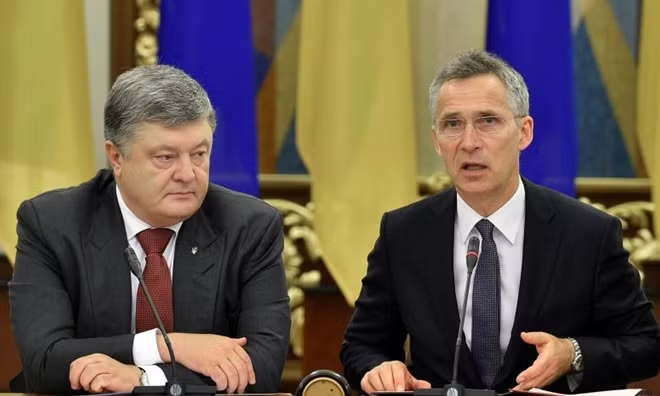 |
| Ukrainian President Petro Poroshenko and NATO Secretary General Jens Stoltenberg attend a meeting in Kiev, Ukraine, July 10, 2017. Mykola Lazarenko/Ukrainian Presidential Press Service/Handout via REUTERS |
"Today we clearly stated that we would begin a discussion about a membership action plan and our proposals for such a discussion were accepted with pleasure."
Russia, deeply opposed to enlargement of NATO toward its borders, weighed in quickly, saying the prospect of NATO membership for Ukraine would not promote stability and security in Europe.
Kremlin spokesman Dmitry Peskov, reacting to Stoltenberg's comment repeated Russia's assertion that it had never had troops in Ukraine.
NATO leaders agreed at a summit in 2008 that Ukraine would one day become a member of the alliance. But there was little popular support for the issue at the time and it was never pursued by Ukraine's pro-Russian president, Viktor Yanukovich.
Support for NATO membership however has soared since Russia's annexation of Crimea in March 2014, following the fall of Yanukovich, and the outbreak of the war in eastern Ukraine, which has killed more than 10,000 people.
Some 69 percent of Ukrainians want to join NATO, according to a June poll by the Democratic Initiatives Foundation, compared to 28 percent support in 2012 when Yanukovich was in power.
Most observers say any prospect of NATO membership for Ukraine is years off. No dates were issued for when talks on a membership action plan might begin and Poroshenko himself said: "This does not mean that we will soon be applying for membership."
Poroshenko, in separate comments issued by his office, said Ukraine was determined to conduct reforms in order to "have a clear schedule of what must be done by 2020 to meet the NATO membership criteria."
A NATO spokeswoman said these would relate to defense, anti-corruption measures, governance and law enforcement.
But the war in the east, which still ticks on despite a theoretical ceasefire, also poses a big obstacle to membership since NATO rules state that aspiring members must first settle international disputes by peaceful means.
Stoltenberg called on Russia to withdraw thousands of troops from Ukraine - forces that Moscow has repeatedly denied sending - and raised concerns about the growing threats to the safety of international teams monitoring the conflict.
He also said NATO had provided Ukraine with new equipment to uncover the perpetrators of a cyber attack that hit Ukraine in June and spread globally.
A cyber attack that began in Ukraine on June 27 spread around the world, knocking out computers and disrupting factories and shipping. Ukrainian politicians pinned the blame on Russia, while Russia denied involvement.