- Blast hits Syrian bus convoy near Aleppo: state media, monitors
- Jets hit Syrian rebel outpost near Turkish border: rebels
- Russia strikes deal with Syrian Kurds to set up base: Syrian Kurdish militia
- Syrian opposition says won't attend Astana talk
Turkey, which supports Syrian rebels, and Iran, which backs Syrian President Bashar Assad, agreed earlier in the day to Russia's proposal for "de-escalation zones" in Syria, a move welcomed by the United Nations but met with scepticism from the United States.
"We want Syria to maintain its integrity," opposition delegate Osama Abu Zaid said after Russia, Turkey and Iran signed a memorandum on creating safe zones. The three countries are sponsoring talks in the Kazakh capital Astana aimed at ending Syria's fighting.
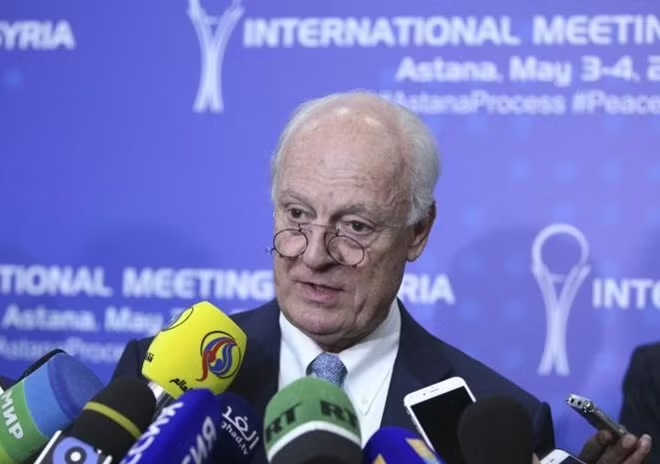 |
| U.N. Special Envoy for Syria Staffan de Mistura speaks to the media during the fourth round of Syria peace talks in Astana, Kazakhstan, May 4, 2017. REUTERS/Mukhtar Kholdorbekov |
"We are against the division of Syria. As for the agreements, we are not a party to that agreement and of course we will never be in favor (of it) as long as Iran is called a guarantor state," Abu Zaid said.
He also cited what he called "a huge gap" between the promises of Russia, which intervened militarily in 2015 on Assad's side and gave him back the upper hand in the conflict.
"We have an agreement already (in) our hands, why isn’t it implemented?" he said, referring to a truce deal announced by Russia in December that was largely ignored on the ground. "Why are we jumping now to safe zones?"
"Russia was not able to or does not want to implement the pledges it makes, and this is a fundamental problem."
Russia, Turkey and Iran did not immediately publish the memorandum, leaving its details unclear. But the safe zones appear intended to be conflict-free to help widen a ceasefire, and would potentially be policed by foreign troops.
The U.S. State Department said in a statement that it was skeptical of Iran's involvement as a guarantor of the accord and Damascus' track record on previous agreements.
U.N. Secretary-General Antonio Guterres said in a statement that he was encouraged by the proposal but cautioned it must "actually improve the lives of Syrians."
Saudi Arabia's foreign minister, Adel al-Jubeir, said while on a visit to Washington, D.C., that the kingdom supported creation of safe zones but he wanted to see more details.
Russian negotiator Alexander Lavrentyev said that under the plan Russia could send observers to safe zones. He said third-party monitors could be invited provided Iran and Turkey agreed.