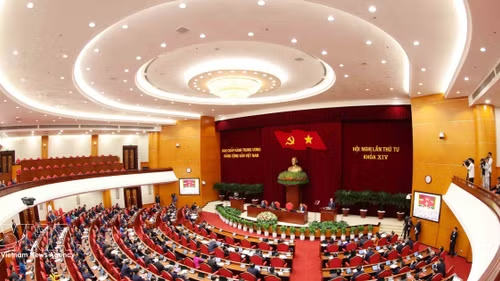
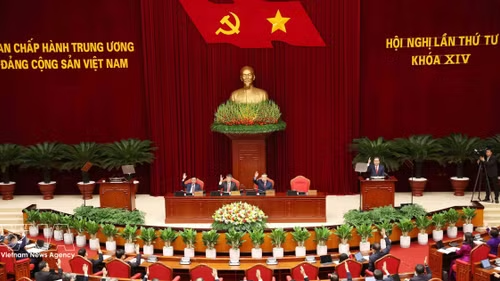
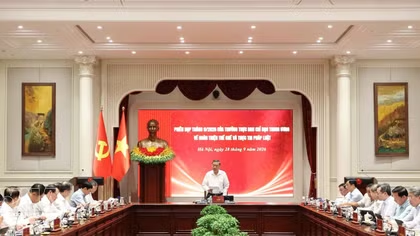
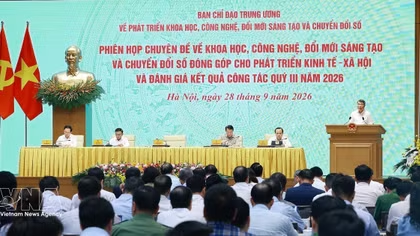
Hanoi (VNA) - Tasks under the Politburo’s Resolution 57 on breakthroughs in science, technology, innovation, and national digital transformation will be considered complete only when they deliver concrete products and values, backed by verifiable data and measurable effectiveness for end users, said Party General Secretary and State President To Lam.
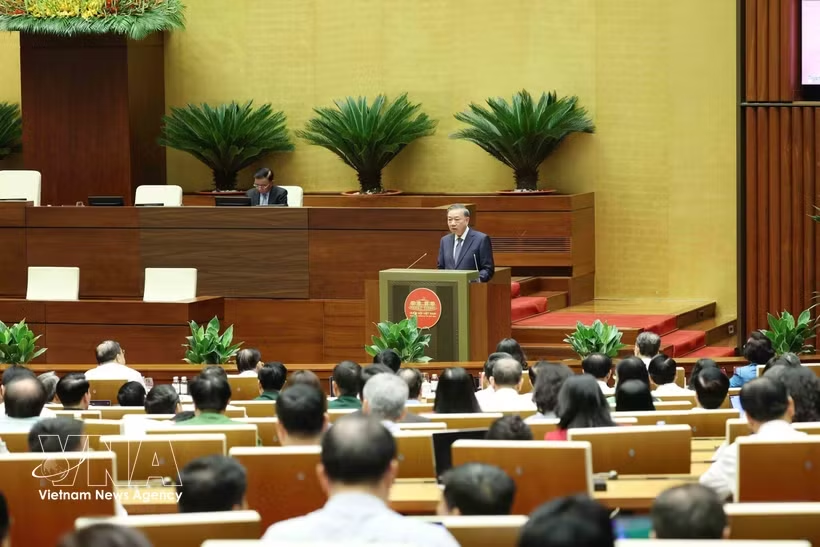
Speaking at a July 1 hybrid conference in Hanoi reviewing the 18-month implementation of the resolution, General Secretary and President Lam praised ministries, agencies, local authorities, research institutes, universities, business community, intellectuals, scientists and the public for pushing the resolution forward.
He also flagged persistent bottlenecks spanning from policies and mechanisms to infrastructure, workforce, data security and capital disbursement, saying that the outcomes have yet to match the political commitment and resources allocated.
Key driver of new growth model
The leader stressed that while the 14th National Party Congress’s Resolution serves as the strategic blueprint for the country's next growth stage, Resolution 57 is one of the key engines for turning that blueprint into reality.
He underscored that sci-tech, innovation and digital transformation must be recognised as the primary drivers of Vietnam’s new growth model. They are not an option but an imperative to meet the country’s two centenary goals.
With global technology competition intensifying, delivering on Resolution 57 has become more critical and urgent than ever, he said, framing it as essential not just to avoid falling behind but achieve strategic autonomy and safeguard national security.
Every Party committee, organisation, official and member, especially those in leadership positions, must treat the resolution implementation as a regular and important political task. Agencies across the political system should lead by example, while businesses and the public should actively join the process, he said.
On digital transformation, he said accelerating adoption across enterprises and society is equally critical to developing the digital economy and digital society.
He called for comprehensive, accurate, clean, continuously updated, interoperable and shared data, coupled with business process restructuring and a workforce equipped with digital skills and a digital-first work culture.
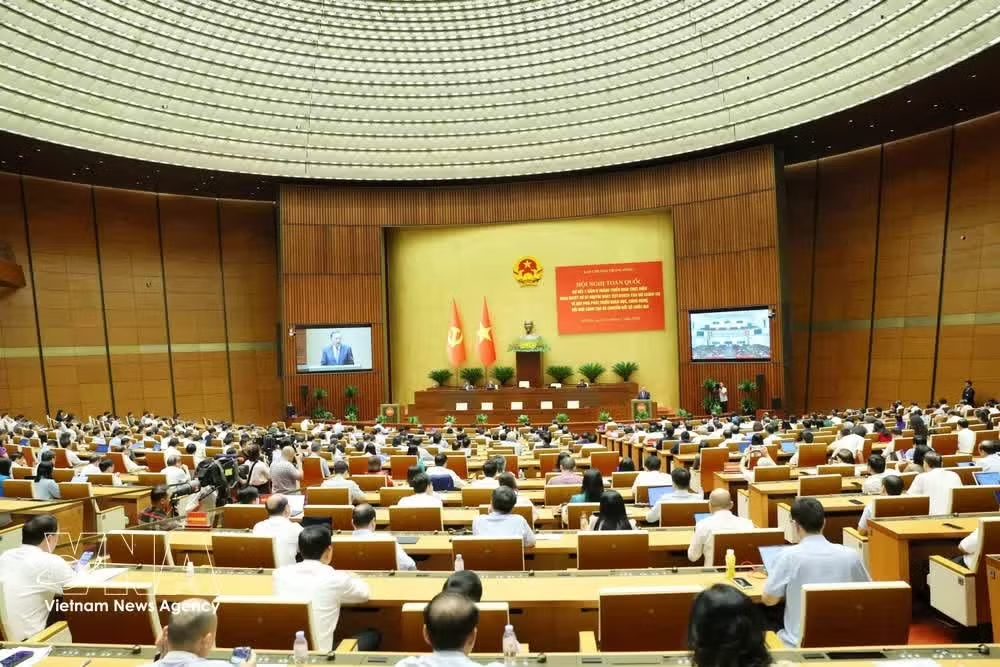
On sci-tech and innovation, he stressed that national strategic technologies must secure investment to achieve technological mastery and become tangible products. Priority areas include artificial intelligence (AI), big data, robotics and automation, biotechnology and biomedicine, advanced materials and energy, semiconductor chips, cybersecurity, quantum technologies, unmanned aerial systems, and marine and subsurface technologies.
He also underscored cybersecurity, information security, data security and national digital sovereignty, insisting that Vietnam must not sacrifice security for development but concerns over potential risks should not slow innovation.
Shift from passive mindset to proactive action
The top leader also called for synchronous action from the central to local levels, spanning the political system and society at large.
He urged ministries and agencies to proactively review and overhaul policies and mechanisms, swiftly issuing regulations, standards, technical specifications, operational procedures and architecture frameworks. Bottlenecks must be cleared without delay.
Local authorities, he said, must decisively shift from passively waiting for guidance to proactively driving action, while fostering innovation within the legal framework. Each locality should identify its own priorities based on local conditions, comparative advantages and development needs.
He encouraged localities to boldly take on major national initiatives, proactively propose new mechanisms, innovative models and approaches, and flag practical obstacles so that central authorities can further refine the institutional framework.
For the business community, he stressed that major enterprises, including both state-owned and private, should play a leading role in mastering core technologies, developing made-in-Vietnam technology products, integrating more deeply into global value chains and building innovation ecosystems with broad spillover effects.
Research institutes, universities and the scientific community must continue serving as the backbone of generating new knowledge, developing new technologies and cultivating a highly skilled workforce, he said.
To build a long-term talent pipeline, he ordered the education sector, universities and vocational training establishments to overhaul curricula from the next academic year. Priority should be given to strategic technology fields and boosting digital skills, digital transformation capabilities, innovation, and especially the AI adoption.
He called for a fundamental overhaul of leadership, inspection and performance evaluation, demanding that leaders at all levels take direct responsibility for driving, overseeing and ensuring effective delivery.
The Politburo has decided to raise the rate of officials with sci-tech expertise in Party committees to 10%-15% from 5%, he noted, requiring Party committees and organisations at central and local levels to devise training plans to meet that target.
The Party Central Committee’s Inspection Commission and inspection boards at all levels must tighten oversight of Resolution 57 and other Party directives to ensure rigorous and effective follow-through, he concluded./.