- Australia says TPP not dead, despite Trump opposition
- Trump says will quit TPP trade pact on day one of presidency
- Japan PM says TPP trade pact meaningless without U.S.
- TPP leaders promise efforts to implement deal
- PM: Integration to continue regardless of TPP
Fulfilling a campaign pledge to end American involvement in the 2015 pact, Trump signed an executive order in the Oval Office pulling the United States out of the 12-nation TPP.
Trump, who wants to boost U.S. manufacturing, said he would seek one-on-one trade deals with countries that would allow the United States to quickly terminate them in 30 days "if somebody misbehaves."
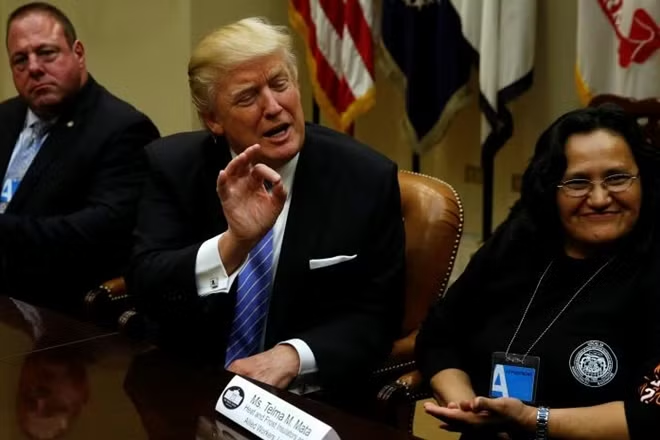 |
| U.S. President Donald Trump (C), flanked by Gary Masino (L) of the Sheet Metal Workers Union and Telma Mata (R) of the Heat and Frost Insulators Allied Workers Local 24, holds a roundtable meeting with labor leaders at the White House in Washington, U.S. January 23, 2017. REUTERS/Jonathan Ernst |
"We're going to stop the ridiculous trade deals that have taken everybody out of our country and taken companies out of our country," the Republican president said as he met with union leaders in the White House's Roosevelt Room.
The TPP accord, backed heavily by U.S. business, was negotiated by former Democratic President Barack Obama's administration but never approved by Congress.
Obama had framed TPP, which excluded China, as an effort to write Asia's trade rules before Beijing could, establishing U.S. economic leadership in the region as part of his "pivot to Asia."
China has proposed a Free Trade Area of the Asia Pacific and has also championed the Southeast Asian-backed Regional Comprehensive Economic Partnership.
Trump has sparked worries in Japan and elsewhere in the Asia-Pacific with his opposition to the TPP and his campaign demands for U.S. allies to pay more for their security.
His trade stance mirrors a growing feeling among Americans that international trade deals have hurt the U.S. job market. Republicans have long held the view that free trade is a must, but that mood has been changing.
"It's going to be very difficult to fight that fight," said Lanhee Chen, a Hoover Institution fellow who was domestic policy adviser to 2012 Republican presidential nominee Mitt Romney. "Trump is reflecting a trend that has been apparent for many years."
Harry Kazianis, director of defense studies at the Center for the National Interest think tank in Washington, said Trump must now find an alternative way to reassure allies in Asia.
"This could include multiple bilateral trade agreements. Japan, Taiwan and Vietnam should be approached first as they are key to any new Asia strategy that President Trump will enact,” he said.
Trump is also working to renegotiate the North American Free Trade Agreement to provide more favorable terms to the United States, telling reporters he would meet leaders of NAFTA partners Mexico and Canada to get the process started.