After months of inaction, U.S. Congress approves $892 billion COVID-19 relief package

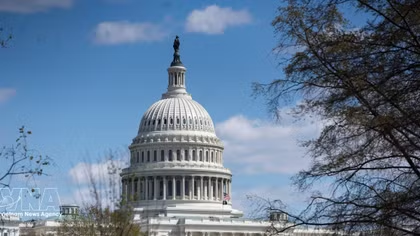
 The U.S. Congress on Monday approved an $892 billion coronavirus aid package, throwing a lifeline to the nation’s pandemic-battered economy after months of inaction, while also keeping the federal government funded.

President Donald Trump is expected to sign the package into law.

Following days of furious negotiation, both legislative chambers worked deep into the night to pass the bill - worth about $2.3 trillion including spending for the rest of the fiscal year - with the House of Representatives first approving it and the Senate following suit several hours later in a bipartisan 92-6 vote.

The virus relief bill includes $600 payments to most Americans as well as additional payments to the millions of people thrown out of work during the COVID-19 pandemic, just as a larger round of benefits is due to expire on Saturday.

The stimulus package, the first congressionally approved aid since April, comes as the pandemic is accelerating in the United States, infecting more than 214,000 people every day and slowing the economic recovery. More than 317,000 Americans have died.

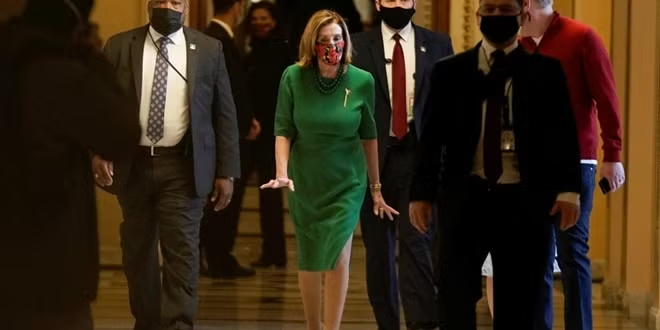
House Speaker Nancy Pelosi, a Democrat, said she supported the virus relief bill even though it did not include the direct aid for state and local governments that Democrats had sought. She said they would try for it again after Democratic President-elect Joe Biden takes office on Jan. 20.

The bill, she said, “doesn’t go all the way but it takes us down the path.”

Republican Representative Hal Rogers, who also supported the package, said “it reflects a fair compromise.”

At 5,593 pages, the wide-ranging bill that also spends $1.4 trillion on an array of federal programs through the end of the fiscal year in September, is likely to be the final major piece of legislation for the 116th Congress that expires on Jan. 3. Congress included a measure continuing current levels of government spending for seven days, ensuring no interruption to federal operations.
After months of inaction, U.S. Congress approves $892 billion COVID-19 relief package ảnh 1
After months of inaction, U.S. Congress approves $892 billion COVID-19 relief package
Reuters

Other News

Vietnam supports UNESCO's people-centred approach, multilateral cooperation: official

Vietnam supports UNESCO's people-centred approach, multilateral cooperation: official

Van affirmed Vietnam’s support for the UNESCO80 reform roadmap, focusing on the organisation’s core mandate, priority areas, interdisciplinary approach, and the special status of the Vietnam National Commission for UNESCO, and UNESCO representative offices, alongside efforts to diversify resources and strengthen global partnerships to enhance the organisation’s effectiveness.

Regional media highlight significant step in Vietnam’s leadership structure

Regional media highlight significant step in Vietnam’s leadership structure

Under General Secretary and President Lam’s leadership, Vietnam is expected to maintain a balanced foreign policy, strengthen its regional standing and accelerate economic development, thereby improving living standards and creating new opportunities for international investors, according to the India-based platform Devdiscourse.

Laos identifies 10 key tasks to build independent, self-reliant economy

Laos identifies 10 key tasks to build independent, self-reliant economy

Laos will step up agricultural production to ensure food security, meet domestic demand and expand exports; encourage the development of agro-processing industries, including those related to rubber, aquatic products, cassava and sugarcane, as well as fertiliser and animal feed production, in order to increase added value and create jobs in rural areas.

Malaysia steps up cyber security resilience

Malaysia steps up cyber security resilience

To ensure accountability, Malaysia plans to finalise the Cybercrime Bill this year which addresses both cyber-dependent and cyber-enabled offences, introducing stricter penalties and prison terms to enhance deterrence.

US public opinion positive about PM Pham Minh Chinh’s visit

US public opinion positive about PM Pham Minh Chinh’s visit

Public opinion in the US is generally positive about Vietnamese Prime Minister Pham Minh Chinh’s trip to the US from September 17-23 to attend the 78th session of the United Nations General Assembly, which took place immediately after the upgrading of the Vietnam - US relations to a comprehensive strategic partnership on the occasion of US President Joe Biden’s official visit to Vietnam.