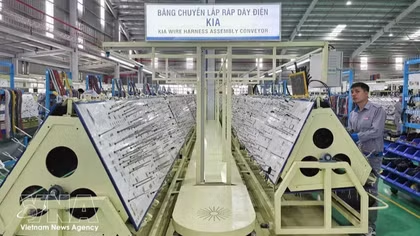
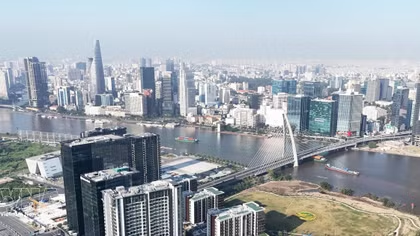
Even as a sluggish global recovery, rising protectionism and tighter technical standards continue to pose challenges, Vietnam’s agriculture and environment sector is carving out new growth opportunities by restructuring production, stepping up business initiative and shifting its growth model, with exports targeted at 73–74 billion USD.
According to Deputy Minister of Agriculture and Environment Phung Duc Tien, expanding and diversifying export markets remains a key priority in 2026. Beyond traditional destinations, the sector is intensifying efforts to penetrate emerging markets in the Middle East, Africa and South Asia, while making more effective use of free trade agreements (FTAs) to strengthen competitiveness and widen market access for Vietnamese agricultural products.
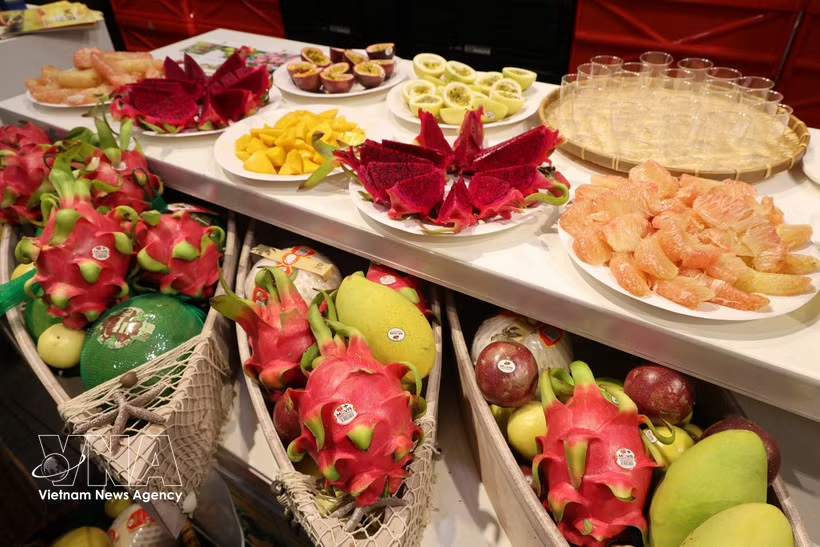
These efforts are already yielding results. In January 2026, agro-forestry-fishery export turnover reached nearly 6.51 billion USD, up almost 30% year-on-year, underscoring clear signs of recovery and the sector’s strong adaptability.
Alongside market expansion, raising value added through deep processing has been identified as a central driver of new growth. Nguyen Dinh Tho, Deputy Director General of the Institute of Strategy and Policy on Agriculture and Environment, noted that Vietnam is increasingly integrating into global supply chains, particularly through processed products. Moving away from raw-material exports towards processed goods helps lift value, improve economic efficiency and enhance the international profile of Vietnamese agricultural products.
The coffee sector illustrates this shift. In 2025, coffee export revenue hit 8.92 billion USD, up nearly 59% year-on-year, driven not only by higher prices but also by a strong transition towards roasted, instant and other high-value products. Deep processing has significantly boosted export value while reducing exposure to fluctuations in raw commodity prices.
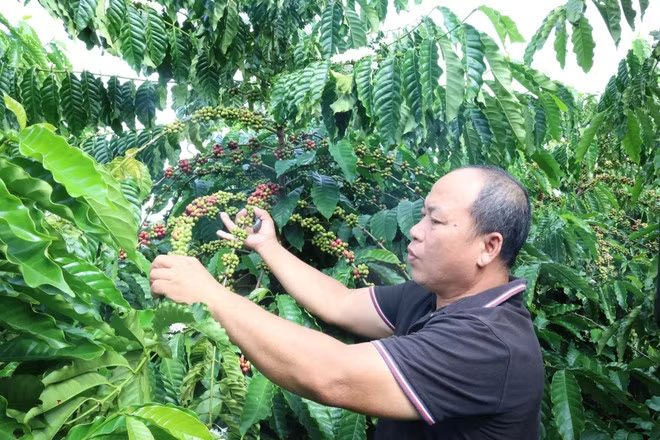
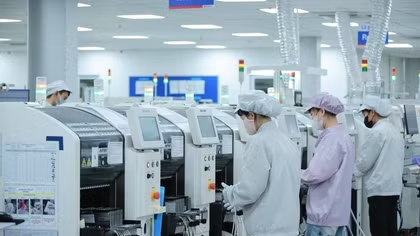
Investment in processing technology and brand development is therefore becoming unavoidable. Many domestic and foreign-invested enterprises have stepped up investment in modern processing facilities, developed higher value-added products and expanded export markets, an important transformation to improve competitiveness and lay the foundation for sustainable growth.
The fruit and vegetable sector has also recorded encouraging progress. According to Dinh Cao Khue, Vice Chairman of the Vietnam Fruit and Vegetable Association, growth has been reflected not only in scale but also in quality, as businesses place greater emphasis on standardised raw-material areas, processing investment and product diversification.
Experts believe the sector still holds considerable growth potential, particularly in high-demand markets such as Europe, the US, Japan and the Republic of Korea. Investment in processing technology helps improve quality, extend shelf life and meet stringent technical requirements, thereby increasing export value.
Business initiative is playing an increasingly decisive role in market expansion. Many companies have invested in certified raw-material zones and applied digital technologies in production management, traceability and quality control. Supply-chain digitalisation enhances transparency, meets international market requirements and improves management efficiency.
At the same time, the agriculture and environment sector continues to refine policies and mechanisms to support business development. The Ministry of Agriculture and Environment (MAE) is intensifying trade promotion, assisting enterprises in market expansion, strengthening compliance with international standards and adapting to new import regulations.
Science and technology are identified as core drivers of value addition and competitiveness. Applying technology across production, processing and value-chain management not only improves product quality but also reduces costs, boosts efficiency and supports sustainable development.
Amid ongoing global volatility, experts agree that shifting from a volume-driven growth model to one based on quality and value added is an inevitable trend. This transition will not only enhance export performance but also underpin long-term sustainable development.
With a focus on production restructuring, market expansion, deep processing and the application of science and technology, the agriculture and environment sector is steadily building a solid foundation for a new growth phase. Enhancing value added, diversifying markets and strengthening competitiveness will be key to expanding export headroom and reaffirming agriculture’s role as a pillar of the economy.
According to the MAE, Vietnam’s agro-forestry-fishery exports are increasingly weighted towards processed and higher value-added products. Major items such as coffee, fruit and vegetables, wood products and seafood continue to consolidate their positions on global markets. Vietnam ranks among the world’s leading agricultural exporters, first in pepper and cashew nuts, and among the top exporters of coffee and rice.
International organisations also point out that global food demand is expected to continue rising, particularly for processed and sustainable products, creating fresh opportunities for Vietnamese agricultural goods to expand markets, enhance value added and integrate more deeply into global supply chains.
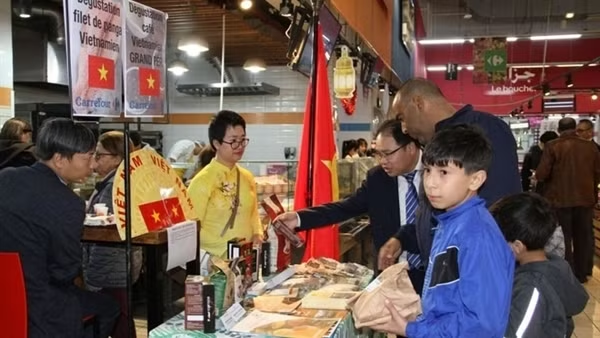 Vietnamese agricultural products introduced in Algeria
 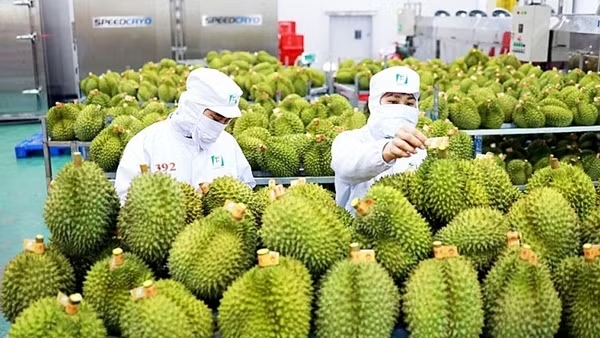 Vietnam's agriculture conquers world markets