As logistics increasingly serves as the backbone of the economy, connecting production with markets and strengthening national competitiveness, Vietnam faces an urgent need to develop a highly skilled workforce capable of adapting to artificial intelligence (AI), big data and the sector’s ongoing digital transformation.
According to the Vietnam Logistics Business Association (VLA), the logistics sector will require around 2.2 million workers by 2030, including 1.6 million employees for logistics service providers and nearly 600,000 personnel supporting logistics operations in manufacturing and trading enterprises.
However, training capacity remains limited. Vietnam currently has only about 30 universities offering logistics-related programmes, enrolling roughly 3,000 students annually, while colleges add just 800–1,000 graduates each year. The widening gap between labour demand and supply is placing increasing pressure on the job market, forcing many companies to recruit workers from other sectors and retrain them.
Experts argue that the challenge lies not only with quantity but also quality. As global supply chains become more complex and volatile, businesses need workers who can analyse data, manage systems, operate digital technologies and respond effectively to emerging challenges, rather than simply perform routine tasks.
Hoang Dinh Kien, General Director of Hoa Phat Logistics JSC, said students generally possess a solid academic foundation but often lack practical skills, particularly problem-solving capabilities in real-world working environments.
According to Nguyen Anh Duong of the Institute for Policy and Strategy Studies under the Party Central Committee's Commission for Policies and Strategies, digital transformation has become essential for enhancing competitiveness. AI can help businesses forecast demand, optimise transportation, improve operational efficiency and reduce costs, while automating many repetitive tasks.
As a result, the labour market is increasingly prioritising candidates who can apply technology, leverage data and use AI as a decision-support tool. Kien stressed that, at a minimum, students should be able to use AI in their work and understand management principles in technology-driven operating environments.
Van Ha, Secretary General of the Vietnam Association for Logistics Manpower Development (VALOMA), said many universities have revamped their curricula to better align with industry needs and strengthen partnerships with businesses. In addition to theoretical coursework, students are gaining exposure to practical modules, management software, enterprise resource planning (ERP) systems and simulation models, enabling them to experience real-world working environments while still at university.
Industry seminars, career talks, scientific research competitions and university-business networking programmes are also being organised regularly, helping students stay abreast of industry trends and improve their readiness for the labour market.
Phan Truong An, a student at CMC University who previously interned at Foxconn Group, said classroom knowledge provides an essential foundation, but hands-on experience in a corporate setting offers deeper insight into supply chain operations while helping students develop communication, teamwork and problem-solving skills.
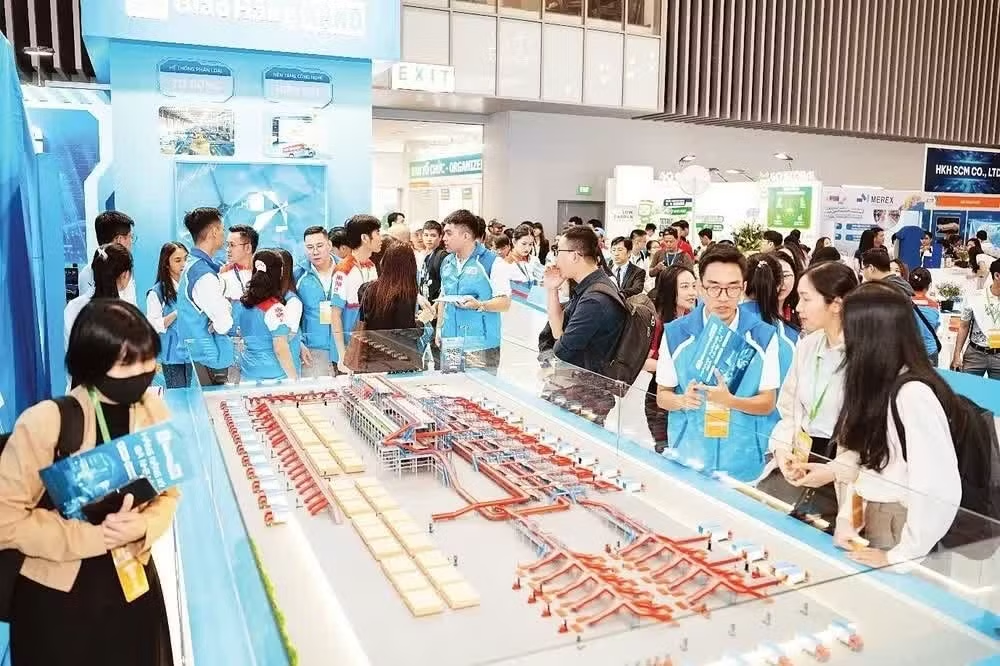
Alongside logistics infrastructure development, Vietnam is advancing policies on AI, digital logistics and green logistics to improve supply chain efficiency and foster a high-quality workforce. Experts say training programmes must continue evolving through curriculum standardisation, stronger foreign-language instruction, enhanced digital and data-analysis skills, and the promotion of modern management thinking.
In addition to formal education, expanding short-term training, reskilling and upskilling programmes for the existing workforce will be crucial in helping workers adapt to technology-driven changes.
As AI reshapes the global logistics industry, business competitiveness will increasingly depend on workforce quality and technological capabilities. With logistics infrastructure improving, smart border gates being introduced and digital supply chains expanding, building a workforce with strong professional expertise, innovative thinking and technological adaptability will be key to elevating Vietnam’s logistics sector in the years ahead.
Developing logistics talent is therefore not only a responsibility of educational institutions and businesses but also a strategic imperative for strengthening Vietnam’s competitiveness in the digital era./.