GDP expands 8.18%, with new growth drivers taking shape

According to the National Statistics Office under the Ministry of Finance, GDP expanded by 8.39% in the second quarter, up from 8.14% a year earlier. Growth for the first six months reached 8.18%, exceeding the 7.63% recorded in the same period of 2025. The performance reflected broad-based contributions from both the supply and demand sides of the economy.

Hanoi (VNA) - Vietnam's economy maintained strong momentum in the second quarter and first half of 2026, posting GDP growth above expectations despite persistent global uncertainties, underscoring the economy's resilience and the Government's flexible policy management.
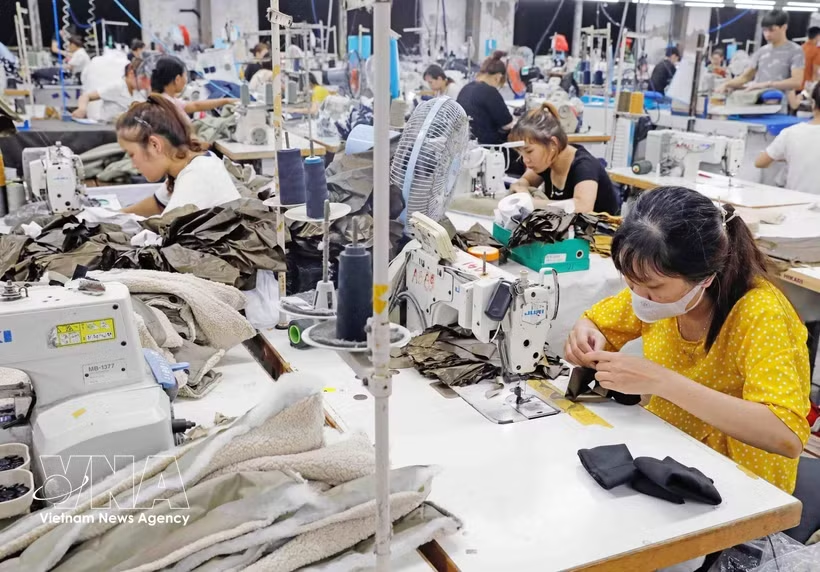
download-7.png
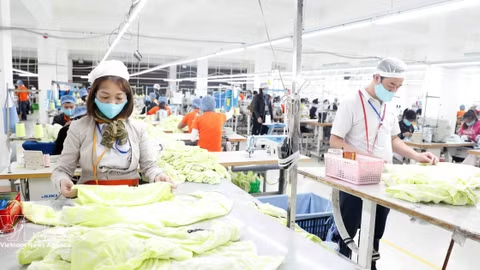
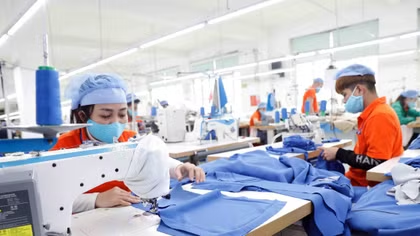
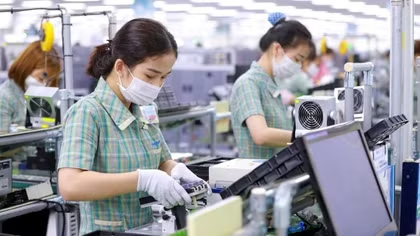
Marnufacturing garments for export at Hung Yen Jute and Garment Joint Stock Company. (Photo: VNA)

According to the National Statistics Office under the Ministry of Finance, GDP expanded by 8.39% in the second quarter, up from 8.14% a year earlier. Growth for the first six months reached 8.18%, exceeding the 7.63% recorded in the same period of 2025.

The performance reflected broad-based contributions from both the supply and demand sides of the economy.

On the supply side, all three major economic sectors recorded balanced growth.

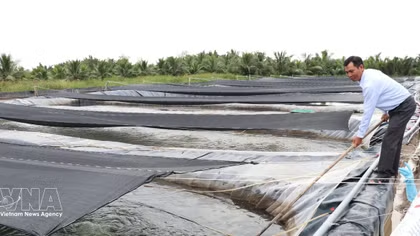
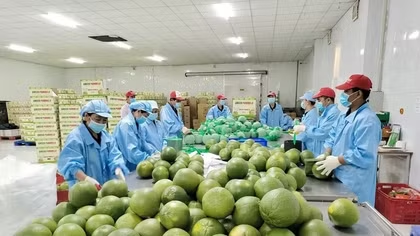
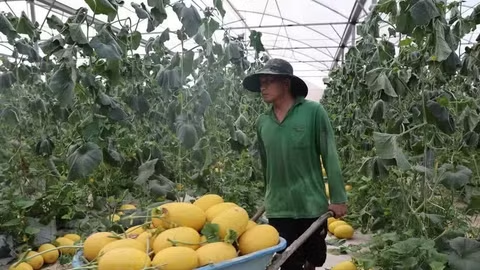
Agriculture, forestry and fisheries remained a key pillar, sustaining steady expansion through structural reforms, wider application of advanced technologies, improved planting-area code management, stronger disease control in livestock and enhanced forest protection.

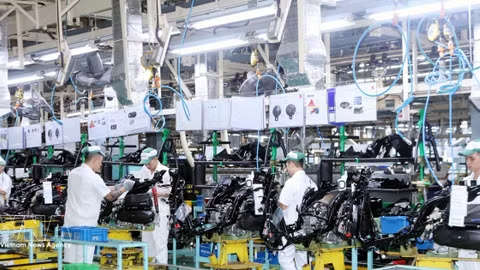
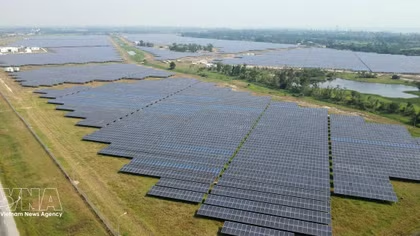
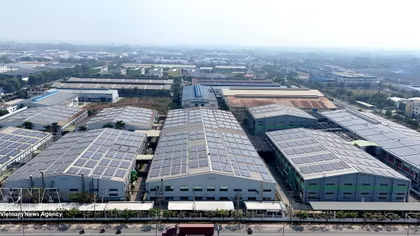
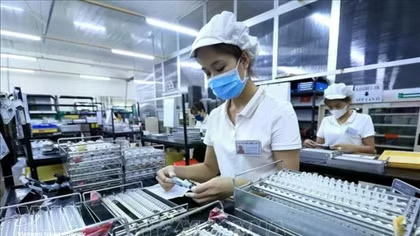
Industry and construction continued to serve as the main growth engine. Processing and manufacturing led the expansion, rising 10.56% in the second quarter and 10.23% in the first half, supported by a strong recovery in export orders for electronics, computers, metals and automobiles. Electricity and gas production grew 12.19%, ensuring stable energy supplies, while construction rose 10.28% and mining increased 7.59%, driven by higher crude oil and natural gas output.

The services sector also recorded positive growth despite higher input costs.

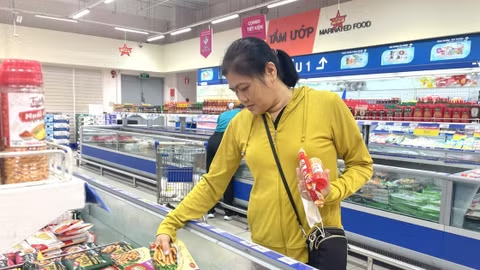
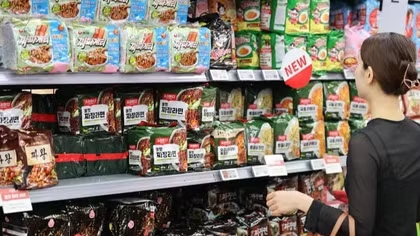
On the demand side, final consumption rose 7.02% in the second quarter and 8.15% in the first six months. Household spending increased 9.94% in the second quarter and 9.48% in the first half, reflecting stronger domestic demand supported by seasonal spending and the recovery of tourism, accommodation and entertainment services.

Consumption patterns also shifted towards higher-quality and more sustainable products, with spending on environmentally friendly goods and experience-based services such as tourism and leisure increasing.

Asset accumulation remained a major growth driver, surging 20.4% in the second quarter and 15.2% in the first half, reflecting stronger public investment disbursement and a recovery in production. Inventories also rose sharply as businesses increased imports of raw materials and components for future production.

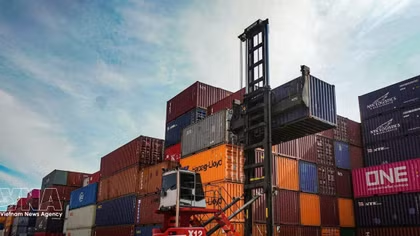
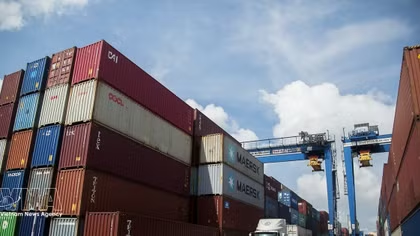
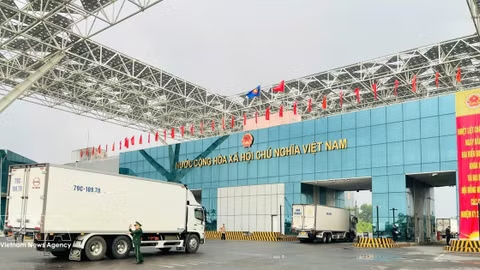
Merchandise trade expanded 27.1% year-on-year in the first six months. Exports increased 21%, while imports climbed 33.4%, driven by higher purchases of fuel, electronic components and production materials, as well as investment in data centres and AI infrastructure. The resulting trade deficit may weigh on the external sector's net contribution to GDP growth.

The statistics office said traditional growth drivers – investment, manufacturing, exports, and consumption - continued to underpin the economy. Faster public investment disbursement, particularly for major infrastructure projects, boosted construction activity while encouraging private investment. Manufacturing and exports remained resilient despite a slow global recovery, and stronger household consumption helped support domestic demand and economic stability.

At the same time, new growth drivers such as science and technology, innovation and the digital economy are gaining momentum and gradually expanding into high-tech industries and services. However, they remain supportive rather than leading drivers of growth, with their full potential dependent on continued institutional reforms, human resource development and a stronger innovation ecosystem./.
VNA
en.vietnamplus.vn

Other News

Plan issued to develop agricultural logistics system

Plan issued to develop agricultural logistics system

A key target is that by 2030, all concentrated agricultural, forestry and fisheries production areas will have access to essential services, including product traceability, quarantine, testing, quality certification, processing and market development. The move reflects growing international demand for stricter food safety, quality and traceability standards, which have become increasingly important for agricultural exports.

Vietnam seeks stronger export growth in H2

Vietnam seeks stronger export growth in H2

Despite the encouraging performance, Vietnam's exports remain heavily dependent on a limited number of major markets and product groups, while the domestic value added of many export products remains relatively low because of their reliance on imported raw materials and components.

RoK picks Vietnam as K-Food logistics hub for ASEAN expansion

RoK picks Vietnam as K-Food logistics hub for ASEAN expansion

Demand for Korean food in Vietnam has continued to grow rapidly alongside the popularity of the Korean Wave, or Hallyu, making the country a strategic market in the RoK's plan to expand agricultural and food exports to ASEAN, the RoK's Ministry of Agriculture, Food and Rural Affairs said.

Nearly 68,000 smuggling, trade fraud, counterfeit cases uncovered in H1

Nearly 68,000 smuggling, trade fraud, counterfeit cases uncovered in H1

Authorities detected and handled 67,937 violations in the first half of the year, up 36.66% year-on-year. Budget revenue from enforcement reached nearly 9.65 trillion VND (nearly 367 million USD), an increase of 49.36%, while investigation was launched into 1,676 criminal cases involving 2,789 suspects.

Vietnam joins global push for energy efficiency

Vietnam joins global push for energy efficiency

Participation in the Montreal Declaration also provides a foundation for Vietnam to explore deeper engagement with the IEA's multilateral energy efficiency initiatives, offering opportunities to access data, policy experience, technical tools and public-private partnership models in energy conservation.

Public-private partnerships drive low-emission rice farming

Public-private partnerships drive low-emission rice farming

Experts agreed that integrating nutrient management, biotechnology, mechanisation and digital technologies will enhance productivity, reduce greenhouse gas emissions and accelerate the transition towards greener, more sustainable rice production.

Vietnam's tilapia exports maintain strong growth

Vietnam's tilapia exports maintain strong growth

Vietnam's tilapia export revenue in the first five months of 2026 hit 62 million USD, more than doubling that in the same period last year, reflecting a strong recovery in international demand

Vietnam's domestic carbon exchange launched

Vietnam's domestic carbon exchange launched

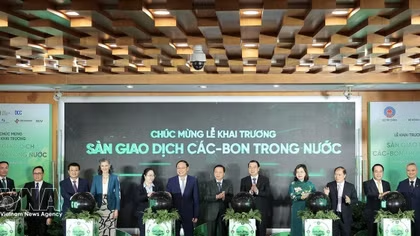
The carbon exchange creates a mechanism that enables businesses to optimise emission-reduction costs through trading emission quotas and carbon credits, encourages technological innovation, and supports sustainable development while maintaining the principle of not sacrificing the environment for economic growth.

SBV raises short-term capital lending cap to 40%

SBV raises short-term capital lending cap to 40%

The new circular will help credit institutions have more room to provide capital to businesses and investment projects to support high economic growth in the next few years, while increasing flexibility in the SBV’s monetary policy management.

Business confidence in Vietnam rebounds strongly: UOB

Business confidence in Vietnam rebounds strongly: UOB

The study found that 85% of Vietnamese enterprises reported positive business sentiment, a sharp increase from 48% in 2025, when business confidence was weighed down by uncertainties surrounding US tariff policies and related trade developments.