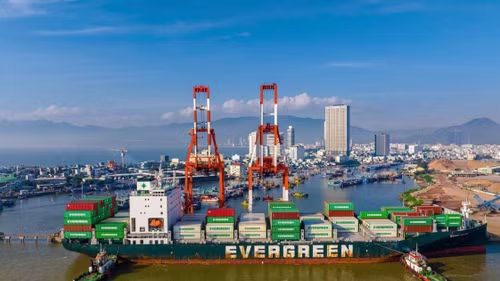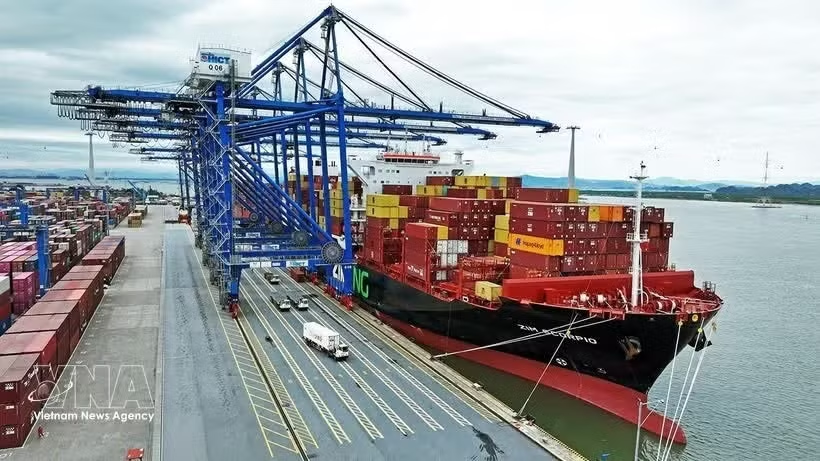
Hanoi (VNA) - Viet Nam’s total goods trade reached an estimated 1.01 trillion USD in the first 10 months of 2026, up 32.3% from a year earlier, surpassing the 1 trillion USD mark for the first time, the Ministry of Industry and Trade’s Agency of Foreign Trade said on October 29.
Trade turnover in October alone was estimated at 122.2 billion USD, up 47.6% year on year.
Exports continued to grow strongly, reaching an estimated 499 billion USD in the January-October period, up 27.4%. The performance has put Viet Nam on track to meet or exceed its full-year 2026 export growth target of 15-16%.
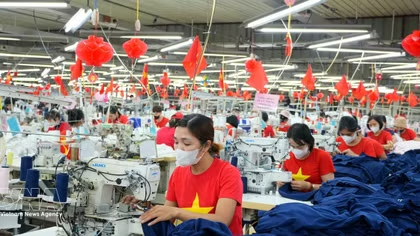
According to the agency, export growth was recorded in both the domestic and foreign-invested sectors. Processed and manufactured goods remained the mainstay, accounting for 87.4% of total exports. Shipments also grew strongly to major markets, including China, the United States, the European Union, the Republic of Korea and ASEAN.
Viet Nam recorded a trade surplus of an estimated 6.8 billion USD in October, marking the second consecutive month of surplus and narrowing the cumulative trade deficit for the first 10 months to around 12.7 billion USD.
The results underscore the continued momentum in trade and its important contribution to economic growth.
The agency said that the Ministry of Industry and Trade is drafting a goods import-export strategy through 2030, with a vision to 2045.
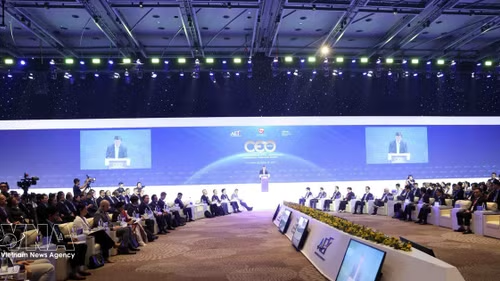
The strategy aims to drive strong export and import growth to support Viet Nam’s ambition of achieving double-digit economic growth in 2026-2030. It targets average annual export growth of 15-16% over the period, with Viet Nam aspiring to rank among the world’s 10 largest exporting nations by 2045.
Imports are targeted to grow by an average of 12-13% annually in 2026-2030, naming Viet Nam among the world’s top 10 importers by 2045. The strategy seeks to establish a sustainable trade surplus in 2026-2030, equivalent to an average of 3-6% of total exports during the period, rising to 7-10% by 2045.
To improve the quality of trade growth and increase the value added from processing and technology, the draft strategy aims to raise the share of domestic firms in total exports to around 28-30% by 2030 and 38-40% by 2045.
Processed and refined goods are expected to account for 89-90% of total exports by 2030 and more than 92% by 2045. High-tech products are targeted to make up around 50% of processed and manufactured exports by 2030 and more than 55% by 2045.
The strategy also calls for broader market diversification to reduce concentration risks and strengthen resilience to trade shocks.
By 2030, no single export market should account for more than 25% of total exports, while no single import market should represent more than 35% of total imports.
The combined share of Viet Nam’s three largest export markets or regions is targeted to fall below 55% by 2030 and below 50% by 2045.
Viet Nam aims to export more than 1 billion USD worth of goods to over 45 markets by 2030 and 55 markets by 2045. The share of exports to emerging markets in South Asia, the Middle East, Africa and Latin America is targeted to reach around 10% by 2030 and 15% by 2045.
For the fourth quarter, the Ministry of Industry and Trade has identified export promotion, market diversification and stronger compliance capabilities as key priorities.
The ministry will seek to use existing free trade agreements (FTAs) more effectively and expand access to new markets. It will also strengthen early-warning mechanisms for trade defense investigations, tariff barriers, green standards, traceability requirements and rules of origin.
Other priorities include helping businesses improve product quality, develop brands and enhance supply-chain transparency.
The ministry will also promote official export channels, expand agreements and protocols on agricultural quarantine, increase investment in cold-chain logistics infrastructure, and standardize growing areas and packing facilities to meet individual trading partners' requirements.