VEFTA opens opportunities for high-tech cooperation, innovation

According to Vice President of the Foreign Trade University Associate Professor Dr. Dao Ngoc Tien, the VEFTA’s long-term value lies largely in its non-tariff commitments, which establish institutional frameworks, principles and cooperation mechanisms with lasting economic impacts.

The free trade agreement between Vietnam and the European Free Trade Association (EFTA) opens up new opportunities for scientific and technological cooperation, high-quality investment and innovation, in line with Vietnam’s development priorities under Politburo Resolution No. 57-NQ/TW.

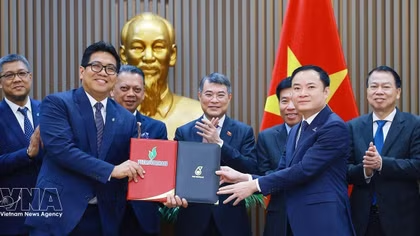
The Vietnam – EFTA Free Trade Agreement (VEFTA) was officially signed on October 18, 2026, marking a new step in the country’s international economic integration and creating prospects for deeper cooperation in science, technology and innovation.
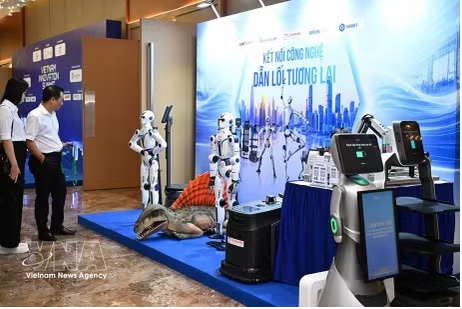
vnanet-doi-moi-sang-tao.png
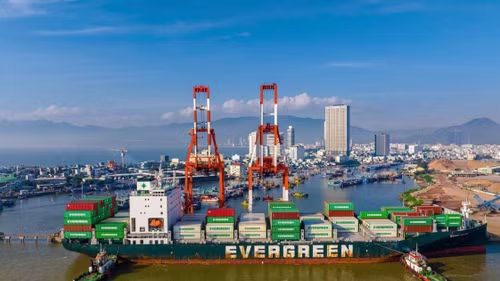
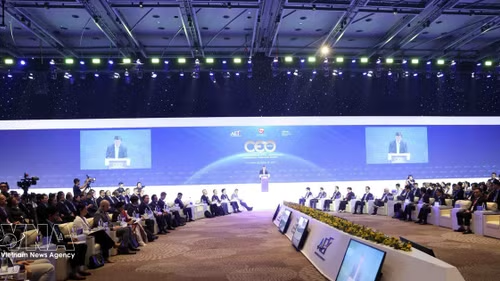
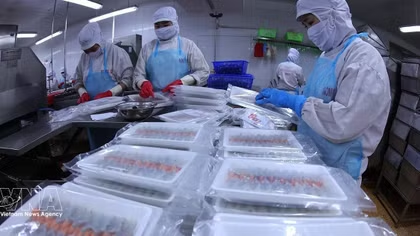
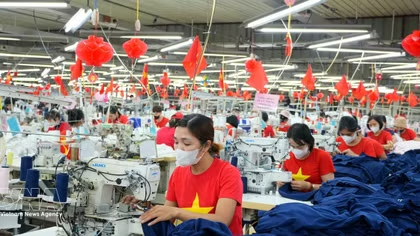
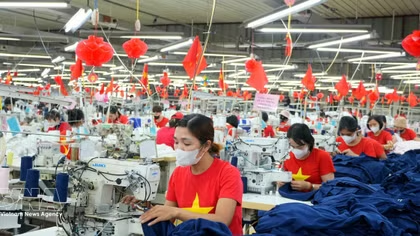
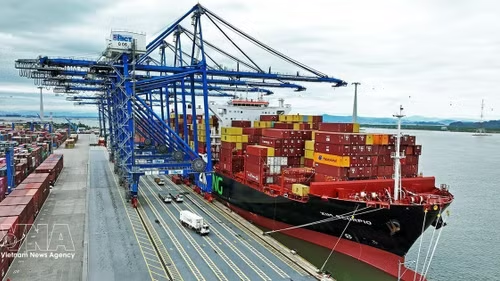
The free trade agreement between Vietnam and the European Free Trade Association (EFTA) opens up new opportunities for scientific and technological cooperation, high-quality investment and innovation. (Illustrative photo: VNA)

The agreement comes as Vietnam accelerates the implementation of Resolution No. 57-NQ/TW, dated December 22, 2024, which identifies breakthroughs in science and technology, innovation and national digital transformation as key drivers of development.

The EFTA comprises Switzerland, Norway, Iceland and Liechtenstein. Although relatively small in population, these economies have strong capabilities in technology, finance, research and development (R&D), particularly in knowledge-intensive industries.

Switzerland is known for pharmaceuticals, biotechnology and precision engineering; Norway for maritime technology, clean energy and aquaculture; Iceland for geothermal technology and seafood processing; and Liechtenstein for specialised manufacturing. These strengths complement Vietnam’s development needs, particularly in high-tech industries, supporting industries, energy, the marine economy and advanced processing.

According to Vice President of the Foreign Trade University Associate Professor Dr. Dao Ngoc Tien, the VEFTA’s long-term value lies largely in its non-tariff commitments, which establish institutional frameworks, principles and cooperation mechanisms with lasting economic impacts.

The agreement includes commitments on investment, intellectual property, cooperation and capacity building. Stronger intellectual property protection could encourage Swiss and Norwegian businesses to invest and transfer technology, while helping Vietnamese companies protect their inventions and trademarks and develop their brands.

Its cooperation and capacity-building provisions also provide a framework for technical assistance, allowing Vietnam to propose joint programmes on standards, technical regulations and intellectual property. These areas are important for research, technology application and commercialisation.

Meanwhile, tariff reductions on machinery, equipment, chemicals and materials imported from the EFTA could help Vietnamese businesses access high-quality production inputs and technology at more favourable costs. However, the benefits would be greater if equipment purchases were accompanied by workforce training, process improvements and efforts to master the technologies involved.

As of the end of 2025, Switzerland had 234 investment projects in Vietnam with registered capital exceeding 2.4 billion USD, while Norway had 62 projects worth more than 201 million USD. These investments provide a foundation for broader cooperation, particularly in technology-intensive sectors.

Economist Ngo Tri Long said the VEFTA’s strategic benefits should be assessed not only through trade growth but also through its ability to attract high-quality capital, technology and management expertise. Investment performance should be measured by technology transfer, the development of domestic suppliers and technical workforce training, rather than registered capital alone.

This approach would help Vietnamese businesses move into higher-value activities, strengthen their technological capabilities and improve their competitiveness in global value chains.

These opportunities align with Resolution 57 which sets a target for R&D spending to reach 2% of gross domestic product (GDP) by 2030, for more than 40% of businesses to engage in innovation activities, and for high-tech products to account for at least 50% of total export value.

Achieving these goals requires domestic resources as well as international partnerships, access to advanced technologies and a stronger innovation ecosystem. Resolution 57 also calls for greater scientific research and technology development cooperation with countries that have advanced technological capabilities, alongside capacity building and technology transfer through international agreements.

In this context, the VEFTA could provide an additional channel for Vietnam to access technological resources from developed economies. However, the agreement creates favourable conditions rather than guaranteeing automatic technology transfers.

Vietnam therefore needs to proactively promote joint R&D programmes, connect businesses with research institutes and universities in EFTA countries, and encourage joint ventures, production partnerships and technology applications in sectors with strong domestic demand and development potential.

Priority should also be given to investment projects that conduct R&D in Vietnam, train highly skilled workers, develop supporting industries and transfer knowledge to domestic businesses.

Nguyen Minh Khoi of the Tony Blair Institute for Global Change said the VEFTA’s long-term effectiveness should be measured not only by trade turnover but also by high-quality investment projects linked to innovation, participation in global value chains and the ability to retain added value in Vietnam.

Another priority is to strengthen Vietnamese businesses’ capacity to absorb and develop technology. Acquiring modern machinery is only the first step; the ability to operate, improve and develop technology into new products and services ultimately determines the effectiveness of innovation.

en.vietnamplus.vn

Other News

Vietnam and Belgium expand cooperation, tap trade, investment potential

Vietnam and Belgium expand cooperation, tap trade, investment potential

The official visit to Belgium by General Secretary of the Communist Party of Vietnam Central Committee and President To Lam is expected to provide fresh impetus for cooperation in trade, investment, science and technology, innovation, high-quality human resources training, logistics and green growth.

Swiss President hails new Free Trade Agreement at Swiss-Viet Economic Forum 2026

Swiss President hails new Free Trade Agreement at Swiss-Viet Economic Forum 2026

Swiss President Guy Parmelin has described the newly signed free trade agreement (FTA) between Vietnam and the European Free Trade Association (EFTA) as a strategic commitment to closer economic cooperation, expected to strengthen legal certainty, improve market access and create fresh opportunities for businesses from both sides.

Prime Minister backs PETRONAS' further investment expansion in Vietnam

Prime Minister backs PETRONAS' further investment expansion in Vietnam

Prime Minister Le Minh Hung praised PETRONAS and the Vietnam National Industry-Energy Group (Petrovietnam) for maintaining a strong partnership for more than 30 years, with joint efforts supporting Vietnam’s energy security, sustainable development and economic growth, as well as those of the Asian region.

Vietnam ties FDI incentives to local supplier commitments

Vietnam ties FDI incentives to local supplier commitments

Incentives will increasingly hinge on investors’ performance and commitments, not just on landing projects. Key commitments include transferring technology to Vietnamese firms, training workers, providing technical support and opening FDI supply chains to domestic companies.

Vietnamese businesses, entrepreneurs make growing contributions to national development

Vietnamese businesses, entrepreneurs make growing contributions to national development

Viet Nam Entrepreneurs’ Day is an opportunity to recognise the business community’s contributions to the nation, and promote the entrepreneurial spirit, the pursuit of legitimate prosperity and national responsibility. With stronger policies and greater innovation, Vietnamese enterprises are expected to play an increasingly important role in developing economic growth and realizing the country’s ambition to become a strong, prosperous nation.

Tax policy stability now key to keeping foreign investors: Officials

Tax policy stability now key to keeping foreign investors: Officials

Companies must ensure records and data truthfully reflect the substance of transactions and engage in dialogue early when complex issues arise. Tax authorities, in turn, need to publish policies, give clear guidance, enforce rules consistently and deliver information in a timely manner.

Vietnam – a potential regional supply hub for Jatropha seed oil

Vietnam – a potential regional supply hub for Jatropha seed oil

Japan’s research on non-edible oil feedstocks showed that Jatropha is highly drought-tolerant and could grow well on wasteland, eroded sandy land and infertile soil. Given this, areas in central Vietnam, including Ninh Thuan, Binh Thuan and the Central Highlands, have climatic, sunlight and soil conditions suitable for achieving high seed yields and oil content.

Vietnam enters investment grade credit rating category for first time

Vietnam enters investment grade credit rating category for first time

Vietnam has maintained robust growth, outperforming other Southeast Asian economies. Its ongoing government reforms aimed at streamlining the state apparatus, promoting the private sector, improving the institutional framework and developing capital markets will strengthen the country’s growth potential and economic resilience.

Vietnam, Laos seek to expand room for trade, investment cooperation

Vietnam, Laos seek to expand room for trade, investment cooperation

Vietnam and Laos aim to boost bilateral trade in 2026 towards the milestone of 10 billion USD by 2030, a target said to be challenging but feasible as both Governments work to remove trade barriers, improve border-trade mechanisms, and strengthen transport and logistics connectivity.

Vietnam's national brand value jumps 45% to over 462 bln USD

Vietnam's national brand value jumps 45% to over 462 bln USD

Deputy Minister of Industry and Trade Luong Hoang Thai outlined Vietnam's National Brand Programme 's achievements, the role of business community and plans for brand development in a press interview ahead of the 10th Vietnam National Brand Product recognition ceremony on October 16.

Vietnam revises scheme to improve sovereign credit rating by 2030

Vietnam revises scheme to improve sovereign credit rating by 2030

Under the decision, Vietnam aims to become a developing country with modern industry and upper-middle income by 2030, while building a competitive and effective governance system and a dynamic economy driven by science, technology, innovation and digital transformation.

Vietnam posts GDP growth of 9.95% in Q3

Vietnam posts GDP growth of 9.95% in Q3

In the first nine months, Vietnam's GDP was estimated to increase 9.01% from the same period last year. Agriculture, forestry and fisheries grew 4.02%, contributing 5.35% to overall gross value added growth; industry and construction rose 11.21%, contributing 49.62%; and services expanded 8.69%, contributing 45.03%.