Vietnam can't win high-tech investment on land alone: 2026 Autumn Economic Forum

Bill Giannikos, Director of the Global Services Centre and Data Centre at Aurecon Vietnam, said data centre development has to be planned alongside land, power, telecoms and supporting services. Investors need clear information on land availability, power capacity, supply timelines and connectivity before committing to large projects.

Ho Chi Minh City (VNA) – As Vietnam reworks its growth model around science – technology, innovation and productivity, it needs high-tech investment that adds value to the economy.

vnanet-v.png
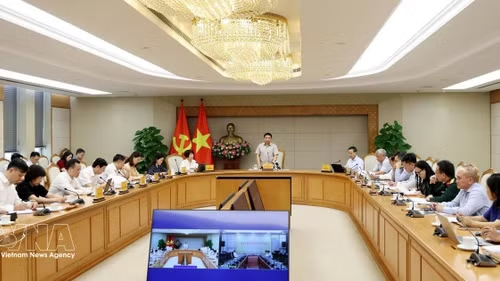
The CEO 500 programme takes place as part of the 2026 Autumn Economic Forum in Ho Chi Minh City on October 26. (Photo: VNA)

Land alone can’t attract tech projects

Vietnam has a major opportunity in the global digital shift as AI, cloud computing and digital services increasingly shape economic activity. Capturing it requires planning infrastructure as a whole rather than project by project, Bill Giannikos, Director of the Global Services Centre and Data Centre at Aurecon Vietnam, told the CEO 500 programme, themed “The Convergence of FDI, Technology and Global Financial Flows,” at the 2026 Autumn Economic Forum on October 26.

According to him, data centre development has to be planned alongside land, power, telecoms and supporting services. Investors need clear information on land availability, power capacity, supply timelines and connectivity before committing to large projects.

Giannikos pointed to Australia’s Victoria state, which coordinates land, energy and connectivity planning to build its digital ecosystem. He proposed that Vietnam, particularly Ho Chi Minh City, study creating dedicated zones for digital infrastructure, with essential requirements built into planning from the start.

Beyond infrastructure, he stressed linking computing capacity with universities, enterprises and the workforce to speed up AI adoption in manufacturing, logistics, health care, education and public services. Returns on investment therefore depend not only on data centre capacity, but on how the technology is adopted and the value it creates for the economy.

Infrastructure must also scale up and adapt to new technologies while taking into account energy and water efficiency and long-term resilience. That demands coordination among authorities, utilities, operators and technology suppliers from the planning stage.
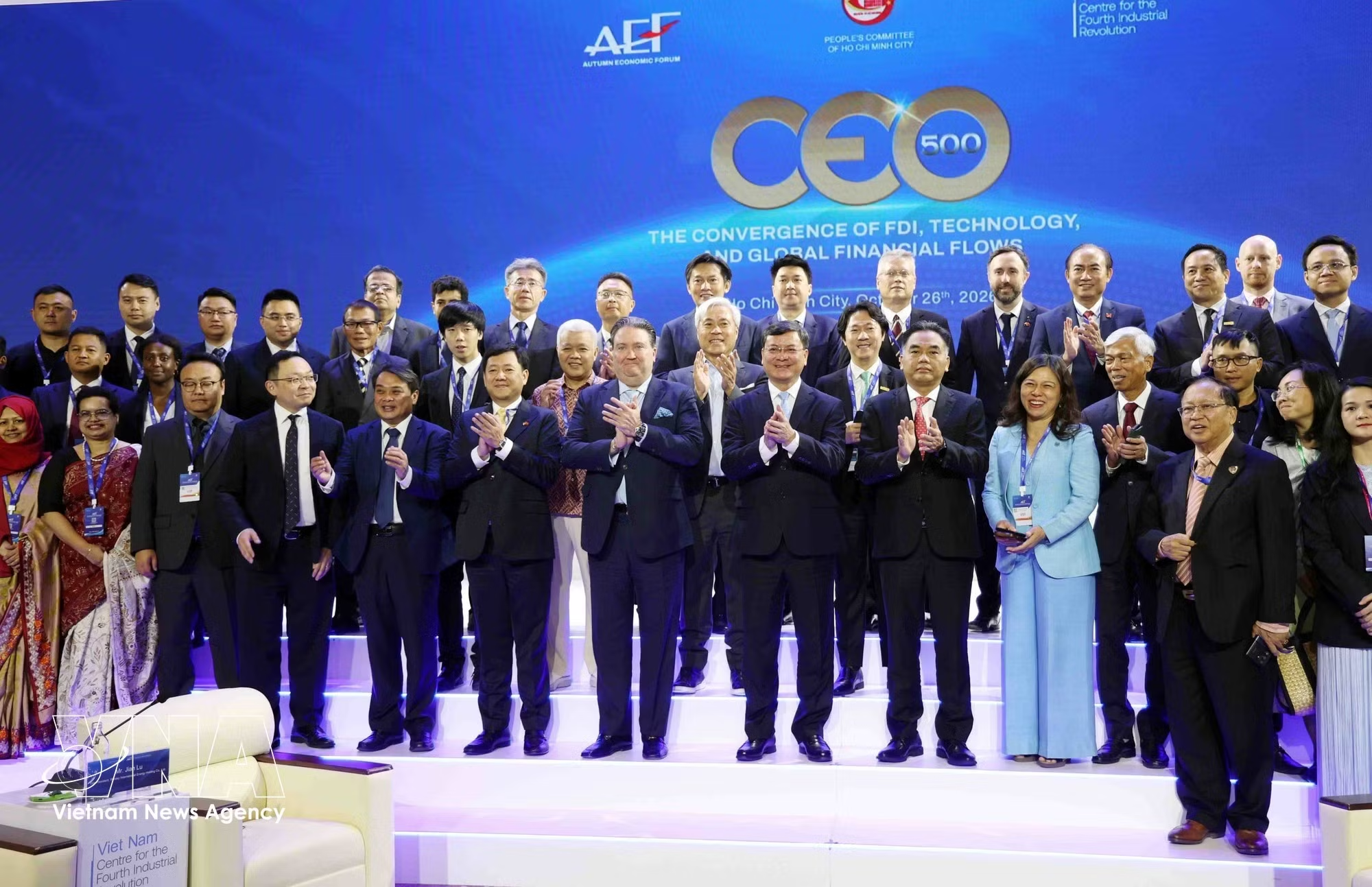
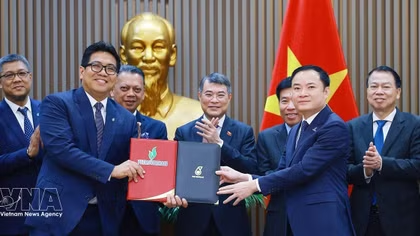
Ho Chi Minh City officials and attendees at the CEO 500 programme (Photo: VNA)

Nguyen The Duy, Vice Chairman of the Board of Directors and Deputy CEO of Becamex Group, said the larger development space after the merger gives Ho Chi Minh City a chance to build high-tech industrial hubs and modern urban areas.

According to Duy, a new generation of FDI investors is looking beyond land and factory space, paying attention also to connectivity infrastructure, technology access, workforce and an ecosystem of production support services. Becamex is developing next-generation industrial parks that are smart, eco-friendly and sustainable, linking production infrastructure with research, technology transfer, automation and workforce training.

Notably, Becamex aims to develop a science and technology urban area in northern Ho Chi Minh City into an integrated ecosystem of high-tech industry, research and development, innovation, training and modern urban living. The area is planned to connect to the city downtown via expressways, railways, metro lines and regional logistics networks.

To realise this vision, its representative proposed that the city continue building breakthrough mechanisms to foster an industrial and sci-tech ecosystem capable of attracting high-added-value FDI projects.

Clearing bottlenecks so technology adds value

Jesse Choi, General Director of Sunwah Southeast Asia, suggested that the city create conditions for firms to test technological solutions in real-world environments. The city could support pilot sites, develop technical standards and risk management mechanisms, and set out a roadmap for bringing qualified technologies into commercial application, he said.

Citing the AI use to optimise wastewater treatment as an example, Choi said the solution could cut operating costs by about 20–25%. Technologies such as drones and self-driving electric vehicles also have potential for use in logistics and urban services.

San Eng, Chairman of the Singapore-based WorkOptional.ai, said beyond data centres and computing power, the market is seeing growing demand for services that support AI agents capable of performing work in place of humans. This trend is driving demand for communication, transaction, payment, identity, authentication and risk management systems. These could become important components of digital economy infrastructure in the next phase.

He also said Vietnam has advantages in absorbing technology from many markets, developing domestic digital platforms and pooling a workforce capable of adapting to new technologies. In his view, the city should study developing infrastructure for an AI-agent economy, while tightening links between its Vietnam International Financial Centre and investors and technology companies.

Working sessions with partners in Vietnam before the 2027 first quarter to seek cooperation opportunities and develop technology and financial platforms in line with the AI economy trend are also needed, he said./.

VNA
en.vietnamplus.vn

Other News

Vietnam and Belgium expand cooperation, tap trade, investment potential

Vietnam and Belgium expand cooperation, tap trade, investment potential

The official visit to Belgium by General Secretary of the Communist Party of Vietnam Central Committee and President To Lam is expected to provide fresh impetus for cooperation in trade, investment, science and technology, innovation, high-quality human resources training, logistics and green growth.

Swiss President hails new Free Trade Agreement at Swiss-Viet Economic Forum 2026

Swiss President hails new Free Trade Agreement at Swiss-Viet Economic Forum 2026

Swiss President Guy Parmelin has described the newly signed free trade agreement (FTA) between Vietnam and the European Free Trade Association (EFTA) as a strategic commitment to closer economic cooperation, expected to strengthen legal certainty, improve market access and create fresh opportunities for businesses from both sides.

Prime Minister backs PETRONAS' further investment expansion in Vietnam

Prime Minister backs PETRONAS' further investment expansion in Vietnam

Prime Minister Le Minh Hung praised PETRONAS and the Vietnam National Industry-Energy Group (Petrovietnam) for maintaining a strong partnership for more than 30 years, with joint efforts supporting Vietnam’s energy security, sustainable development and economic growth, as well as those of the Asian region.

Vietnam ties FDI incentives to local supplier commitments

Vietnam ties FDI incentives to local supplier commitments

Incentives will increasingly hinge on investors’ performance and commitments, not just on landing projects. Key commitments include transferring technology to Vietnamese firms, training workers, providing technical support and opening FDI supply chains to domestic companies.

Vietnamese businesses, entrepreneurs make growing contributions to national development

Vietnamese businesses, entrepreneurs make growing contributions to national development

Viet Nam Entrepreneurs’ Day is an opportunity to recognise the business community’s contributions to the nation, and promote the entrepreneurial spirit, the pursuit of legitimate prosperity and national responsibility. With stronger policies and greater innovation, Vietnamese enterprises are expected to play an increasingly important role in developing economic growth and realizing the country’s ambition to become a strong, prosperous nation.

Tax policy stability now key to keeping foreign investors: Officials

Tax policy stability now key to keeping foreign investors: Officials

Companies must ensure records and data truthfully reflect the substance of transactions and engage in dialogue early when complex issues arise. Tax authorities, in turn, need to publish policies, give clear guidance, enforce rules consistently and deliver information in a timely manner.

Vietnam – a potential regional supply hub for Jatropha seed oil

Vietnam – a potential regional supply hub for Jatropha seed oil

Japan’s research on non-edible oil feedstocks showed that Jatropha is highly drought-tolerant and could grow well on wasteland, eroded sandy land and infertile soil. Given this, areas in central Vietnam, including Ninh Thuan, Binh Thuan and the Central Highlands, have climatic, sunlight and soil conditions suitable for achieving high seed yields and oil content.

Vietnam, Laos seek to expand room for trade, investment cooperation

Vietnam, Laos seek to expand room for trade, investment cooperation

Vietnam and Laos aim to boost bilateral trade in 2026 towards the milestone of 10 billion USD by 2030, a target said to be challenging but feasible as both Governments work to remove trade barriers, improve border-trade mechanisms, and strengthen transport and logistics connectivity.

Vietnam's national brand value jumps 45% to over 462 bln USD

Vietnam's national brand value jumps 45% to over 462 bln USD

Deputy Minister of Industry and Trade Luong Hoang Thai outlined Vietnam's National Brand Programme 's achievements, the role of business community and plans for brand development in a press interview ahead of the 10th Vietnam National Brand Product recognition ceremony on October 16.

Vietnam revises scheme to improve sovereign credit rating by 2030

Vietnam revises scheme to improve sovereign credit rating by 2030

Under the decision, Vietnam aims to become a developing country with modern industry and upper-middle income by 2030, while building a competitive and effective governance system and a dynamic economy driven by science, technology, innovation and digital transformation.

Vietnam posts GDP growth of 9.95% in Q3

Vietnam posts GDP growth of 9.95% in Q3

In the first nine months, Vietnam's GDP was estimated to increase 9.01% from the same period last year. Agriculture, forestry and fisheries grew 4.02%, contributing 5.35% to overall gross value added growth; industry and construction rose 11.21%, contributing 49.62%; and services expanded 8.69%, contributing 45.03%.

Vietnam sees 149,700 new businesses in nine months

Vietnam sees 149,700 new businesses in nine months

Vietnam recorded nearly 149,700 newly established enterprises in the first nine months of 2026, up 3.2% year-on-year, with total registered capital rising 32.7% to over 1.88 quadrillion VND (71.6 billion USD).

Vietnam accelerates innovation to boost growth, competitiveness

Vietnam accelerates innovation to boost growth, competitiveness

By 2030, Vietnam aims to rank among the world’s top 40 in the GII; raise total social investment in R&D to at least 2% of GDP, with non-State funding accounting for over 60%; increase international scientific publications by an average of 10% annually; and raise the number of patent applications and granted patents by an average of 16-18% annually.