- United Nations to honor a Vietnamese farmer
- Vietnam pins high hopes on new UN Secretary General
- Security Council nominates Portugal's Guterres as UN chief
Mr. Guterres, aged 67, was Prime Minister of Portugal from 1995 to 2002, and the UN High Commissioner for Refugees from June 2005 to December 2015.
The world’s next top diplomat has expressed his deep solidarity with all UN staff and looks forward to working with them around the globe.
Accepting the designation, Mr. Guterres said, “I believe this process means that the true winner today is the credibility of the UN. And it also made very clear to me that, as Secretary-General, having been chosen by all Member States, I must be at the service of them all equally and with no agenda but the one enshrined in the UN Charter.”
Lisbon: The future UN Secretary-General is born
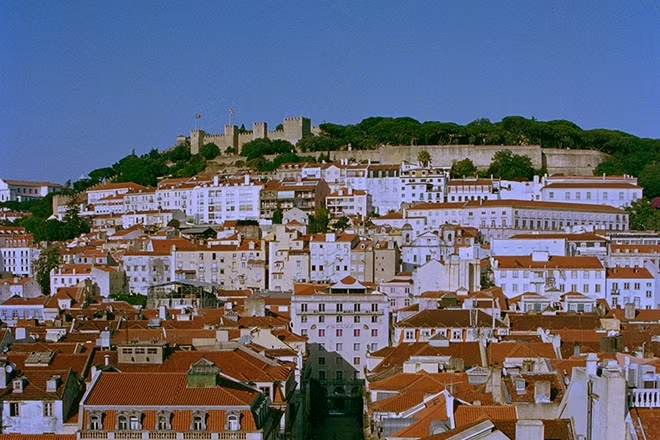 |
| View of the Castle de São Jorge overlooking the historical centre of Lisbon. Photo: UN/ Clara Pereira |
In 1949, António Manuel de Oliveira Guterres was born in Lisbon, Portugal, where he grew up and, in 1971, graduated from the Instituto Superior Técnico with a degree in engineering.
A polyglot, a politician and a statesman
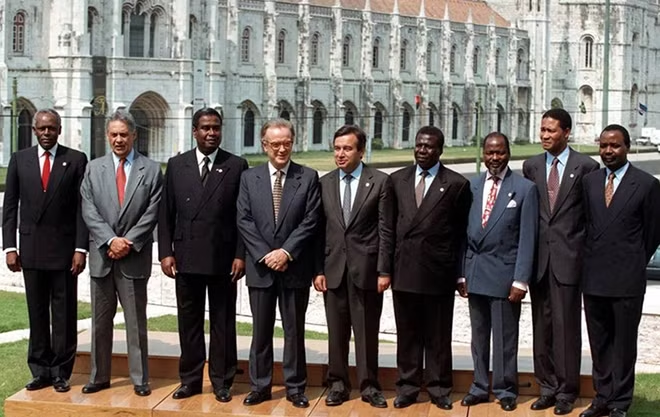 |
| Pictured during the Community of Portuguese Speaking Countries Founding summit. Photo: LUSA/ Joao Paulo Trindade |
Fluent in Portuguese, English, French and Spanish, Mr. Guterres has spent more than 20 years in government and public service. He was elected to the Portuguese Parliament in 1976, where he served for 17 years.
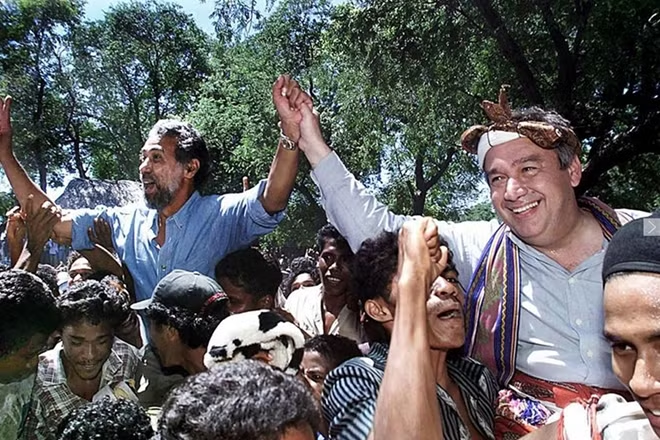 |
| The Prime Minister is photographed here with Timor-Leste´s leader Xanana Gusmão. Photo: LUSA Antonio Cotrim |
In 1995, Mr. Guterres became the Prime Minister of Portugal. During his seven year tenure, he was heavily involved in the international effort to resolve the crisis in East Timor. The Prime Minister is photographed here with Timor-Leste´s leader Xanana Gusmão.
10 years with the most vulnerable
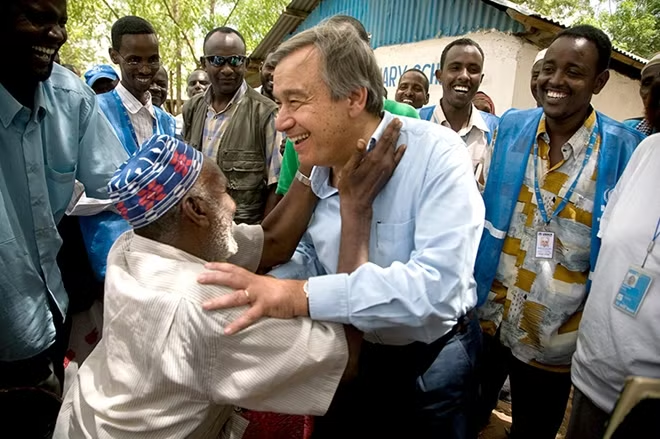 |
| UN High Commisioner meets with Somali elders at Hagadera refugee camp near Dadaab, Kenya. Photo: UNHCR/Evelyn Hockstein |
From June 2005 to December 2015, Mr. Guterres served as United Nations High Commissioner for Refugees (UNHCR ). While heading one of the world’s foremost humanitarian organizations – with nearly 10,000 staff working in 125 countries – UNHCR’s volume of activities tripled.
On 12 December 2016, António Guterres will be sworn in as the next UN Secretary-General. In his vision for the post, Mr. Guterres - a former Prime Minister of Portugal and UN High Commissioner for Refugees - has said that the world body is uniquely placed to connect the dots to overcome global challenges and further strengthen the nexus between peace and security, sustainable development and human rights policies.
The UN finds the next Secretary-General
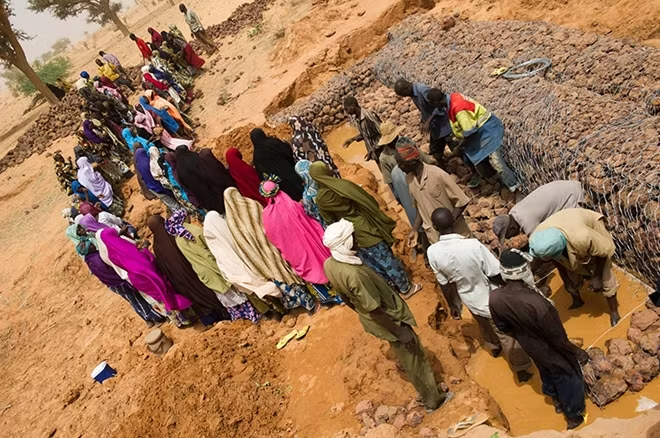 |
| Water conservation in Niger aims to retain rainwater longer, for off-season use. Photo: UNHCR/ Rein Skullerud |
On 13 December 2016, the General Assembly appointed, by acclamation, Mr. Guterres as the next UN Secretary-General. On 1 January 2017, he will become the world’s top diplomat for the next five years. His belief in the values of peace, justice, human dignity, tolerance and solidarity have served him well, as he places key importance on alleviating suffering of the vulnerable, particularly refugees and those in conflict zones .
New Secretary-General, new approach
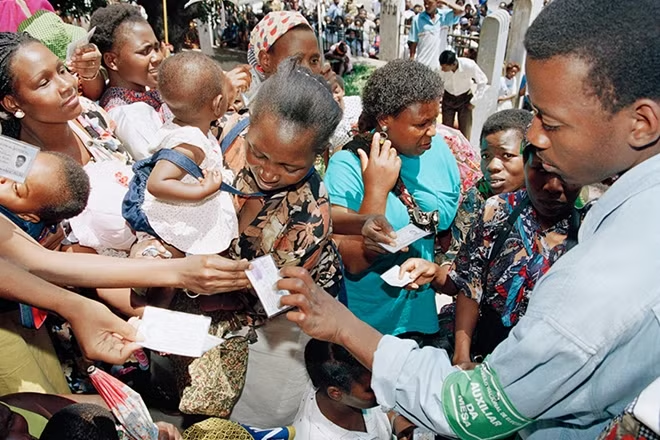 |
| Voters in Mozambique flash their registration cards outside a polling station in a Maputo suburb. Photo: UN Photo/ Pernaca Sudhakaran |
The next UN chief sees the need for a holistic approach to mutually-reinforcing links between the Orgnaization’s three pillars of peace and security, sustainable development and human rights policies. “It's widely recognized,” he says “that there is no peace without development and no development without peace; it is also true that there is no peace and sustainable development without respect for human rights.”
Political solutions are primary
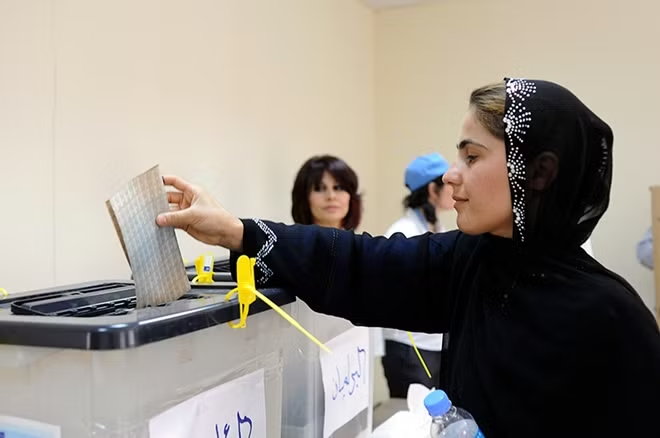 |
| Mr. Guterres emphasised that “a surge in diplomacy” was necessary to achieve peace. Photo: UN Photo/Rick Bajorna |
He believes that there are only political solutions for humanitarian problems and underscores that the UN should “ensure the primacy of political solutions at all stages, promote preventive approaches, mainstream human rights, and foster inclusive engagement and empowerment of women and girls” while highlighting that the “full participation of women is essential to the success of any peace process.”
Gender parity: An integral part of rights and freedoms
Pointing out that the world spends more energy and resources managing crises than preventing them, Mr. Guterres feels strongly about building a "culture of prevention," for which the UN’s good offices and mediation capacity would act “as an honest broker, bridge builder and messenger of peace” in “a surge of diplomacy for peace” which, he says, will be his priority.
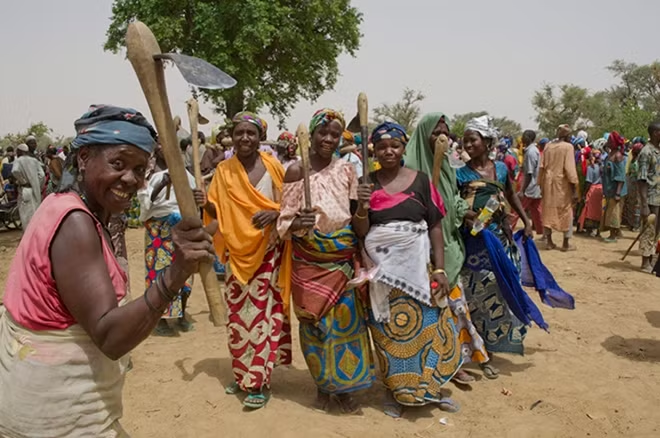 |
| Thirty-three Malian refugee women participate in cash-for-work planting programme. Photo: UNHCR/Rein Skullerud |
Mr. Guterres’ strong commitment to gender parity was evident in his assertion that the UN “must be at the forefront of the global movement towards gender equality, an inalienable and indivisible feature of all human rights and fundamental freedoms: progressively moving from perceiving women and girls as a subject of protection to promoting their empowerment; from an isolated focus on women to gender mainstreaming.”
A new pledge for peace: A surge in diplomacy
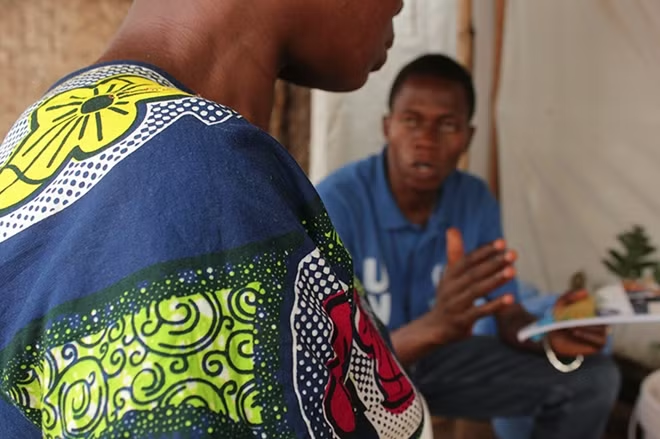 |
| Full use should be made of the Organization's convening power, as a forum for dialogue, to ease tensions and facilitate peaceful solutions. Photo: UNHCR/Francesca Salvi |
The next UN chief also holds true that peacekeeping and peacebuilding “create a unique opportunity” to develop a comprehensive, modern and effective operational peace architecture, or a peace continuum, which encompasses prevention, conflict resolution, peacekeeping, peacebuilding and long-term development.
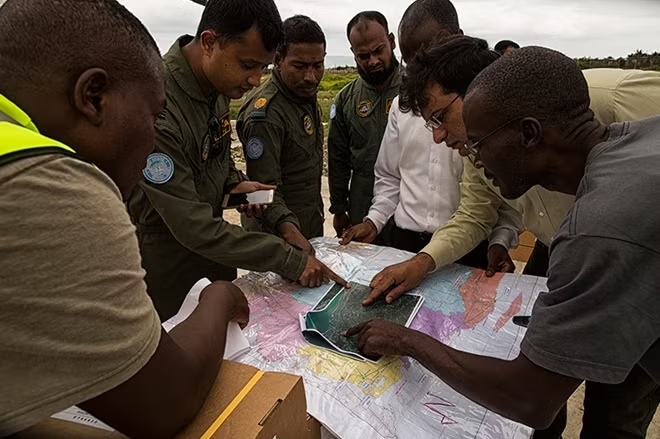 |
| According to Mr. Guterres, strategies for peacekeeping, peacebuilding and women, peace and security must converge. Photo: UN/ Logan Abassi |
Mr. Guterres maintains that the Secretary-General must promote reform and innovation, focused on delivery and results, saying “The future of the UN will be determined by its readiness to change and adapt.” He pledges “unwavering commitment to transparency, accountability and oversight,” including by “imposing the highest ethical standards on everyone serving under the UN flag.”
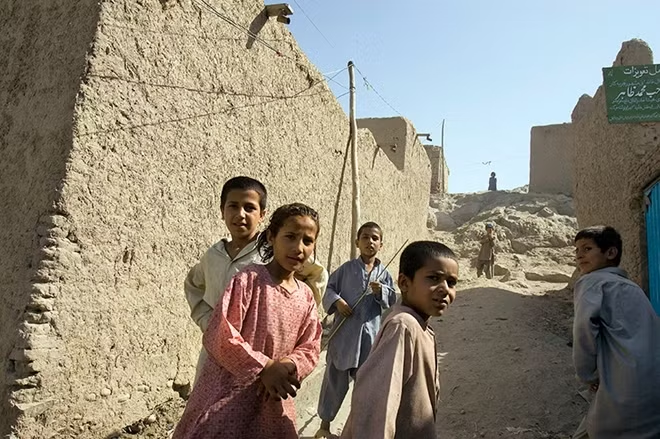 |
| Prevention is crucial in combating terrorism. Mr. Guterres stresses the need “to foster inclusion, solidarity and the cohesion of multi-ethnic, multicultural and multi-religious societies." Photo: UN Photo/ Eskinder Debebe |
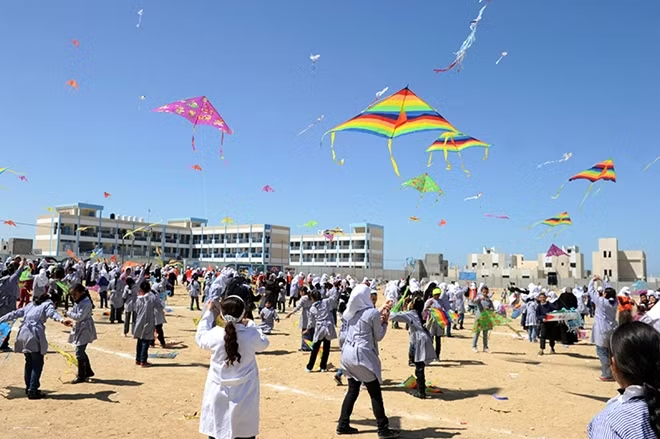 |
| The next Secretary-General sees the UN as the cornerstone of the International system and the key actor of effective multilateralism. Photo: UN Photo/ Shareef Sarhan |
Mr. Guterres believes that for multilateralism to be effective, the UN needs to develop a strong partnership culture at the three levels of: regional organizations; International Financial Institutions; and civil society and the private sector, emphasizing, “Global coherence demands a permanent strategic cooperation culture at all levels.”
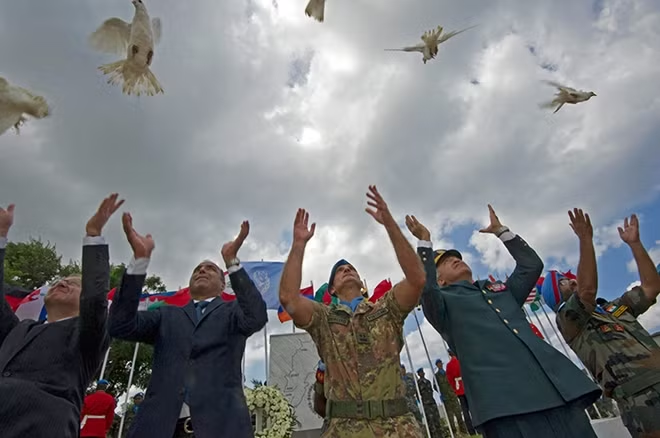 |
| Mr. Guterres underscores that the key to further enhancing UN effectiveness requires leadership and strengthened coordination, “sharing instead of competing and collective responsibility instead of circumstantial individual interests.” Photo: UN Photo/ Pasqual Gorriz |