Australia to allow up to 1,000 Vietnamese workers in agricultural sector

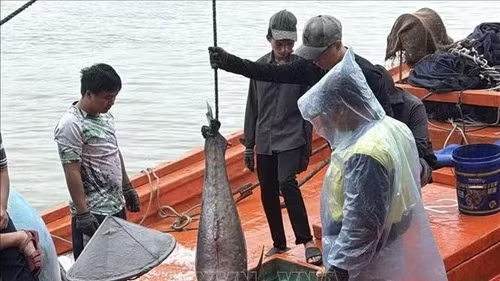
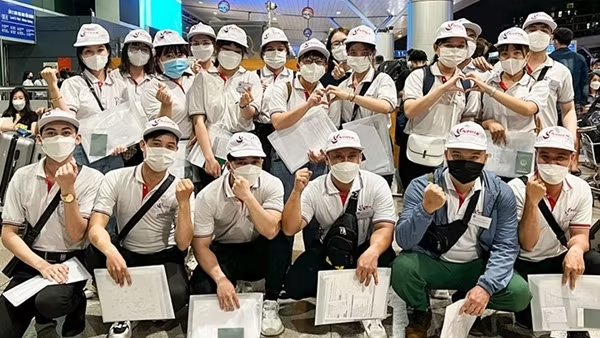
Vietnamese workers can be employed under short-term (6 to 9 months) or long-term (1 to 4 years) roles in low and semi-skilled roles across primary industries sectors such as horticulture, meat processing, fisheries (including aquaculture) and forestry.

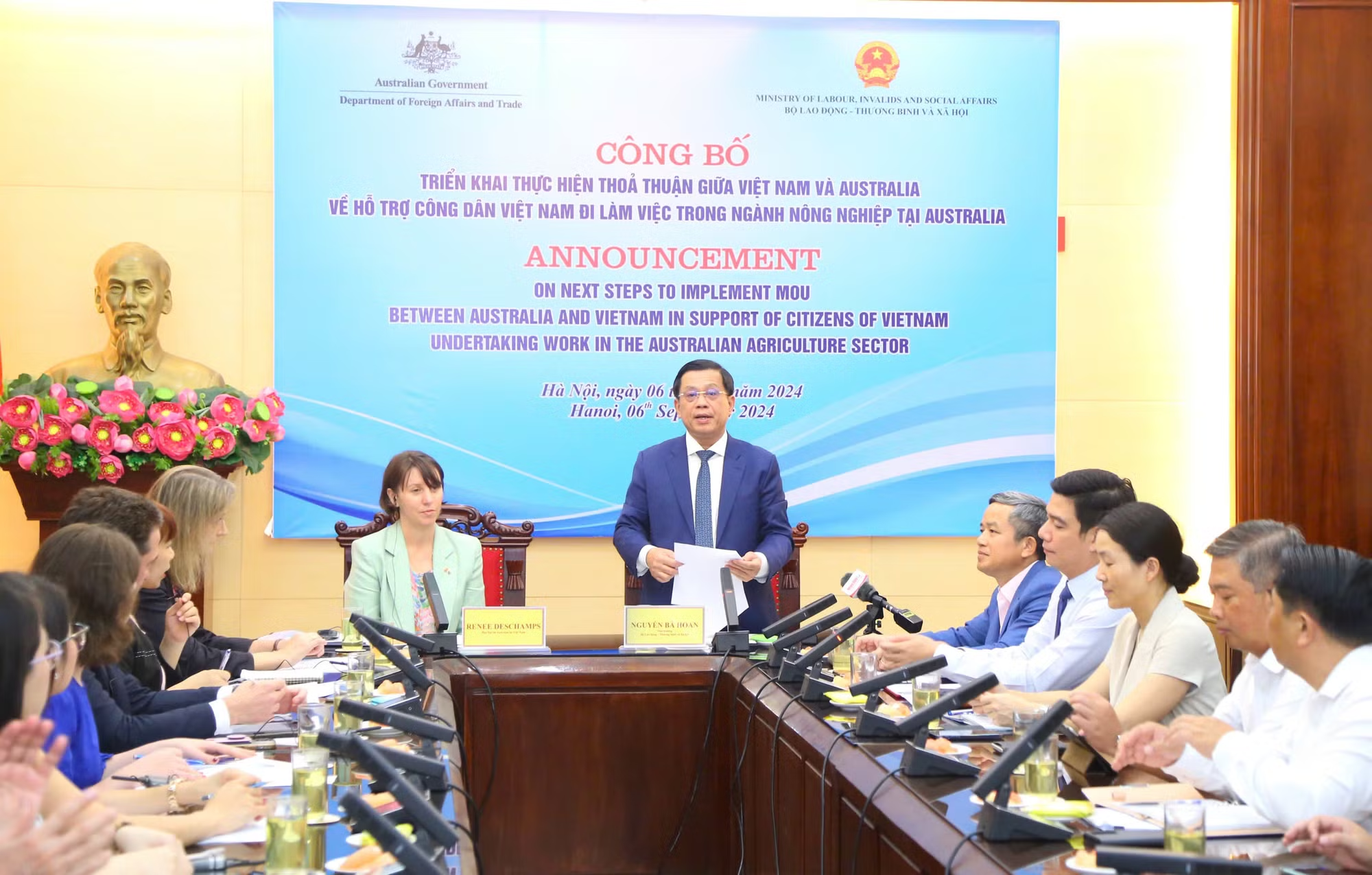
On September 6, the Vietnamese Ministry of Labour - Invalids and Social Affairs (MOLISA) and the Australian Embassy in Vietnam have jointly announced the next steps to support Vietnamese workers undertake work in the Australian agriculture sector under the Vietnam Labour Mobility Arrangement. The Australian government will enable up to 1,000 Vietnamese workers at a time to undertake work in the Australian agriculture sector. 
Australia to allow up to 1,000 Vietnamese workers in agricultural sector -0
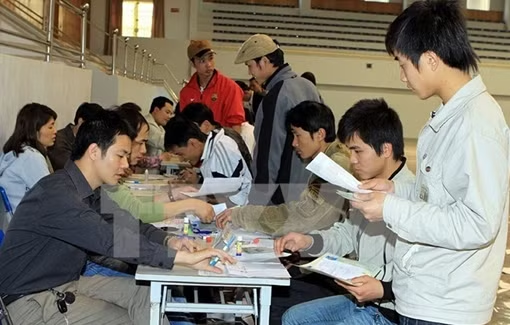
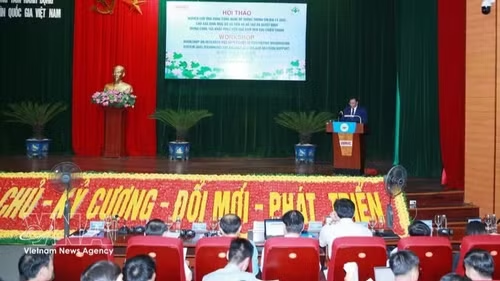
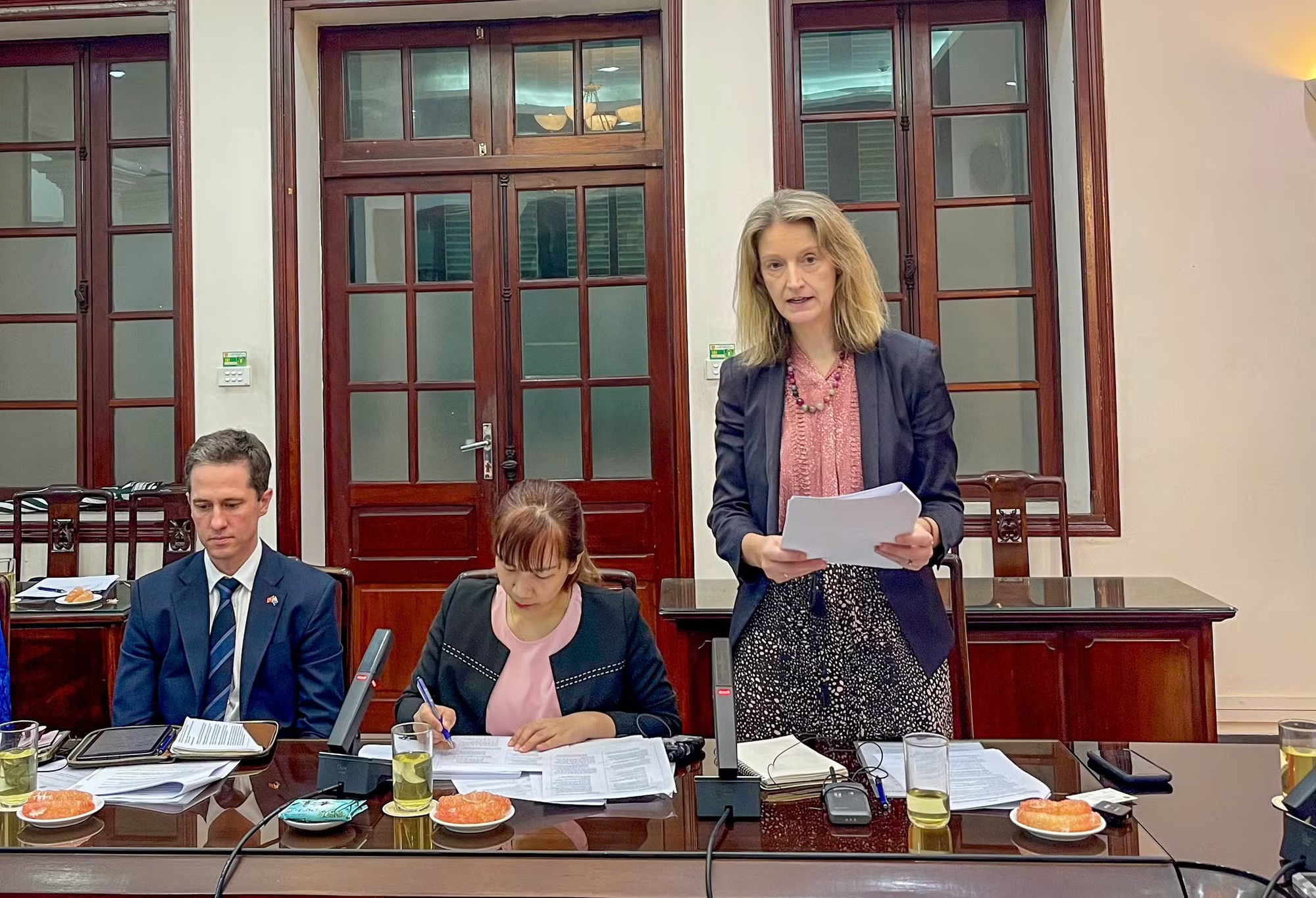
Australian Deputy Ambassador Renée Deschamps and Mr Nguyen Ba Hoan, Deputy Minister of MOLISA at the event.

Under this arrangement, Vietnamese workers can be employed under short-term (6 to 9 months) or long-term (1 to 4 years) roles in low and semi-skilled roles across primary industries sectors such as horticulture, meat processing, fisheries (including aquaculture) and forestry.
The program’s implementation arrangements, announced by the two Prime Ministers in March this year, set out the eligibility requirements for Vietnamese workers as well as key roles and responsibilities of relevant stakeholders to ensure worker welfare. 

Speaking at the event, MOLISA Vice Minister Nguyen Ba Hoan said that: “The implementation of the Arrangement aims to address Vietnamese citizens’ expectation of working in Australia to improve their English skill, accumulate their knowledge and technical skills in agriculture sector with high income. Then these knowledge and skills can be applied to achieve higher productivity and efficiency when returning to the home country. It is also to help fulfill labor gaps of the Australian employers”.
Australia to allow up to 1,000 Vietnamese workers in agricultural sector -0
Ms Cecilia Brennan, Economic Counsellor from Australian Embassy talks about criteria, rights and obligations of the workers participating in the program.

Affirming that the program highlights the economic cooperation and enhanced people-to-people links between Australia and Vietnam, and reflects the two countries’ newly enhanced Comprehensive Strategic Partnership, Deputy Australian Ambassador to Vietnam, Renee Deschamps, added: “Both Australia and Vietnam are committed to worker safety and will work hard to minimise the risk of fraud, unethical recruitment practices, and worker exploitation under the program. We look forward to working with experienced recruitment service enterprises in Vietnam with strong ethical, fair and inclusive recruitment practices and policies”. 

Vietnamese workers, who meet the Worker Eligibility Criteria and Visa Eligibility Requirements, will be supported to come to Australia using the Pacific Australia Labour Mobility (PALM) scheme infrastructure. Recruitment fees will be covered by Australian employers and paid to the non-business state organization and Vietnamese recruitment service enterprises.
PSNews

Other News

Hanoi ready to implement Capital Law 2026, unlocking new development momentum

Hanoi ready to implement Capital Law 2026, unlocking new development momentum

The effectiveness of the Capital Law 2026 will be measured not by the number of legal documents issued but by tangible improvements in governance and public administration, better services for people and businesses, faster administrative procedures, stronger investment attraction and higher economic growth.

Vietnamese students earn honours at ROBOG Asia Cup 2026

Vietnamese students earn honours at ROBOG Asia Cup 2026

Three teams from Chu Van An Secondary School in Vietnam’s Thai Nguyen province have earned First Prize honours and advanced to the quarterfinals at the ROBOG Asia Cup 2026, a regional robotics and artificial intelligence (AI) competition for students held in Hong Kong, China.

Hanoi sets out new investment blueprint with century-long development vision

Hanoi sets out new investment blueprint with century-long development vision

As of early June, Hanoi had attracted 74.6 billion USD in foreign direct investment (FDI) through more than 9,250 valid projects. FDI inflows in the first six months were projected at 3.2 billion USD, surpassing the annual target by 116%, while nearly 16,000 new businesses were established in the first five months, up 34.4% year-on-year.

Vietnam promotes legal cooperation and rule of law at global forum

Vietnam promotes legal cooperation and rule of law at global forum

Vietnam’s development and international integration have gone hand in hand with the improvement of its legal system, the incorporation of international commitments into domestic legislation, and legal reforms aimed at fostering development, openness and global integration. The country regards international law as an essential instrument for building fair, mutually beneficial relations among nations.

Hanoi to hold investment promotion event on June 29

Hanoi to hold investment promotion event on June 29

At the event, Hanoi authorities plan to grant investment policy decisions and investment registration certificates to 20 exemplary projects in the fields of transportation infrastructure, industrial parks, urban development, social housing, environment, science and technology, and foreign investment attraction.

Hanoi's Red River urban area development draws widespread attention

Hanoi's Red River urban area development draws widespread attention

Located south of the Red River and extending from the historic inner city to newly developing areas in the south and the west, the central urban area along Red River’s right bank covers approximately 45,317 hectares and is projected to accommodate around 6.365 million residents by 2045 and 6.455 million by 2065.

Hanoi's Red River urban area development draws widespread attention

Hanoi's Red River urban area development draws widespread attention

Located south of the Red River and extending from the historic inner city to newly developing areas in the south and the west, the central urban area along Red River’s right bank covers approximately 45,317 hectares and is projected to accommodate around 6.365 million residents by 2045 and 6.455 million by 2065.

Regional cooperation strengthened to combat cross-border drug crime

Regional cooperation strengthened to combat cross-border drug crime

Vietnam, China, Laos and Myanmar face common challenges as drug syndicates increasingly exploit the Mekong River, cross-border transport networks, e-commerce platforms, international logistics services, cyberspace and cryptocurrencies to organise drug transactions and smuggling operations.