 |
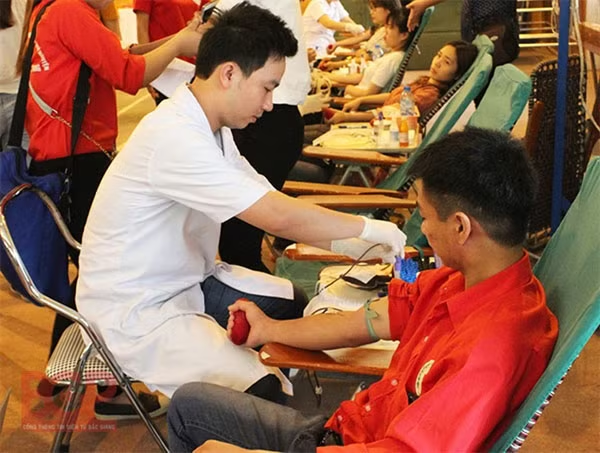
| No shortage: Giving blood has become a family tradition in rural Bac Giang Province. — Photo syt.bacgiang.gov.vn |
“When we donate blood, we take more than what we give. We get a free health check, our family bonds are strengthened and we also enjoy the reward helping others in need,” Le Van Phung, a member of the family, said.
“Unfortunate incidents can happen to anyone at any time. For many people, the line between life and death becomes very thin and all that they desperately need is blood. By donating blood, we can save their lives,” said Phung.
There are four families in Tien Luc who are frequent donors - the Le, Nguyen Van, Nguyen Dinh and Tran Van. Each family donates a total of about 50 units of blood (each equivalent to 250ml) every year. In 2017, the whole commune donated a total of 203 units.
Phung said family meetings, reunions, funerals and ancestor commemoration were chosen for "communication work" as he describes blood donations.
In rural areas, it is customary for families to hold a year-end meeting to sum up the achievements for the 12 months, including children’s studies or the construction of a commemoration structure for the whole family.
In recent years, reports on blood donations have also become part of discussion and frequent blood donors are honoured.
The Le family is one of the biggest families in the region with more than 300 households. The family started donating blood eight years ago.
“Initially people had little understanding about blood donations. Locals thought that by donating blood they would lose the nutrients in their body,” Phung said.
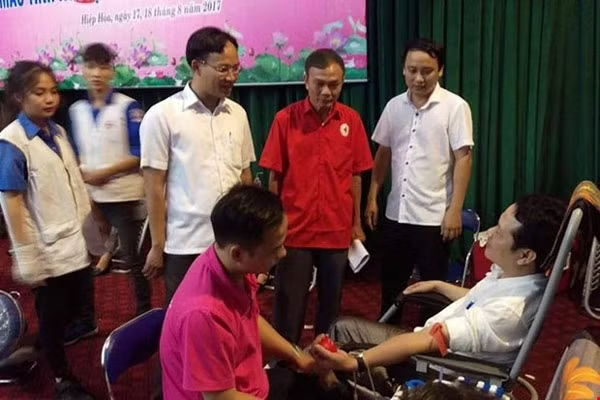 |
| First: Tran Van Do (standing, centre) from Hiep Hoa District is a pioneer blood donor. — Photo nihbt.org.vn |
It was a common belief that a drop of blood was equivalent to nutrients contained in six bowls of rice.
Phung joined the commune’s Red Cross group and tried to change this perception through research and reading newspapers. He found out that blood donations did not harm the donor’s health, but they did help save other people’s lives.
He first encouraged his own small wife and children to donate blood. They were all excited about the idea. Blood donation became a topic of discussion in his family and the spirit spread quickly to other relations.
Nguyen Dinh Lam from the commune still vividly remembers first donating blood in 2008 while attending a training class in Bac Giang City. At the beginning, he felt a bit worried and unsure, yet after the volunteers explained, he joined in. After donating blood, he felt "more healthy and refreshed" because he felt glad that his blood would be used to save other people.
Lam has donated blood twice a year for more than eight years. Apart from Lam, English teacher Nguyen Dinh Phuc has also donated blood regularly since 2005.
Lam said that people in his big family donated blood in the hope of saving people in need. "When we meet at the end of the year, blood donors are honoured. This is a big motivation for us.”
According to Le Van Tien, head of Tien Luc Commune’s Red Cross, there is even a competition between four of the big families to see which can donate the most. All want to have the honour.
“We are proud of families that have many blood donors because it means that the family is healthy. The locals here donate blood voluntarily. Every time they go, the clan rents a car for them to travel to the blood collection location. They use "attendance money" they received to hold small party together,” said Tien.
Tran Van Do from Hiep Hoa District in Bac Giang Province, an exemplary blood donor, was one of the first to help.
In 2006, this mountainous district with a population of only 200,000 had a total of 256 units of blood in storage.
“It was hard at first, as the perception of locals on blood donation was generally negative. Many leaders didn’t encourage their staff to donate blood, some families would not encourage their children,” said Do.
Yet Do was determined to change the perspective. He asked the local authority to hold training classes with trainers from the Institute of Haematology and Blood Transfusion to raise awareness of local people and civil servants. He also went to communes to talk to locals and give them advice.
Since 2011, the amount of blood donated in Hiep Hoa has leapt to an average of 1,600 units per year.
“Hiep Hoa has a high number of blood donors and Do played an important role in this achievement,” said Ma Thi Thin Nga, head of the provincial Red Cross.