The virtual talks between U.S. Trade Representative Katherine Tai and China's Vice Premier Liu He follow Tai's announcement on Monday that she would seek "frank" talks and hold China to its commitments under a "Phase 1" trade deal negotiated by former President Donald Trump.
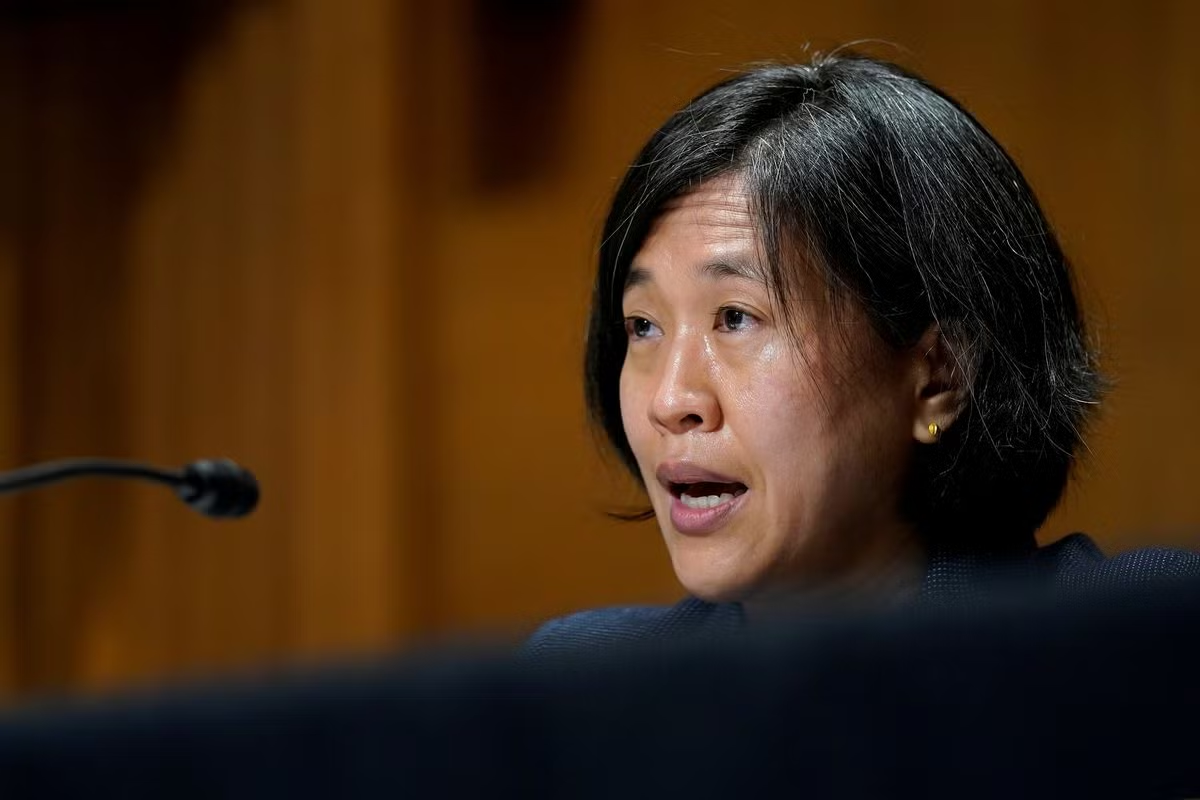
"The Chinese side negotiated over the cancellation of tariffs and sanctions, and clarified its position on China's economic development model and industrial policies," China's Xinhua state news agency said after the talks, held on Friday Washington time.
Tai intended to use the call, the second between the two, to test whether bilateral engagement can address U.S. complaints about Beijing's trade and subsidy practices, a USTR official said.
"Ambassador Tai and Vice Premier Liu reviewed implementation of the U.S.-China Economic and Trade Agreement and agreed that the two sides would consult on certain outstanding issues," USTR said in a statement.
Xinhua said the two sides "expressed their core concerns and agreed to resolve each other's reasonable concerns through consultation."
"Both sides agree to continue communicating with an equal approach and mutual respect, and to create the conditions for the healthy development of economic and trade relations between the two countries and the recovery of the world economy." it said.
U.S. CITES CHINA'S 'AUTHORITARIAN STATE-CENTRIC APPROACH'
In a briefing ahead of the call, a senior USTR official said Tai would give Liu an assessment of China's performance in implementing the Phase 1 deal, including promised purchases of U.S. goods that are falling short of targets. She also would raise concerns about China's "non-market" economic practices.
"We recognize that Beijing is increasingly explicit that it is doubling down on its authoritarian state-centric approach and is resistant to addressing our structural concerns," the official said. "Therefore our primary focus will continue to be on building resilience and competitiveness, diversifying markets, and limiting the impact of Beijing's harmful practices."
The official said Tai would base future engagement with China on "how China responds to tonight's call" and declined to discuss possible next steps, but added that Tai will not seek Phase 2 trade negotiations with Beijing over state subsidies and other structural issues.
The Phase 1 deal in January eased a long running tariff war between the world's two largest economies. It focused largely on China's promise to boost purchases of U.S. farm and manufactured goods, energy and services by $200 billion over two years, along with increased protections for copyright, trademarks and other forms of intellectual property.
The Trump administration envisioned a Phase 2 negotiation to follow to tackle more difficult issues such as subsidies to state enterprises and China's strategic industrial policies.
Asked whether the United States would resort to another "Section 301" investigation that could lead to more tariffs on Chinese goods if the engagement with Beijing fails, the official said the United States will use "the full range of tools we have to protect American workers, farmers and businesses from unfair trade practices."