Government wants to raise average retirement ages

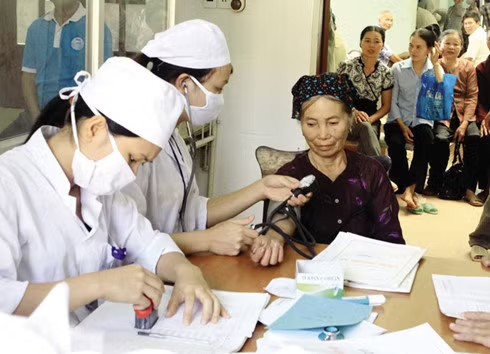
The Vietnam government is hoping to delay the age at which people stop working and retire, according to plans from the Ministry of Labour, Invalids and Social Affairs (Molisa).

Vice labour minister Pham Minh Huan said the overarching plan is to keep the social insurance pay-outs manageable and to mitigate the negative economic consequences of a rapidly aging demographic.

The government can do this most effectively by leveraging higher average retirement ages against an ever-expanding younger middle income workforce, which will put the retirement fund’s finances on a sustainable footing.

Mr Huan said the Ministry wants to up the retirement age to 62 for men and 58 for women from the current mandatory age of 60 and 55 for men and women, respectively.

There is still much ongoing discussion regarding varying the retirement ages for differing occupations or industry segments, which the Ministry hopes to have worked out by the time the proposal is submitted to the National Assembly next month.

There is also ongoing consideration of equalising the retirement ages of men and women, he noted, and discussion to bring retirement ages back in line with the rising life expectancy in the country.

He said the Ministry anticipates a lot of pushback from some legislators concerned that the proposal, if enacted into law, would create more problems for younger workers in finding gainful employment.

Currently, roughly 70% of the country’s 93 million population is of working age, according to a World Bank report, he said, noting that the aging demographic of the population is threatening the liquidity of the retirement fund.

Of primary concern to the government is the pressure this places on the social insurance scheme, which many analysts including the International Labour Organization have predicted will be exhausted by 2034 if current policies aren’t reformed.

Meanwhile, the Vietnam Social Insurance Department reports the average retirement age in the country is about three years lower than the age stipulated by law (or 57 for men and 52 for women).

This results because current law allows for retirement and full pension for men and women retirees who have paid into the social insurance fund for 30 and 25 years, respectively.

Hypothetically, under current law a public worker who started working at age 25, could retire five years earlier than the mandatory ages and still be entitled to receive a monthly pension equal to 75% of their average monthly salary earned over their lifetime.

This policy incentivizes workers to retire early says the Department a move that much too often discourages workers from continuing working and contributing to the social insurance fund until the legal retirement age.

The Department also cited increased life expectancy as a basis for increasing the retirement age, saying it is a move consistent with other countries around the globe such as the US, Japan and Germany to name only a few.

Per an official survey conducted between 2007 and 2012, around 100,000 citizens (both men and women) retire each year, the average age of which is 53 years (55 for men and 51 for women).

Critics of the proposal to raise the retirement age say the root of the problem does not lie in the retirement age but lie solely in the current social insurance policy loopholes allowing for early retirement.
VOV

Other News

Vietnamese culture connects generations in Canada

Vietnamese culture connects generations in Canada

Beyond language skills, children learn about Vietnamese history, stories of filial devotion and national heroes, and the importance of respecting parents and teachers. Weekend classes begin with the national anthem, while festivals and traditional holidays offer opportunities to make greeting cards, prepare traditional cakes and learn to wrap 'banh chung' (square sticky rice cakes).

Vietnam Studies Centre opens in northeastern Thailand

Vietnam Studies Centre opens in northeastern Thailand

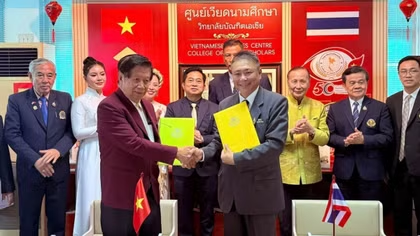
The centre would serve as a valuable academic hub for teaching and promoting Vietnamese language, culture and history, while fostering people-to-people exchanges and connecting younger generations of the two countries.

950 years of Quoc Tu Giam: A milestone in Vietnam's educational and cultural history

950 years of Quoc Tu Giam: A milestone in Vietnam's educational and cultural history

Russia’s senior researcher in Oriental studies Dr. Anatoly Sokolov said that although founded nearly a millennium ago, Quoc Tu Giam remains far more than a historical monument. It has continued to pass on the tradition of learning to successive generations and remained an integral part of Vietnam’s cultural and educational life.

Vietnam plans to go green by expanding ASEAN eco-schools model

Vietnam plans to go green by expanding ASEAN eco-schools model

At the launch ceremony, Deputy Minister of Agriculture and Environment Le Trong Yen said schools play an important role in shaping young people's knowledge, character, and habits. Daily practices such as saving electricity and water, sorting waste and caring for trees could help students understand the value of natural resources and their responsibility towards the environment, while spreading positive habits to families and communities.

Young generation helps strengthen Vietnam–RoK friendship

Young generation helps strengthen Vietnam–RoK friendship

Through the seminar and bilingual contest, VESAMO aimed to provide a platform for young people to share knowledge, pursue their aspirations and contribute to closer friendship and comprehensive cooperation between the two nations.

Vietnamese community in Japan is encouraged to further contribute to national development

Vietnamese community in Japan is encouraged to further contribute to national development

Welcoming the Vietnamese community's efforts and contributions, the General Secretary and President affirmed that the Party and State will continue improving institutions and policies to create favorable conditions for overseas Vietnamese to engage more deeply in the country's socio-economic development and play a proactive role as partners and co-creators in nation-building.

Ho Chi Minh City pushes English as a second language in schools

Ho Chi Minh City pushes English as a second language in schools

In 2027-2028, Ho Chi Minh City targets 20-30% of managers, teachers and staff in English proficiency training, 30% of establishments providing training in English/STEM/STEAM teaching methods, at least 30% of educational establishments with a complete English-speaking environment, and at least 15% of educational establishments teaching subjects in English.

Empowering people with disabilities to be immune to online scams

Empowering people with disabilities to be immune to online scams

Notably, it has organized online scam prevention training courses for more than 1,000 young people with disabilities. In coordination with the Hanoi Police, it has also run awareness campaigns and guided members on identifying fraudulent schemes, protecting their accounts and personal data, and verifying information before sharing it on social media.

New plan aims to empower people with disabilities, promote social inclusion

New plan aims to empower people with disabilities, promote social inclusion

By 2030, Vietnam aims to ensure social security and improve the quality of life of people with disabilities, with priority given to those facing hardship or unable to support themselves. It also aims to ensure their appropriate participation in elected bodies and enable them to benefit from the country's development achievements.

Vietnam advances towards high-quality, specialised healthcare

Vietnam advances towards high-quality, specialised healthcare

Recent developments in Hanoi and other localities highlight efforts to develop specialised treatment, standardise professional practices and apply artificial intelligence (AI) and advanced medical techniques, towards a more modern healthcare system.

Vietnam, US step up technology cooperation in search for war martyrs' remains

Vietnam, US step up technology cooperation in search for war martyrs' remains

Addressing a dialogue on war legacies in Southeast Asia organised by the Stimson Centre in Washington, D.C on October 21, Vietnamese Ambassador to the US Nguyen Quoc Dung briefed representatives of US government agencies, non-governmental organisations and experts on Vietnam’s efforts to address war consequences, while calling for international support and cooperation in urgent humanitarian work.