Hi-tech improves public transport

Public transport management in HCM City has greatly improved compared to five or seven years ago, thanks to modern technologies, experts say.
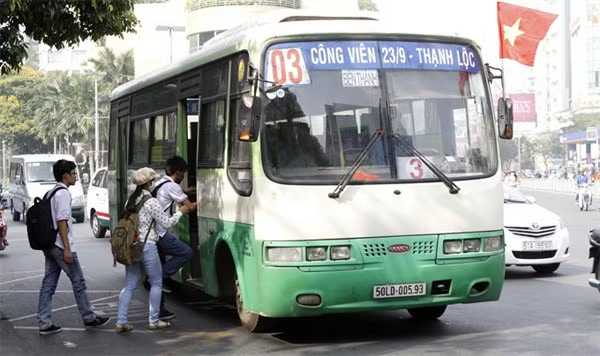
A bus picks up passengers in HCM City. The city’s public transport management has improved compared to several years ago thanks to modern technologies. — Photo: VNA/VNS
A bus picks up passengers in HCM City. The city’s public transport management has improved compared to several years ago thanks to modern technologies. — Photo: VNA/VNS 

Tran Chi Trung, director of the Management and Operation Centre for Public Transport, said that cameras and global positioning system (GPS) devices had significantly improved bus operations management.

Trung said that supervision five or seven years ago was done only at the beginning and ending points of bus routes. Random, unannounced checks were often done by the centre’s staff at that time as well.

But when the first GPS devices were set up in 2012, supervision improved.

The centre staff are now are on duty from 4:30am to 9:30pm every day to supervise the operation of all bus routes.

Managers as well as transportation companies have benefited from the modern equipment.

Nguyen Van Trieu, director of the May 19 Bus Transport Co-operative, said that before GPS devices and cameras were installed, manual supervision was used, but it was not effective as human resources were limited.

In addition, the co-operative had 500 buses running on 18 routes.

“Since the day we began using modern technologies, all shortcomings have been eliminated,” he told Sai Gon Giai Phong (Liberated Sai Gon) newspaper. “We’re able to control and examine all activities of a bus on its entire route.”

Other bus companies have said that cameras and GPS devices are useful as they monitor bus operations and drivers’ work ethic. With the system, they can promote or punish drivers.

The first GPS devices on city buses were used in 2012, and two years later, cameras were installed.

Now, all buses in the city have GPS devices, while nearly 2,000 buses have cameras.

Each bus has four cameras. One tracks the route, one follows activities of the driver, and two of them supervise security.

GPS devices monitor the bus’s speed, routes, opening and closing of doors, air conditioning, and the time the buses run.

All information taken from cameras and devices are sent to the online operating office.

Thanks to the equipment, managers can correct driver’s work attitude and behavior such as eating and using a phone while driving.

Violators caught

In March, the Management and Operation Centre for Public Transport received a call from a man looking for a lost 6th grade girl who was his relative.

The girl had caught a bus on Ha Huy Giap Street in District 12. From the equipment data, the centre found the route and buses that the girl had used and were able to locate her.

In another case, a passenger reported that the driver of bus on the An Suong – Ben Thanh route braked suddenly, causing elderly people to fall down. The driver did not say he was sorry and did not have a good attitude when other passengers complained.

Examining the cameras, managers discovered the case and temporarily suspended the driver, asking him to re-study the codes of ethics.

In addition, a driver on the Vo Van Kiet -- Chu Van An route was fired when he did not stop at a station to pick up two people with disabilities.
VNS

Other News

Vietnamese culture connects generations in Canada

Vietnamese culture connects generations in Canada

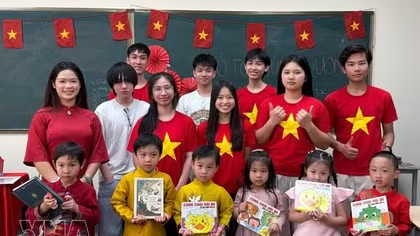
Beyond language skills, children learn about Vietnamese history, stories of filial devotion and national heroes, and the importance of respecting parents and teachers. Weekend classes begin with the national anthem, while festivals and traditional holidays offer opportunities to make greeting cards, prepare traditional cakes and learn to wrap 'banh chung' (square sticky rice cakes).

Vietnam Studies Centre opens in northeastern Thailand

Vietnam Studies Centre opens in northeastern Thailand

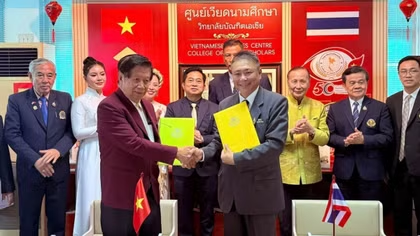
The centre would serve as a valuable academic hub for teaching and promoting Vietnamese language, culture and history, while fostering people-to-people exchanges and connecting younger generations of the two countries.

950 years of Quoc Tu Giam: A milestone in Vietnam's educational and cultural history

950 years of Quoc Tu Giam: A milestone in Vietnam's educational and cultural history

Russia’s senior researcher in Oriental studies Dr. Anatoly Sokolov said that although founded nearly a millennium ago, Quoc Tu Giam remains far more than a historical monument. It has continued to pass on the tradition of learning to successive generations and remained an integral part of Vietnam’s cultural and educational life.

Vietnam plans to go green by expanding ASEAN eco-schools model

Vietnam plans to go green by expanding ASEAN eco-schools model

At the launch ceremony, Deputy Minister of Agriculture and Environment Le Trong Yen said schools play an important role in shaping young people's knowledge, character, and habits. Daily practices such as saving electricity and water, sorting waste and caring for trees could help students understand the value of natural resources and their responsibility towards the environment, while spreading positive habits to families and communities.

Young generation helps strengthen Vietnam–RoK friendship

Young generation helps strengthen Vietnam–RoK friendship

Through the seminar and bilingual contest, VESAMO aimed to provide a platform for young people to share knowledge, pursue their aspirations and contribute to closer friendship and comprehensive cooperation between the two nations.

Vietnamese community in Japan is encouraged to further contribute to national development

Vietnamese community in Japan is encouraged to further contribute to national development

Welcoming the Vietnamese community's efforts and contributions, the General Secretary and President affirmed that the Party and State will continue improving institutions and policies to create favorable conditions for overseas Vietnamese to engage more deeply in the country's socio-economic development and play a proactive role as partners and co-creators in nation-building.

Ho Chi Minh City pushes English as a second language in schools

Ho Chi Minh City pushes English as a second language in schools

In 2027-2028, Ho Chi Minh City targets 20-30% of managers, teachers and staff in English proficiency training, 30% of establishments providing training in English/STEM/STEAM teaching methods, at least 30% of educational establishments with a complete English-speaking environment, and at least 15% of educational establishments teaching subjects in English.

Empowering people with disabilities to be immune to online scams

Empowering people with disabilities to be immune to online scams

Notably, it has organized online scam prevention training courses for more than 1,000 young people with disabilities. In coordination with the Hanoi Police, it has also run awareness campaigns and guided members on identifying fraudulent schemes, protecting their accounts and personal data, and verifying information before sharing it on social media.
New plan aims to empower people with disabilities, promote social inclusion

New plan aims to empower people with disabilities, promote social inclusion

By 2030, Vietnam aims to ensure social security and improve the quality of life of people with disabilities, with priority given to those facing hardship or unable to support themselves. It also aims to ensure their appropriate participation in elected bodies and enable them to benefit from the country's development achievements.

Vietnam advances towards high-quality, specialised healthcare

Vietnam advances towards high-quality, specialised healthcare

Recent developments in Hanoi and other localities highlight efforts to develop specialised treatment, standardise professional practices and apply artificial intelligence (AI) and advanced medical techniques, towards a more modern healthcare system.

Vietnam, US step up technology cooperation in search for war martyrs' remains

Vietnam, US step up technology cooperation in search for war martyrs' remains

Addressing a dialogue on war legacies in Southeast Asia organised by the Stimson Centre in Washington, D.C on October 21, Vietnamese Ambassador to the US Nguyen Quoc Dung briefed representatives of US government agencies, non-governmental organisations and experts on Vietnam’s efforts to address war consequences, while calling for international support and cooperation in urgent humanitarian work.