HIV prevention model for factory workers sees positive results

More than 15,000 factory workers at high risk of HIV infection have access to HIV prevention and treatment services through an HIV prevention intervention model called SAFE-ZONE, according to the Vietnam Administration for HIV/AIDS Control (VAAC).

HIV prevention model for factory workers sees positive results -0
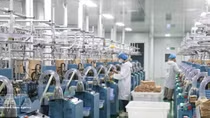
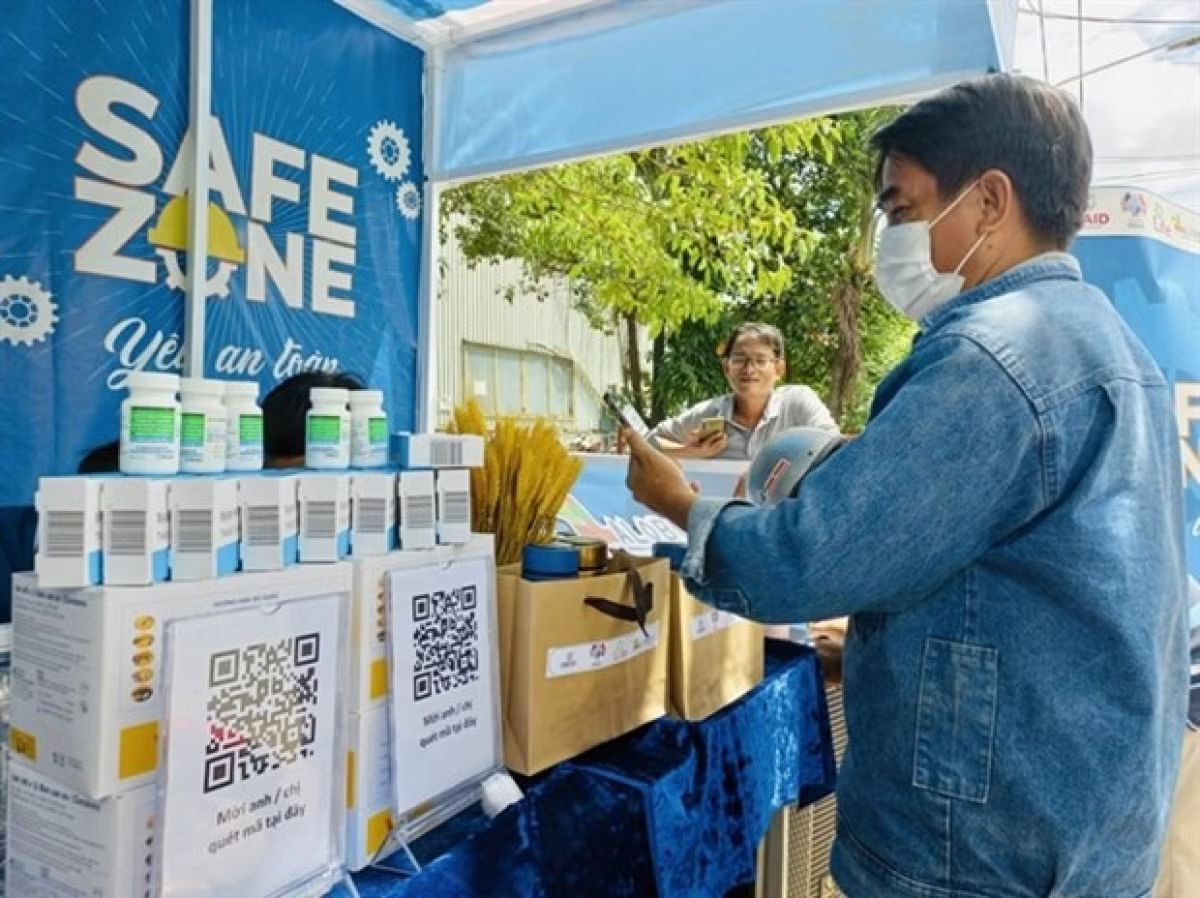
A HIV prevention intervention model for factory workers initiated by LIFE, is being piloted in HCM City and Dong Nai province. (Photo courtesy of LIFE)

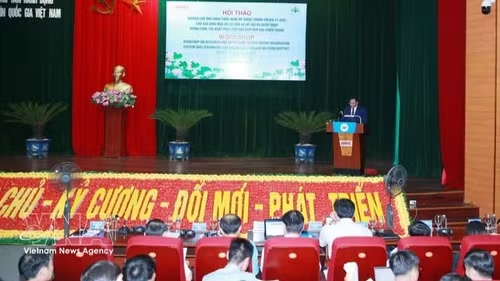
Speaking at a recent workshop held in Ho Chi Minh City, Nguyen Thi Minh Tam, head of VAAC’s Department of HIV/AIDS Prevention and Control, noted that the model is being piloted at four factories in Ho Chi Minh City and Dong Nai province and has seen positive results.

It has provided HIV testing and counseling services for 350 workers, connected more than 60 cases with pre-exposure prophylaxis (PrEP) drugs, and transferred 11 cases to ARV to receive anti-retroviral (ARV) treatment at health facilities.

“The results showed the effectiveness of this model. The model’s implementation steps are very clear and easy to measure and apply,” she said.

So any locality that has many industrial parks and factories with a network of community-based organisations providing available HIV/AIDS services can consider conducting this model, she said.

The model is an initiative of the Centre for Promotion of Quality of Life (LIFE) and community-based organisations (CBOs), contributing to helping the healthcare sector to achieve the national goal of ending the HIV/AIDS epidemic by 2030.

Nguyen Nguyen Nhu Trang, director of LIFE, said this model was built in the context of increasing the number of HIV infection cases detected among factory workers.

The model updates and provides the factory workers information and knowledge about sexual health, HIV prevention, and sexually transmitted diseases (STDs). It also helps connect them to private HIV testing and treatment services provided by CBOs, she said.

The following is the model’s five-step implementation:

Step 1: Contact the factory

Actively contact to ask for a meeting with representatives of the factory in the area identified by health authorities with an increasing number of HIV infections.

The purpose of the meeting is to present the HIV situation in the locality, identify needs, agree on a cooperation method and develop a communication plan on HIV prevention and treatment services for factory workers.

Step 2: Survey workers in the factory

Conduct a survey on knowledge, attitude and practice (KAP) about HIV and other STDs among factory workers to design appropriate communication programmes.

Step 3: 'Passive' Communication

Implement passive communication programmes such as putting up posters, providing leaflets with QR codes, posting articles on the factory's information page and Zalo group, and make media products that attract workers' attention on YouTube and Tiktok.

Step 4: Active communication

Coordinate with the factory to implement on-site communication programmes to attract the direct participation of workers such as events, seminars and creative worker contests. These activities are carried out in a dynamic style, combined with distribution of items such as condoms, lube and self-testing products.

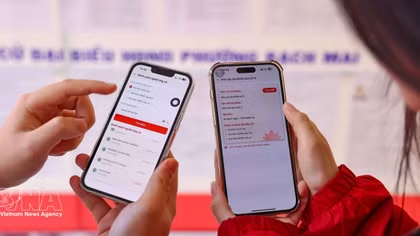
Introduce to the workers “CBO Around U” page to connect with CBOs, and the D-Health app to proactively contact the nearest CBO.

Step 5: Consult, test and transfer

CBOs or the community one-stop-shop health service (DOME) stores will actively contact or receive information directly from customers through the website, phone or via the D-Health app to provide screening tests and consulting, and connect the customers to appropriate health facilities.

Since 2008, LIFE has conducted a programme to improve the quality of life for factory workers in 34 provinces and cities nationwide.

The programme has supported 300,000 workers in 150 factories with issues relating to protecting legitimate rights, providing workplace safety and better health care, gender equality, improving skills for financial management, and personal development.

VOV

Other News

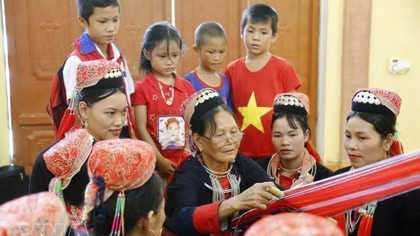
Vietnam steps up implementation of ethnic affairs strategy through 2030

Vietnam steps up implementation of ethnic affairs strategy through 2030

To accelerate the implementation of the the Ethnic Affairs Strategy by 2030, with a vision toward 2045, the Prime Minister requested ministries, agencies and local authorities to continue thoroughly carrying out the Party and State’s policies on ethnic affairs, enhancing the effectiveness of State management and strengthening oversight of policy implementation.

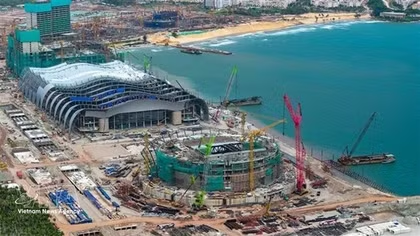
Security preparations reviewed for APEC 2027 in Phu Quoc

Security preparations reviewed for APEC 2027 in Phu Quoc

The team examined the APEC 2027 Convention Centre, where main conference activities are scheduled; Sun Serenia Hospital, designated to provide healthcare and emergency medical services for delegates; provincial road DT.975, which connects Phu Quoc International Airport to the convention centre; and the area surrounding Phu Quoc International Airport.

Hanoi accelerates seven Red River bridge projects, many exceed 70% completion

Hanoi accelerates seven Red River bridge projects, many exceed 70% completion

According to the municipal Transport Construction Investment Project Management Board, the city is simultaneously implementing seven projects, namely Tu Lien, Ngoc Hoi, Tran Hung Dao, Thuong Cat, Van Phuc, Hong Ha and Me So bridges. Construction is being carried out on multiple fronts, focusing on bored piles, pile caps, piers and superstructure works.

Dien Bien battlefield legacy powers tourism revival

Dien Bien battlefield legacy powers tourism revival

Seventy-two years after the Dien Bien Phu Victory, its legacy still reverberates. The unity, self-reliance, and resilience forged in that historic triumph remain a powerful internal engine, now propelling Dien Bien toward fast and sustainable development.

Hanoi accelerates shift to green buses, targets 100% by 2030

Hanoi accelerates shift to green buses, targets 100% by 2030

In the 2027–2030 period, the city will accelerate the transition towards the complete phase-out of fossil fuel-powered buses. The share of electric and green energy-fueled buses is projected to reach 79–89% by 2029 and 100% by 2030.

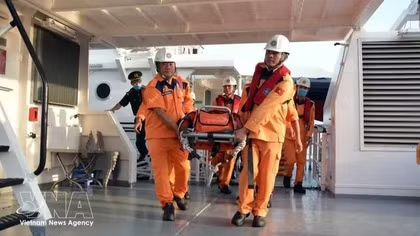
36 fishermen safely rescued after boat breaks down near Truong Sa

36 fishermen safely rescued after boat breaks down near Truong Sa

At 8:00 the same day, KN475 began towing the disabled fishing boat toward Da Tay A island. The towing operation was carried out safely, and by 18:30 both the vessel and its crew had arrived at the island without incident, where repairs and additional support procedures were arranged.

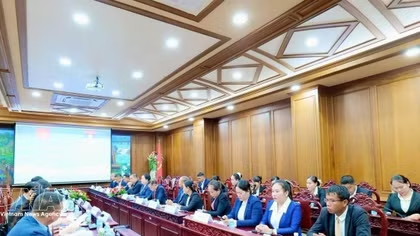
Vietnamese language contest in Laos strengthens youth ties, bilateral friendship

Vietnamese language contest in Laos strengthens youth ties, bilateral friendship

Held in response to the launch of the Vietnamese Language Day among overseas Vietnamese communities, the event aimed to enhance the quality of Vietnamese language teaching and learning in Laos while contributing to the great friendship, special solidarity, comprehensive cooperation and strategic cohesion between the two countries.

Vietnamese language contest in Laos strengthens youth ties, bilateral friendship

Vietnamese language contest in Laos strengthens youth ties, bilateral friendship

Held in response to the launch of the Vietnamese Language Day among overseas Vietnamese communities, the event aimed to enhance the quality of Vietnamese language teaching and learning in Laos while contributing to the great friendship, special solidarity, comprehensive cooperation and strategic cohesion between the two countries.

Hanoi launches 10 electric bus routes from April 1

Hanoi launches 10 electric bus routes from April 1

By the end of April, the number of buses using electricity and other green energy sources in the city is expected to reach 822, including 683 electric buses and 139 compressed natural gas (CNG) buses, representing 42.1% of the total number of vehicles.