Kids have no space or time to enjoy their vacation

The lack of adequately equipped playgrounds and healthy entertainment activities has become a concern in rural areas, especially during the long summer vacation.
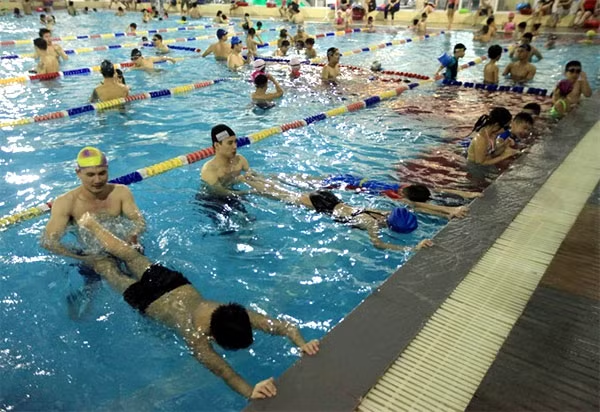
A swimming class in Ha Noi. Many rural provinces begin to offer swimming lessons for children this summer. – Photo: VNA/VNS
A swimming class in Ha Noi. Many rural provinces begin to offer swimming lessons for children this summer. – Photo:  VNA/VNS

With parents and other adults busy in the fields, unsupervised children are prone to engage in “dangerous, accident prone” games like bathing in rivers with strong currents, climbing trees and playing games on the streets.

Besides, in many rural families, children are told to perform various tasks in the fields, gardens or forests, which means that they have no time to relax and have fun during the vacation.

Nguyen Thi Thoa, a resident of Nghe An Province’s Thanh Chuong District, said most children in rural areas have no summer vocation.

“My family lives by farming so every child in my family has a job. The oldest child can help me with caring for the buffalos and ducks, cutting grass or catching crabs and snails, while the younger ones can do housework,” she said.

"The children can stop studying at schools, but never stop doing housework and working in the fields," she added.

Nguyen Van Minh, a second grader from the province’s Yen Thanh District, said looking after the family’s buffalo is his main duty during the summer vocation.

“When I do that, I often catch crabs and snails to earn more money to buy school textbooks in the new school year,” he told the Nong thon ngay nay (Countryside Today) newspaper.

Nguyen Thi Loi, a resident of Ky Bac Commune in the central province’s Ky Anh District, said most parents wanted their children to have fun and engage in activities that improve their physical health before new school year, but there were few opportunities and no facilities to do this.

She also said it was necessary to assign housework for children and remind them to review previous year’s lessons so that they do not get addicted to “dangerous” online games.

No resources

Nguyen Thi Thuy, a teacher from Ha Noi’s Chuong My District, said although there was a lot of vacant land available to build playgrounds for children in rural areas, they had no resources even to design the space, far less build things like courts, goal posts, swings and other playing equipment.

Many families are very busy with farming work, so they do not have much time to care for their children. This results in the kids having to play and entertain themselves on summer days, according to the teacher.

Besides the unsafe games mentioned earlier, online games are a threat.

There are many students who study hard during the school year, but when vacation time comes, they enter the world of online games, and become addicted.

Then, after the summer vacation ends, the kids spend less time on studying and more time on playing games. This affects their results at school, and pushes many to drop out.

Nguyen Duy Thanh, a teacher of Que Phong Boarding Secondary School in Nghe An Province, said children living in remote areas were heavily disadvantaged, when compared with children in big cities.

“The majority of ethnic minority students are from families with serious financial difficulties, so they often follow their parents to harvest maize or gather firewood,” said Thanh, who has spent 10 years teaching in remote areas.

“Recreation centres and other places where they can learn life skills are out of reach for children in these areas,” he said.

Tran Xuan Tinh, head of the Education Department of Yen Thanh District in Nghe An, also agreed with Thanh. “Children in many rural localities do not have the entertainment options available for children in the city.”

He said this was worrying because the lack of oversight by adults could lead to tragedies like drowning or serious traffic accidents.

Rising hopes

In this difficult situation, several parents and officials are showing admirable initiatives to ensure that children in rural areas have a good summer vacation, where they have fun and learn new things at the same time.

Nguyen Thi Trình, a mother of two daughters in Ha Giang Province’s Hoang Su Phi District, some 300km from Ha Noi, said that every summer vacation, the local youth union organises a lot of cultural and sports activities for its members.

They can go to the commune’s library to read books or play traditional games or take classes on subjects like drawing or embroidery held by the youth union twice a week. 

Trình said more attention should be paid to children, especially those in rural, remote areas so they could improve their physical health, broaden their minds and learn necessary skills that are not taught at schools.

Tinh of Yen Thanh District said his office co-ordinated with local authorities to organise swimming classes for children.

Nguyen Thi Thanh Toan, a teacher from Huong Lien Primary School in Huong Khe District, Ha Tinh Province, said she was planning to teach Chut ethnic minority children some soft skills.

"I have requested the district’s Youth Union to assign five volunteer students to organize summer classes so that children can review their lessons,” she said.

She also plans to organise extra classes to disseminate knowledge on food hygiene and safety, forest fire prevention and offer swimming lessons for children. 
VNS

Other News

Vietnamese culture connects generations in Canada

Vietnamese culture connects generations in Canada

Beyond language skills, children learn about Vietnamese history, stories of filial devotion and national heroes, and the importance of respecting parents and teachers. Weekend classes begin with the national anthem, while festivals and traditional holidays offer opportunities to make greeting cards, prepare traditional cakes and learn to wrap 'banh chung' (square sticky rice cakes).

Vietnam Studies Centre opens in northeastern Thailand

Vietnam Studies Centre opens in northeastern Thailand

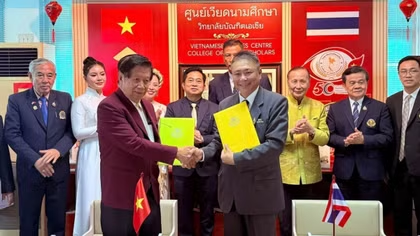
The centre would serve as a valuable academic hub for teaching and promoting Vietnamese language, culture and history, while fostering people-to-people exchanges and connecting younger generations of the two countries.

950 years of Quoc Tu Giam: A milestone in Vietnam's educational and cultural history

950 years of Quoc Tu Giam: A milestone in Vietnam's educational and cultural history

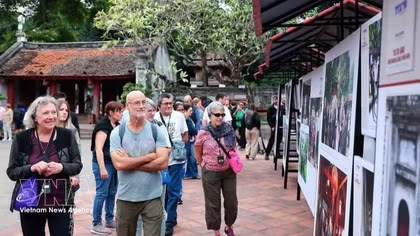
Russia’s senior researcher in Oriental studies Dr. Anatoly Sokolov said that although founded nearly a millennium ago, Quoc Tu Giam remains far more than a historical monument. It has continued to pass on the tradition of learning to successive generations and remained an integral part of Vietnam’s cultural and educational life.

Vietnam plans to go green by expanding ASEAN eco-schools model

Vietnam plans to go green by expanding ASEAN eco-schools model

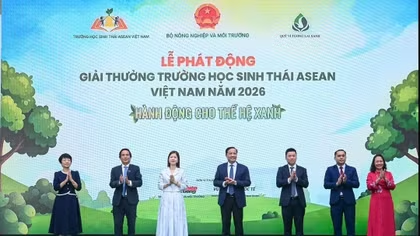
At the launch ceremony, Deputy Minister of Agriculture and Environment Le Trong Yen said schools play an important role in shaping young people's knowledge, character, and habits. Daily practices such as saving electricity and water, sorting waste and caring for trees could help students understand the value of natural resources and their responsibility towards the environment, while spreading positive habits to families and communities.

Young generation helps strengthen Vietnam–RoK friendship

Young generation helps strengthen Vietnam–RoK friendship

Through the seminar and bilingual contest, VESAMO aimed to provide a platform for young people to share knowledge, pursue their aspirations and contribute to closer friendship and comprehensive cooperation between the two nations.

Vietnamese community in Japan is encouraged to further contribute to national development

Vietnamese community in Japan is encouraged to further contribute to national development

Welcoming the Vietnamese community's efforts and contributions, the General Secretary and President affirmed that the Party and State will continue improving institutions and policies to create favorable conditions for overseas Vietnamese to engage more deeply in the country's socio-economic development and play a proactive role as partners and co-creators in nation-building.

Ho Chi Minh City pushes English as a second language in schools

Ho Chi Minh City pushes English as a second language in schools

In 2027-2028, Ho Chi Minh City targets 20-30% of managers, teachers and staff in English proficiency training, 30% of establishments providing training in English/STEM/STEAM teaching methods, at least 30% of educational establishments with a complete English-speaking environment, and at least 15% of educational establishments teaching subjects in English.

Empowering people with disabilities to be immune to online scams

Empowering people with disabilities to be immune to online scams

Notably, it has organized online scam prevention training courses for more than 1,000 young people with disabilities. In coordination with the Hanoi Police, it has also run awareness campaigns and guided members on identifying fraudulent schemes, protecting their accounts and personal data, and verifying information before sharing it on social media.

New plan aims to empower people with disabilities, promote social inclusion

New plan aims to empower people with disabilities, promote social inclusion

By 2030, Vietnam aims to ensure social security and improve the quality of life of people with disabilities, with priority given to those facing hardship or unable to support themselves. It also aims to ensure their appropriate participation in elected bodies and enable them to benefit from the country's development achievements.

Vietnam advances towards high-quality, specialised healthcare

Vietnam advances towards high-quality, specialised healthcare

Recent developments in Hanoi and other localities highlight efforts to develop specialised treatment, standardise professional practices and apply artificial intelligence (AI) and advanced medical techniques, towards a more modern healthcare system.

Vietnam, US step up technology cooperation in search for war martyrs' remains

Vietnam, US step up technology cooperation in search for war martyrs' remains

Addressing a dialogue on war legacies in Southeast Asia organised by the Stimson Centre in Washington, D.C on October 21, Vietnamese Ambassador to the US Nguyen Quoc Dung briefed representatives of US government agencies, non-governmental organisations and experts on Vietnam’s efforts to address war consequences, while calling for international support and cooperation in urgent humanitarian work.