 |
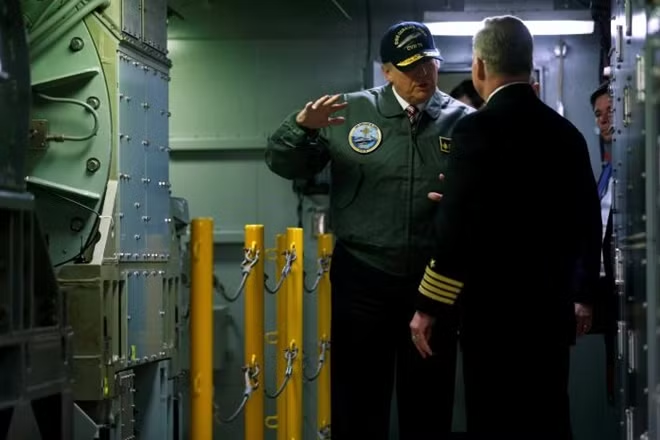
| President Trump tours the pre-commissioned U.S. Navy aircraft carrier Gerald R. Ford at Huntington Ingalls Newport News Shipbuilding facilities in Newport News, Virginia. REUTERS/Jonathan Ernst |
The initiative could cost nearly $700 billion in government funding, take 30 years to complete and require hiring tens of thousands of skilled shipyard workers - many of whom don't exist yet because they still need to be hired and trained, according to the interviews and the documents reviewed.
Trump has vowed a huge build-up of the U.S. military to project American power in the face of an emboldened China and Russia. That includes expanding the Navy to 350 warships from 275 today. He has provided no specifics, including how soon he wants the larger fleet.
The Navy has given Defense Secretary Jim Mattis a report that explores how the country's industrial base could support higher ship production, Admiral Bill Moran, the vice chief of Naval Operations with oversight of the Navy’s shipbuilding outlook, told Reuters.
He declined to give further details. But those interviewed for this story say there are clearly two big issues - there are not enough skilled workers in the market, from electricians to welders, and after years of historically low production, shipyards and their suppliers, including nuclear fuel producers, will struggle to ramp up for years.
To be sure, the first, and biggest, hurdle for Trump to overcome is to persuade a cost-conscious Congress to fund the military buildup.
The White House declined to comment. A Navy spokeswoman said increases being considered beyond the current shipbuilding plan would require “suffici
The two largest U.S. shipbuilders, General Dynamics Corp (GD.N) and Huntington Ingalls Industries Inc (HII.N), told Reuters they are planning to hire a total of 6,000 workers in 2017 just to meet current orders, such as the Columbia class ballistic missile submarine.
General Dynamics hopes to hire 2,000 workers at Electric Boat this year. Currently projected order levels would already require the shipyard to grow from less than 15,000 workers, to nearly 20,000 by the early 2030s, company documents reviewed by Reuters show.
Huntington Ingalls, the largest U.S. military shipbuilder, plans to hire 3,000 at its Newport News shipyard in Norfolk, Virginia, and another 1,000 at the Ingalls shipyard in Mississippi this year to fulfill current orders, spokeswoman Beci Brenton said.
Companies say they are eager to work with Trump to build his bigger Navy. But expanding hiring, for now, is difficult to do until they receive new orders, officials say.
"It’s hard to look beyond" current orders, Brenton said.
Smaller shipbuilders and suppliers are also cautious.
"You can’t hire people to do nothing," said Jill Mackie, spokeswoman for Portland, Oregon-based Vigor Industrial LLC, which makes combat craft for the Navy’s Special Warfare units. "Until funding is there ... you can’t bring on more workers."