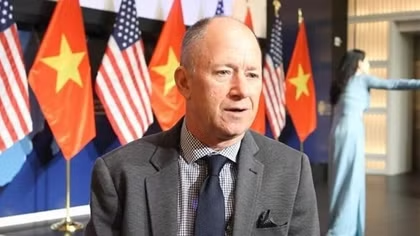
Ukraine will be responsible for its own destruction if it undermines existing peace agreements, a senior Russian diplomat has warned at a UN security council debate on the crisis.
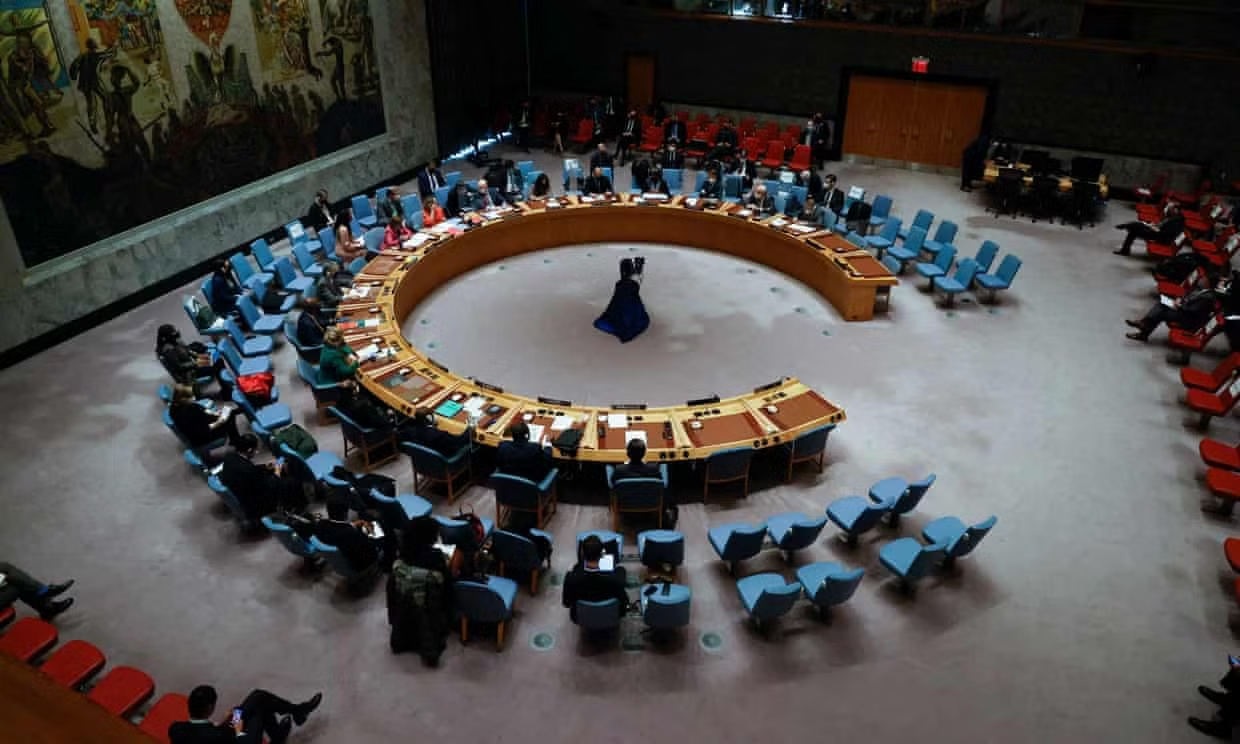
The warning from Vasily Nebenzya, Russia’s permanent representative to the UN, during a combative council session, came on a day of continued high-level diplomacy aimed at defusing the Ukraine crisis.
The state department confirmed it had received a response from Moscow to a document the US delivered in Moscow last week, formally outlining areas where the Biden administration believes the two countries could find common ground. US officials would not disclose the contents of the Russian letter, saying they would not “negotiate in public”.
The US secretary of state Tony Blinken and his Russian counterpart, Sergei Lavrov, are due to talk on Tuesday, in the wake of the Russian letter and the security council session. Meanwhile on Monday, Vladimir Putin talked to Emmanuel Macron in the second phone conversation between the Russian and French leaders since Friday.
“The two leaders agreed to continue contacts by telephone and to promptly consider the possibility of meeting in person,” the Kremlin said in a statement.
Monday’s security council session did nothing to narrow the wide divide between Russia and the west, but did provide a test of diplomatic strength on the world stage. Nebenzya began the meeting by deriding western claims of a planned Russian attack as “hysterics” and blamed Ukraine for not abiding by the Minsk agreements of 2014 and 2015, which were supposed to end the conflict between the Kyiv government and the Russian-backed separatists in the Luhansk and Donetsk regions.
Nebenzya, Russia’s permanent representative at the UN, also blamed western nations for “actively pumping Ukraine full of weapons” which he said would be used against civilians in the east of the country and were “in violation of the Minsk agreements”.
He ended his address to the security council with a warning.
“If our western partners push Kyiv to sabotage the Minsk agreements, something that Ukraine is ... willingly doing, then that might end in the absolute worst way for Ukraine,” Nebenzya said. “And not because somebody has destroyed it, but because it would have destroyed itself and Russia has absolutely nothing to do with this.”
The US had called for an emergency debate on Ukraine as part of a diplomatic campaign to fend off what Washington and its allies say is a planned Russian invasion of Ukraine. As part of that campaign, the US and the UK both announced that pro-Putin Russian oligarchs would be targeted if an attack goes ahead.
Russia had sought to stop a security council debate on Ukraine until after it took over the council presidency on Tuesday. But only China supported its opposition, with Gabon, India and Kenya abstaining, leaving the US with more than the nine votes required to proceed with an open session on the crisis.
In her remarks, the US envoy, Linda Thomas-Greenfield, said that even as the issue was being debated in New York, Russia continued to add to the more than 100,000 troops already massed around Ukraine’s borders, and within days would have 30,000 inside Belarus alone.
“Russia has already used more than 2,000 rail cars to move troops and weaponry from across Russia to the Ukrainian border,” Thomas-Greenfield said. “Russia has also moved nearly 5,000 troops into Belarus, with short-range ballistic missiles, special forces and anti-aircraft batteries. We’ve seen evidence that Russia intends to expand that presence to more than 30,000 troops near the Belarus-Ukraine border, less than two hours north of Kyiv, by early February.”
Speaking towards the end of the session, the Ukrainian envoy, Sergiy Kyslytsya, described the Russian build-up of troops and military hardware around his country’s borders and did not echo President Volodymyr Zelenskiy’s complaints that the West was exaggerating the threat.
Kyslytsya said there were now 112,000 Russian troops massed around Ukraine’s borders and in Crimea, with another 18,000 deployed at sea off the country’s coast.
He pointed to the sophistication of the weapons being gathered in Belarus, including Iskander missiles, Pantsir anti-aircraft systems and advanced Sukhoi-35 jet fighters.