- Vietnam congratulates Cuba on revolution triumph anniversary
- The first incubator of innovative IT enterprises in Hanoi launched
- Leftist leaders join thousands to send off Fidel Castro in Cuba
The end of the "wet foot, dry foot" policy, which allowed any Cuban who reached U.S. soil to stay but returned any picked up at sea, is effective immediately. Cuban officials had sought the change for years.
The shift had been in the works for months. It was announced abruptly because advance warning might have inspired thousands more people to take to the seas between the Cuba and Florida in order to beat a deadline.
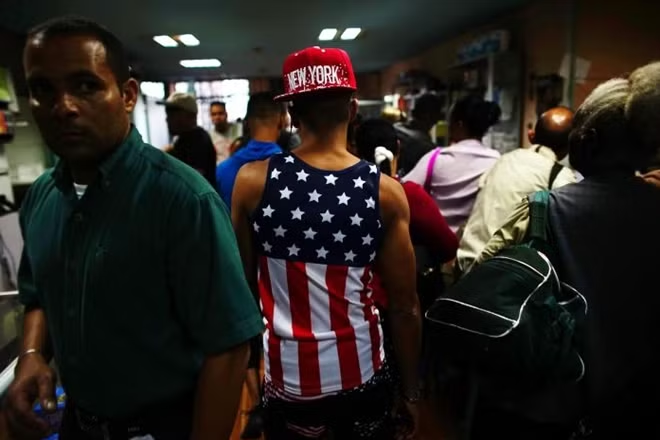 |
| People gather inside a shop in downtown Havana, Cuba, January 12, 2017. REUTERS/Alexandre Meneghini |
The United States and Cuba spent several months negotiating the change, including an agreement from Cuba to allow those turned away from the United States to return.
"With this change we will continue to welcome Cubans as we welcome immigrants from other nations, consistent with our laws," Obama said in a statement.
The Department of Homeland Security also ended a parole program that allowed entry for Cuban medical professionals. That program was unpopular with Havana because it prompted doctors to leave, sapping the country's pool of trained health workers.
The U.S. Coast Guard intercepts thousands of Cubans attempting the 90-mile (145-km) crossing to Florida every year, but tens of thousands who reach U.S. soil, including via Mexico, have been allowed to stay in the country, while immigrants from other nations have been rounded up and sent home.
Cuba welcomed the policy changes, saying they would benefit the whole region by discouraging people-trafficking and dangerous journeys that led to bottlenecks of Cubans in Central America last year.
"Today, a detonator of immigration crises is eliminated. The United States achieves legal, secure and ordered migration from Cuba," said Josefina Vidal, the Cuban foreign ministry's chief for U.S. affairs.
El Salvador's foreign ministry also welcomed the move, saying "there cannot be migrants of different categories." Honduras, from where thousands flee each year without the attraction of favorable U.S. immigration policies, said it would wait to see if the flow of Cubans actually reduced.
Anticipating the end of the policy, Cuban immigration has surged since the 2014 normalization, said Ben Rhodes, Obama's deputy national security adviser.
"People were motivated to migrate," Rhodes told reporters on a call, noting some 40,000 Cubans arrived in 2015 and about 54,000 in 2016.
The administration had rejected Cuban entreaties to overturn the policy before President Barack Obama's historic visit to the island last year, although even some White House aides argued that it was outmoded given efforts to regularize relations between the former Cold War foes.
"Wet foot, dry foot" began in 1995 under President Bill Clinton after an exodus of tens of thousands of Cubans who were picked up at sea by the Coast Guard as they tried to reach Florida.
Obama has been working to normalize relations with Cuba since he and President Raul Castro announced a breakthrough in diplomatic relations in December 2014. His administration has eased restrictions on travel and trade, allowing more U.S. business with Cuba and improved communications with the island.